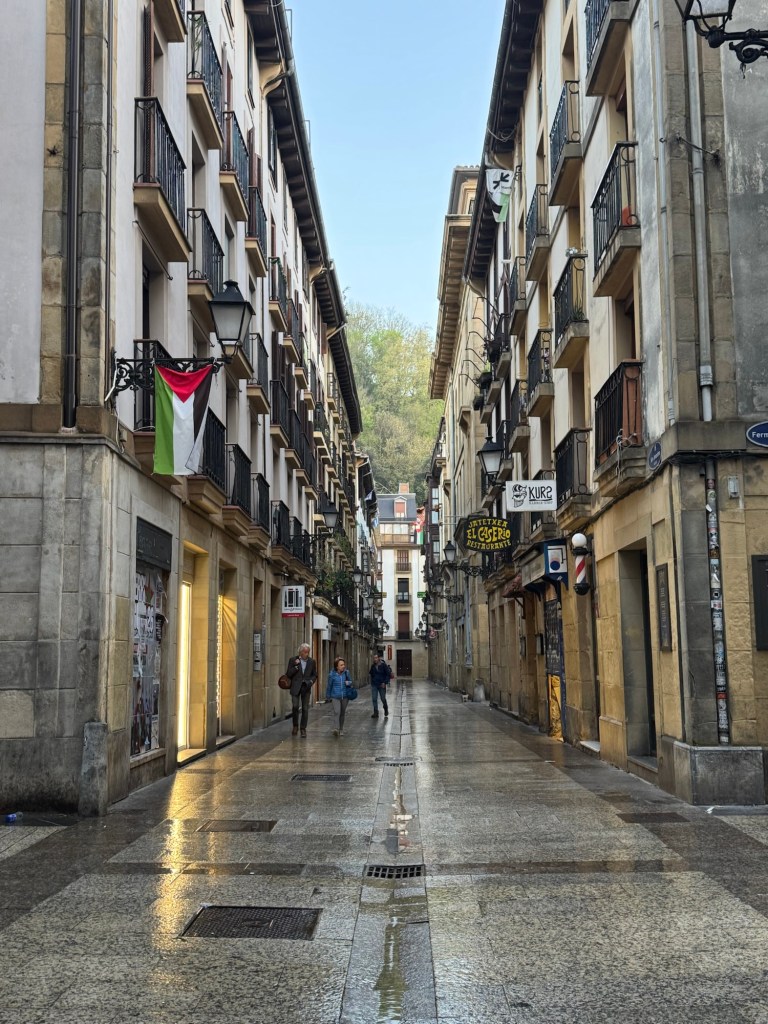
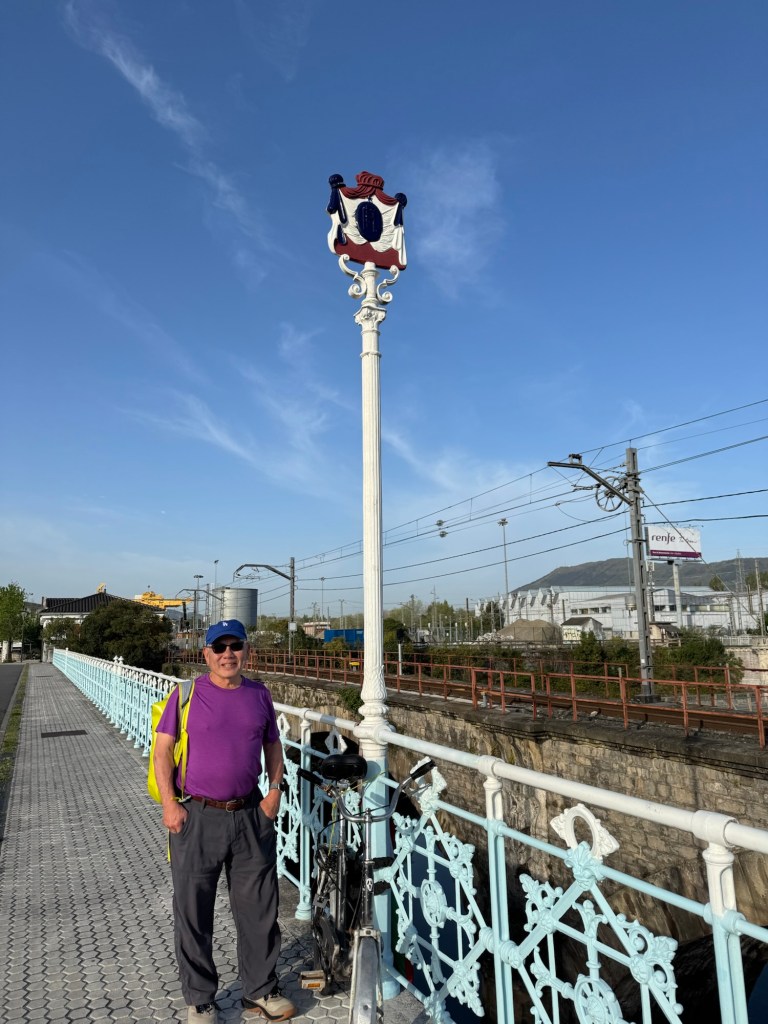
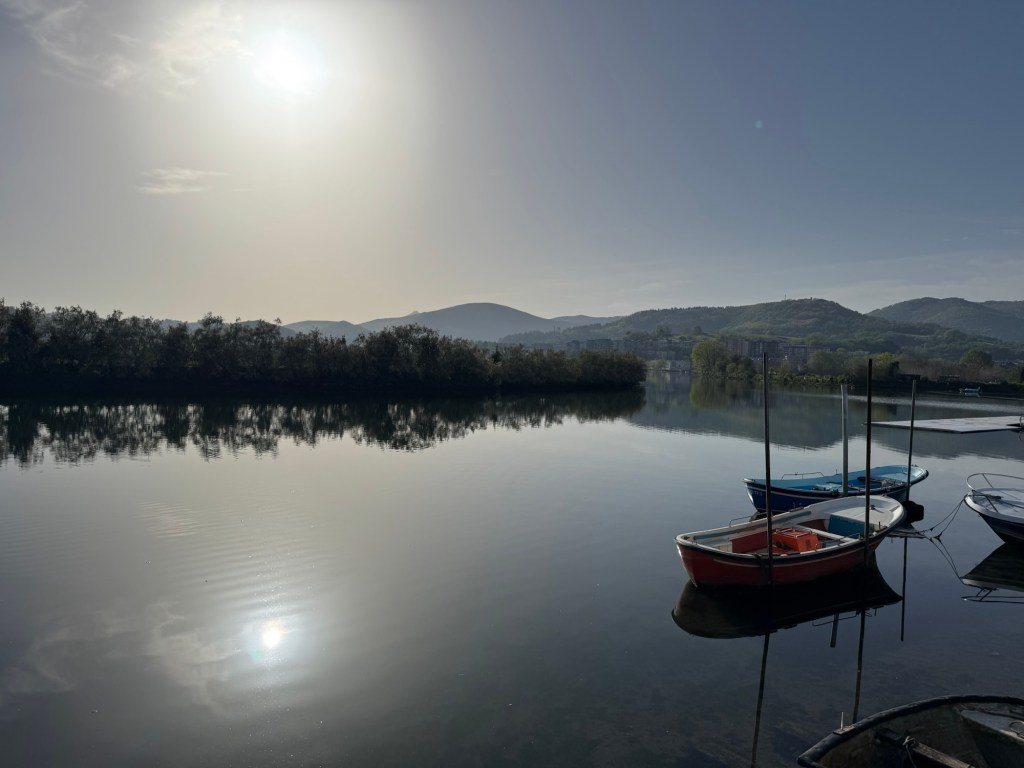
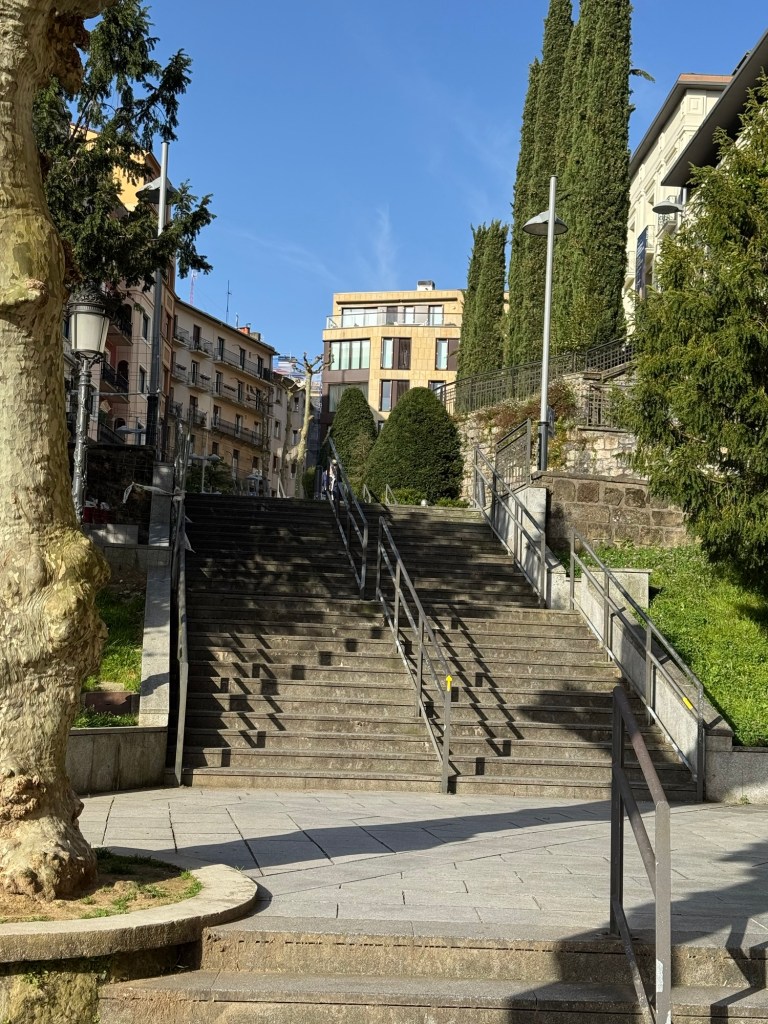
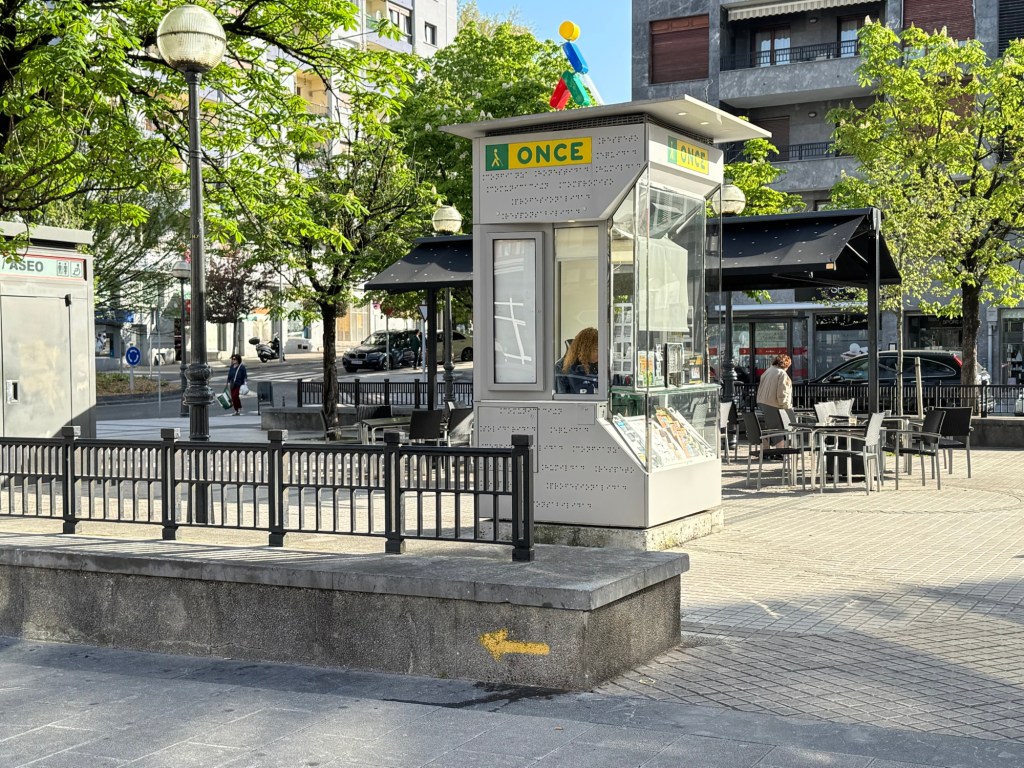
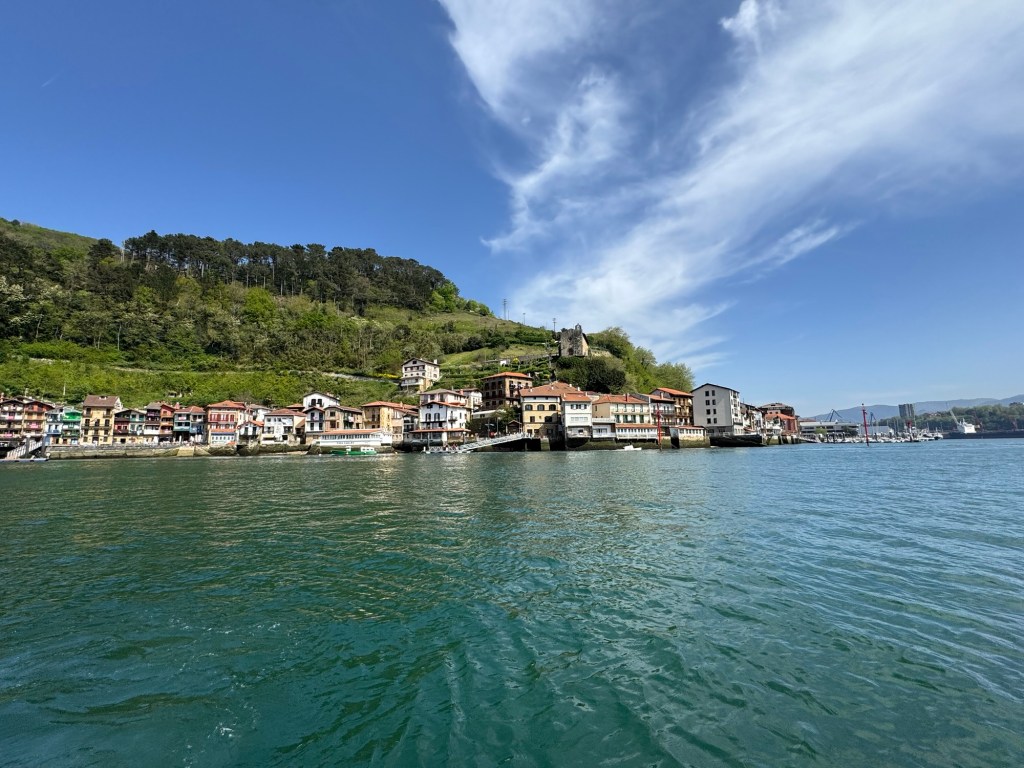
Early morning is clean up time in San Sebastián. A few people are on their way to work at 7:30 while men and machine sweep up and hose down the Old Town. So quiet after a busy evening of socializing over drinks and pinxtos.
Early Morning In Donestia
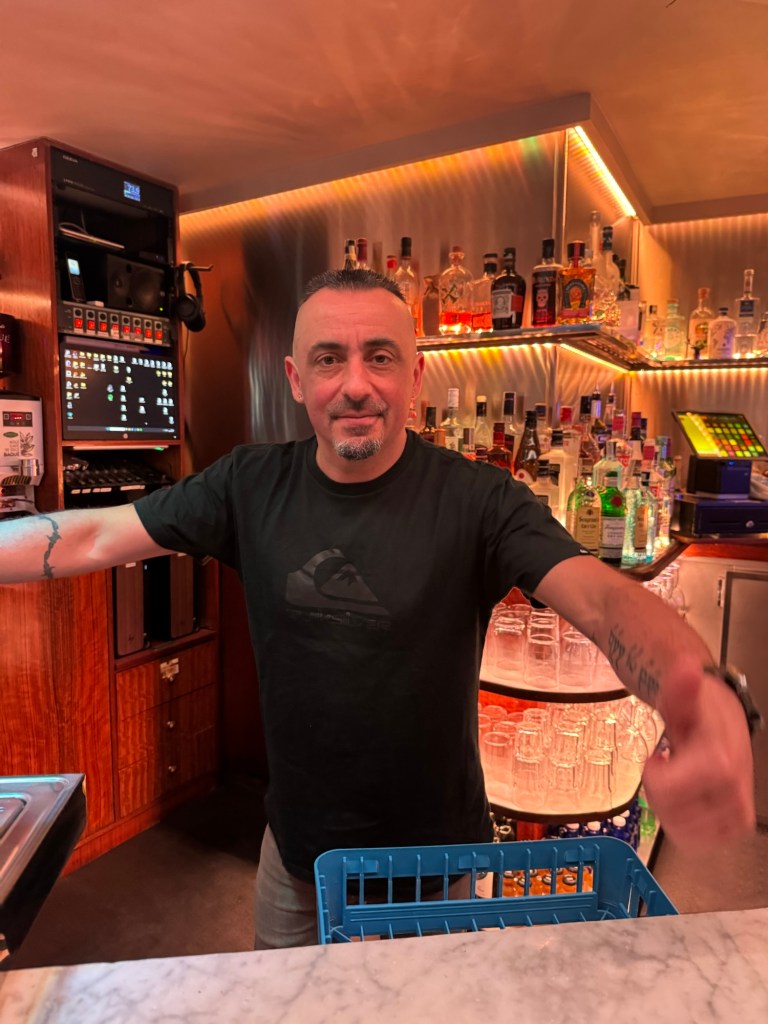
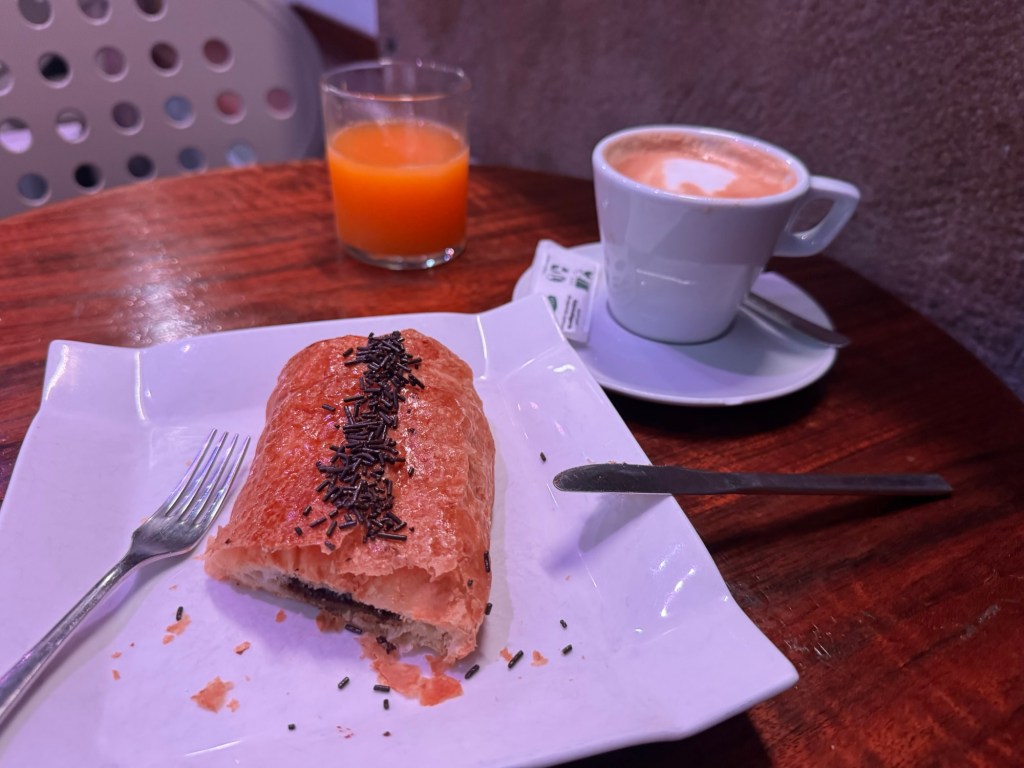
My breakfast bar was one of the earlier openers in Old Town. Jon served up an excellent cup of cafe con leche, freshly squeezed orange juice, and my choice of a flaky chocolate croissant. Even a humble bar serves up a croissant that meets the highest standards.
Jon, the BarristaA Superb Breakfast Combo
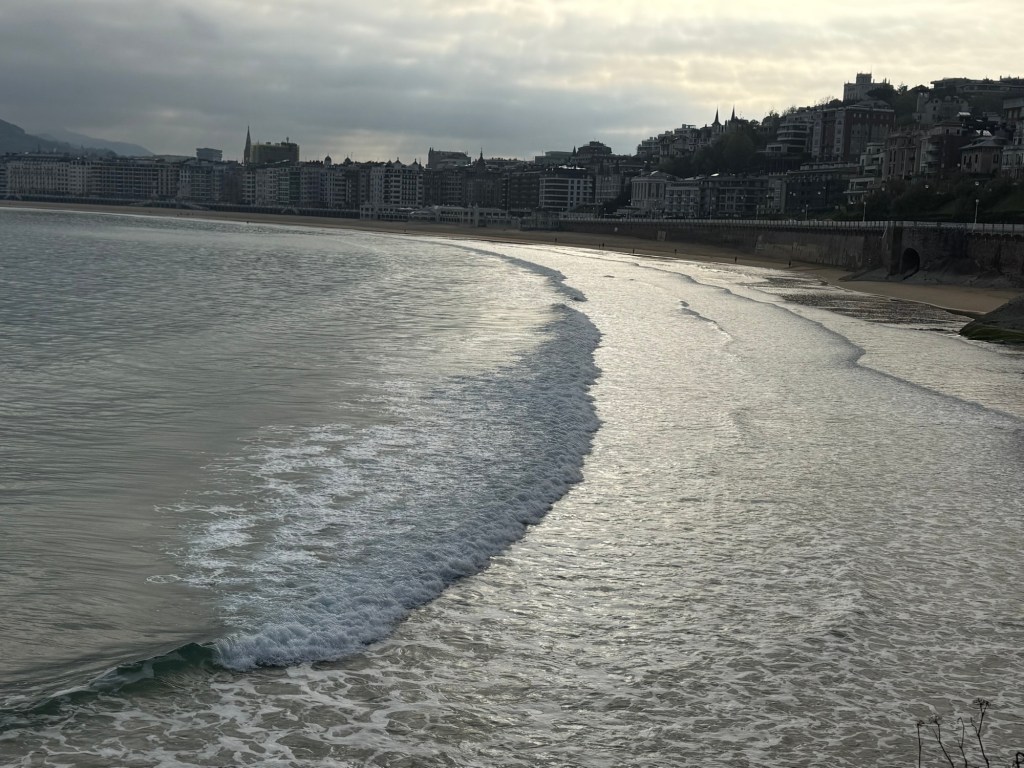
Breakfast on both of my days was quick because of the hikes ahead of me. I was off by 8:30 rounding the beach before starting up the hills surrounding Donestia.
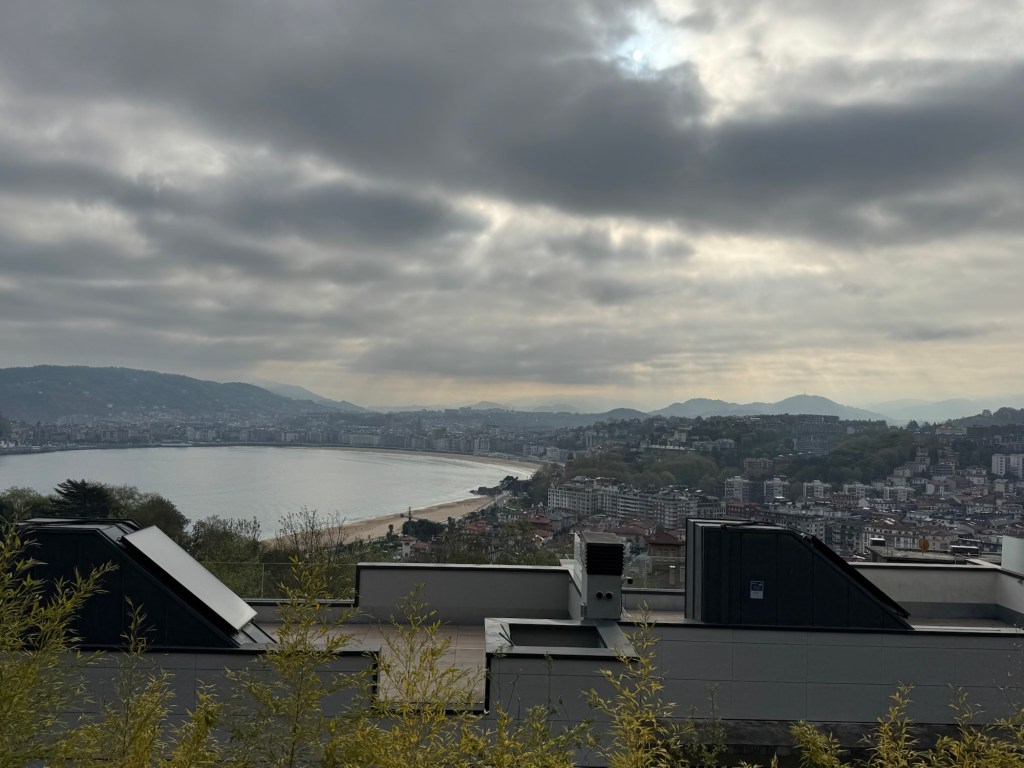
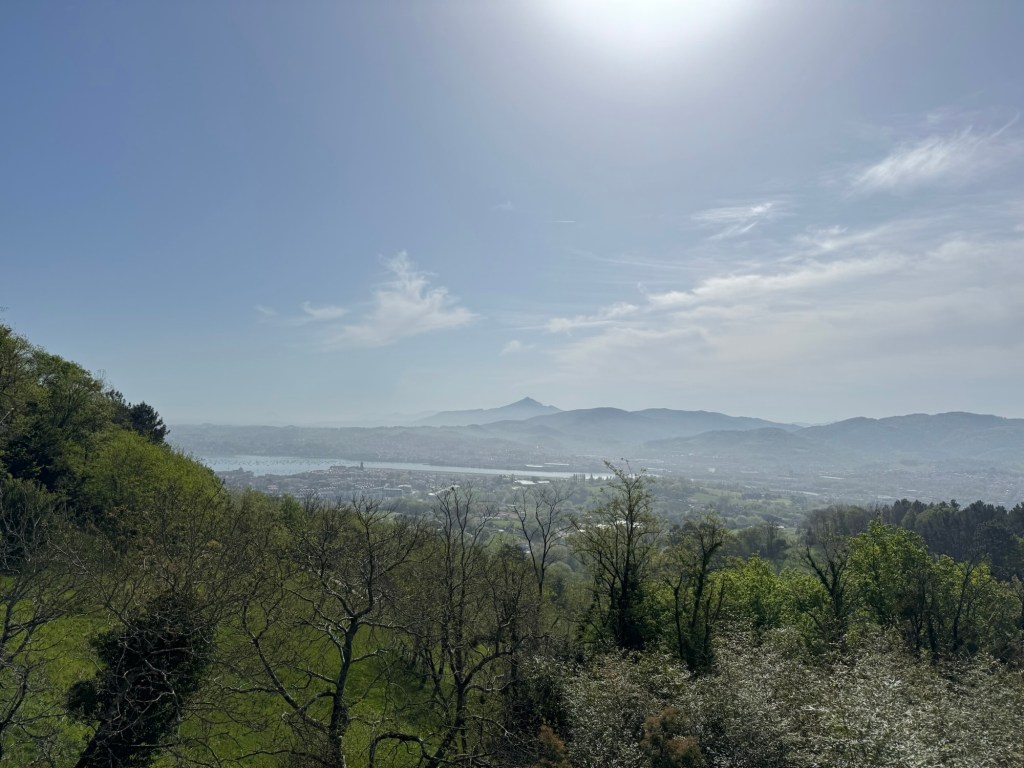
I love looking back at where I had walked. The highest point in the far right background of the photo below was where I communed with the telecommunication towers the day before.
The Waves At DonestiaLooking Back To Irun
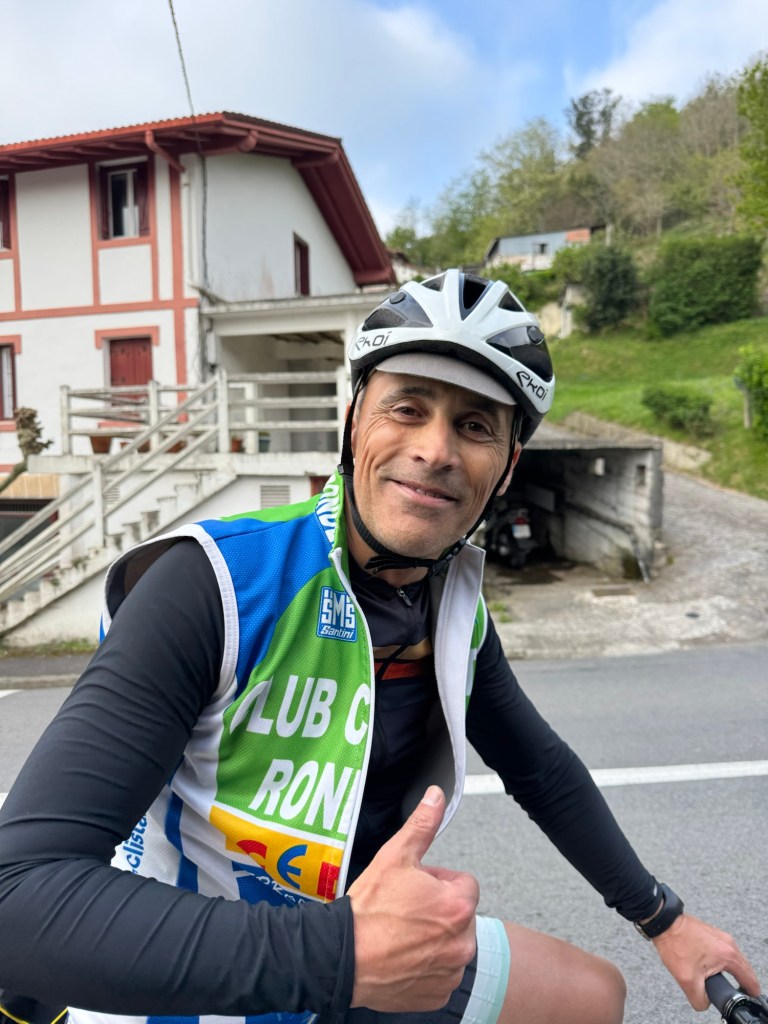
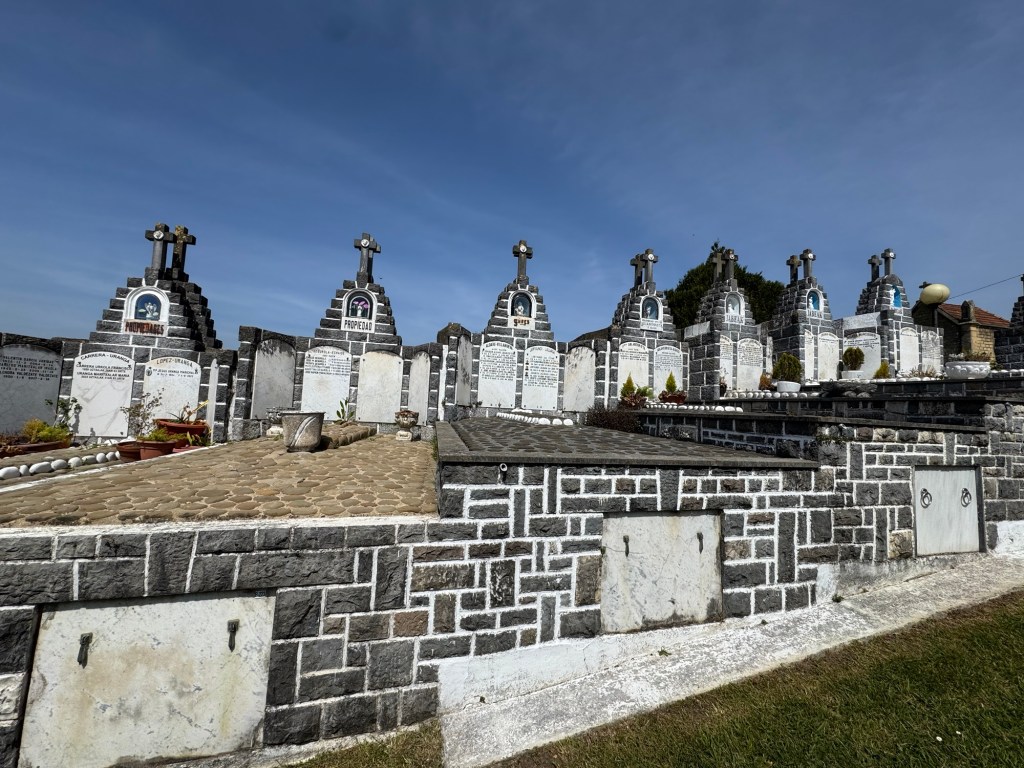
Back to the present while walking just out of Donestia, Antonio from Malaga called out and l asked where I was headed. To Santander, said I. He was cycling there too and beyond to Santiago. He will get to his destinations faster than I. But his experience will be different than mine. I wonder whether he stopped at the cemetery on the downslope while entering Orio? Probably not given the speed that I observed bikers speeding down the hill.
Antonio From MalagaCemetery Above Orio
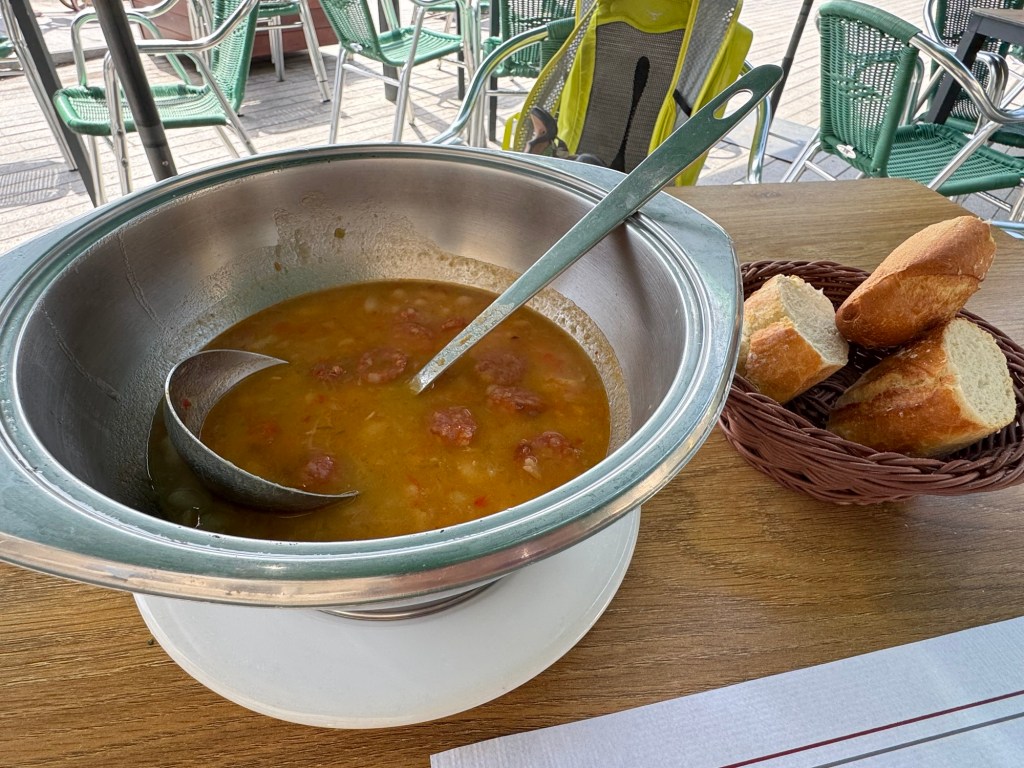
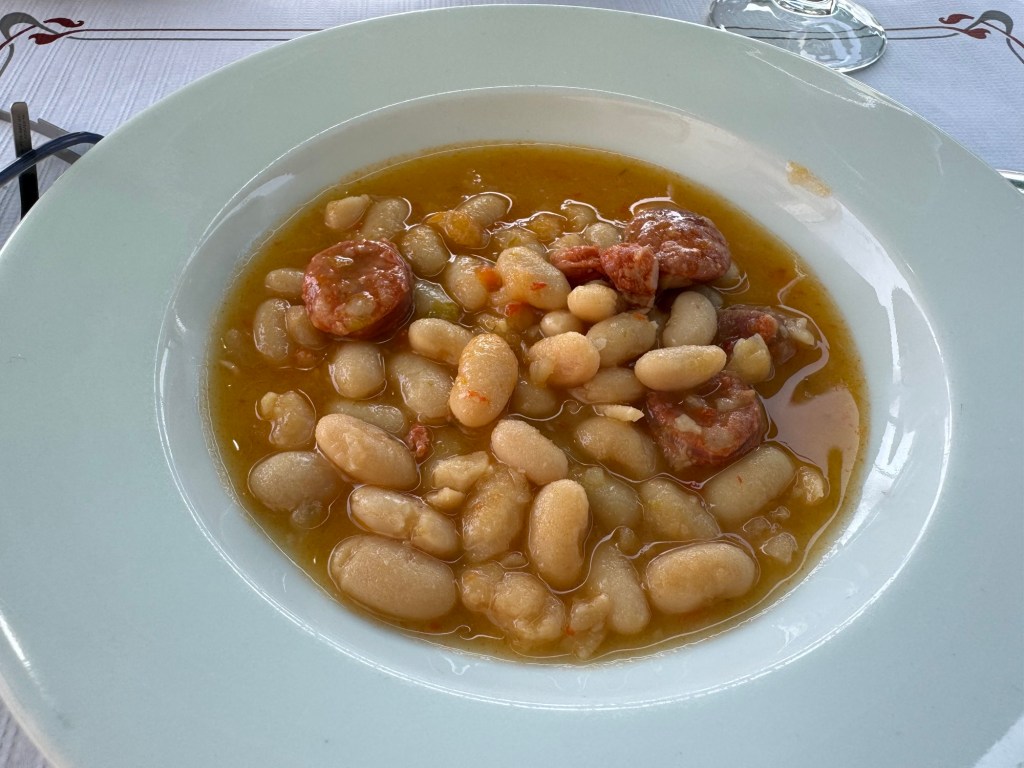
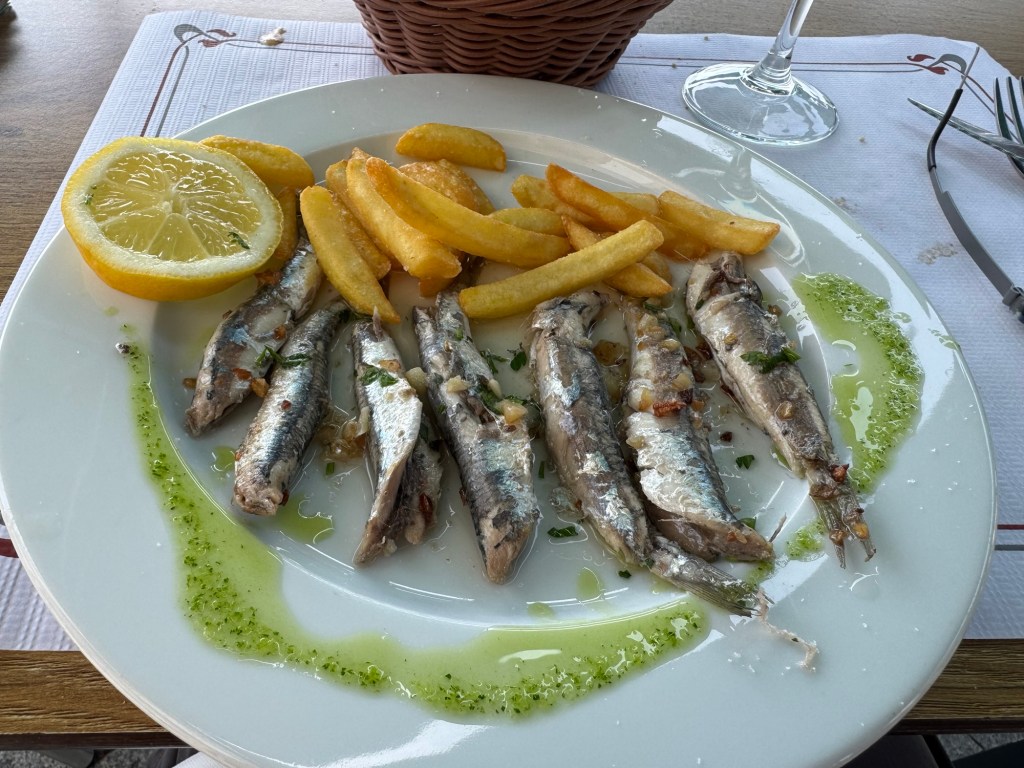
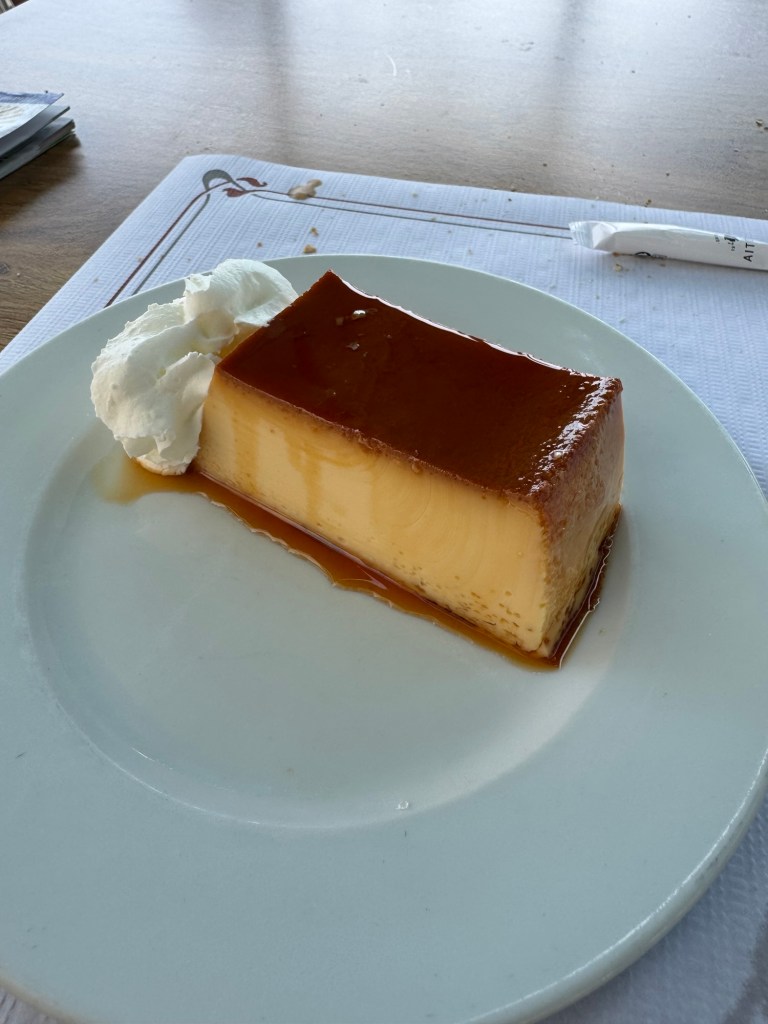
It was 1:30 when I arrived at Orio’s plaza major. Tables at all but one restaurant were taken. Lucky for me. An 18 euro lunch menu was offered: bean soup (a tureen that yielded three bowls), grilled anchovies, flan and a glass of vino. All that I could ask for —- and for the price! Sitting under an umbrella by the river was heavenly.
Tureen Of Bean SoupOne Of Three HelpingsGrilled AnchoviesFlan
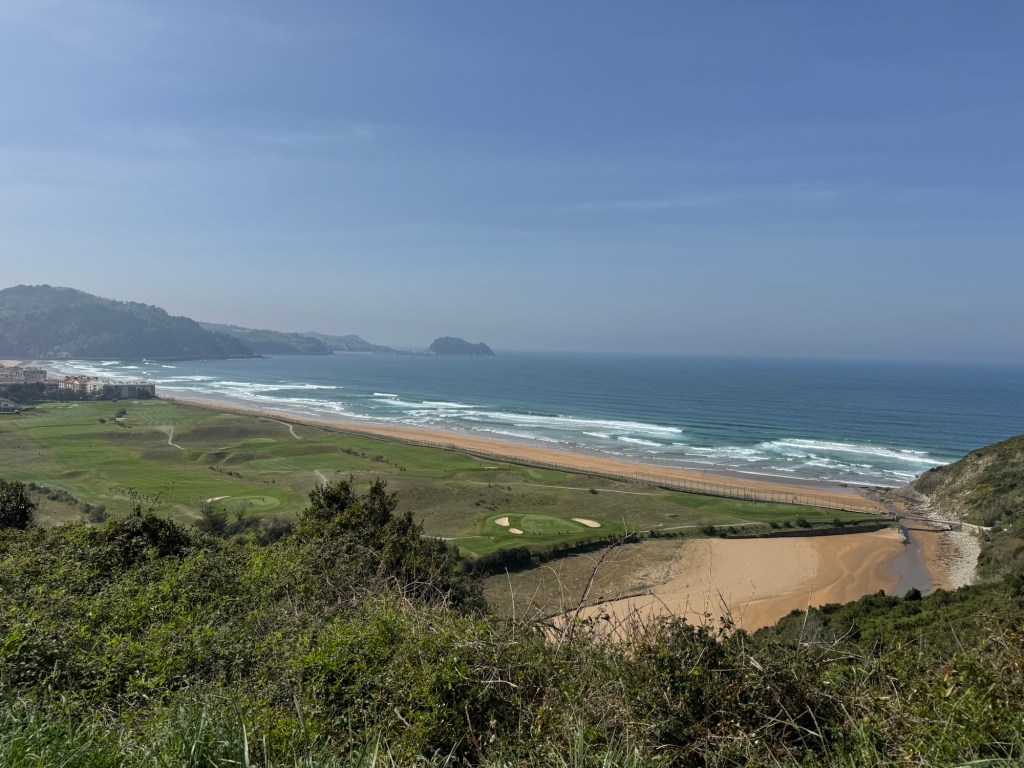
I was now revived for the final four miles to Zarautz which of course had a 500 foot climb up a hill. The view on the other side was the beach at Zarautz. The wind was stiff with clear skies above. What a magnificent site. Note — the three light dots in the foreground were bunkers surrounding a green on the local golf course.
Beach At Zarautz
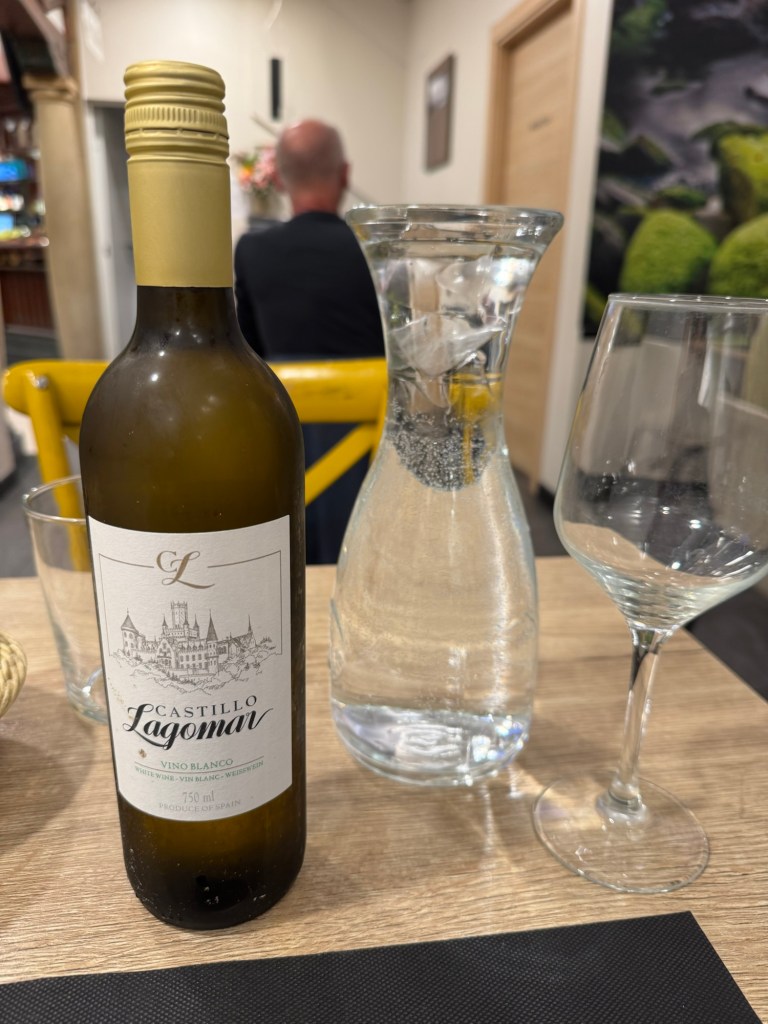
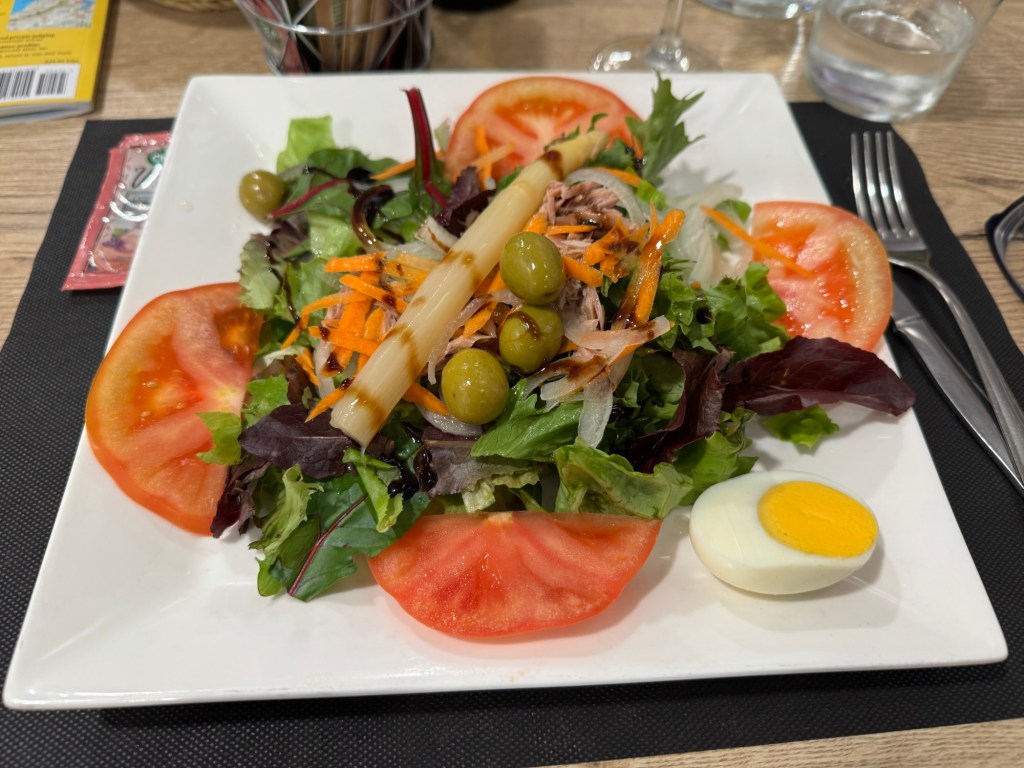
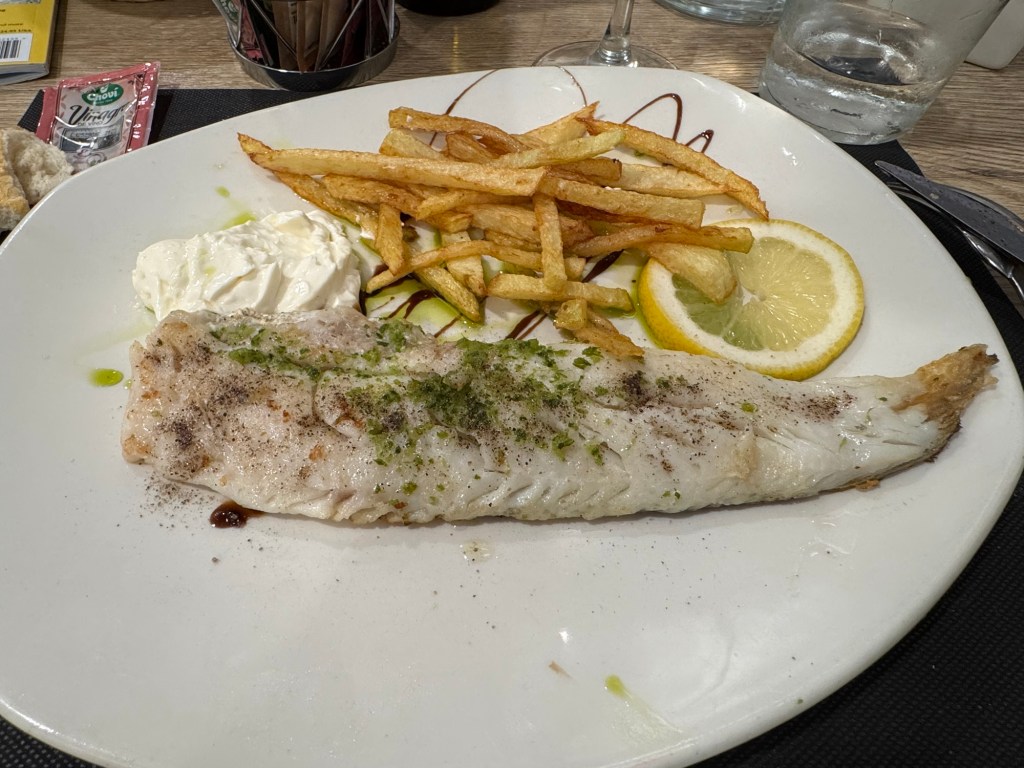
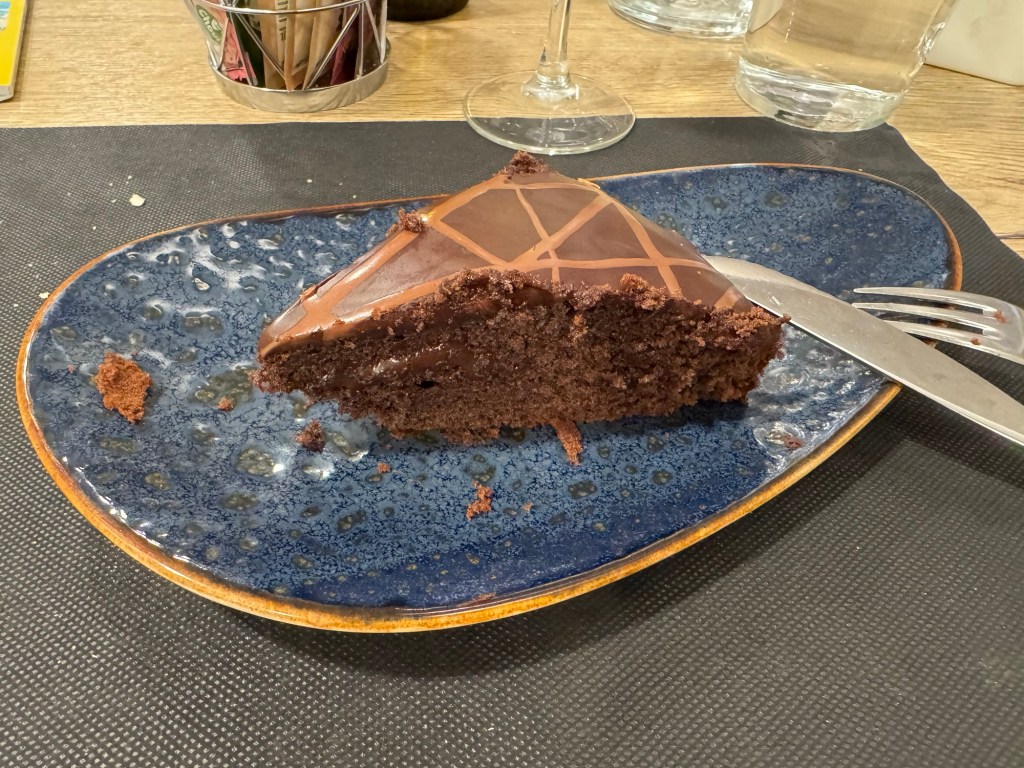
Although today’s walk was easier than yesterday, my legs were pretty sore at the end because of the ups and downs of the past two days. Three more challenging stages await. In the meantime, I relaxed through a three course dinner that included a bottle of wine. I shared the last quarter of the bottle with a diner a few tables away. It was a light white wine at 10% but it paired well with the choices I had made — 18 Euros.
Local VinoInsalata Mixta Grilled HakeChocolate Cake
With a full belly, I was ready for bed. Not quite because this entry was yet to be written.
The start point for the Camino del Norte is the bridge over the Bidasoa River that divides France and Spain. I took two days to reach it.
I decided to chronicle how I reached the border in order to help others with detailed information because the guidebooks were inadequate on how to do so.
After my flight from Newark to Madrid, I went through a new passport control system in Terminal 1 of the Barajas airport. At a gate similar to those in a subway, I scanned my passport, put four fingers of my right hand on a glass plate to record my prints, and smiled for a camera. Once the gate opened, I walked to the booths where the border police stamped my passport. More surveillance.
I then boarded the free airport shuttle outside of Terminal 1 for the ride to Terminal 4 and the long walk to the bus terminal located about a half a mile away along a covered walkway.
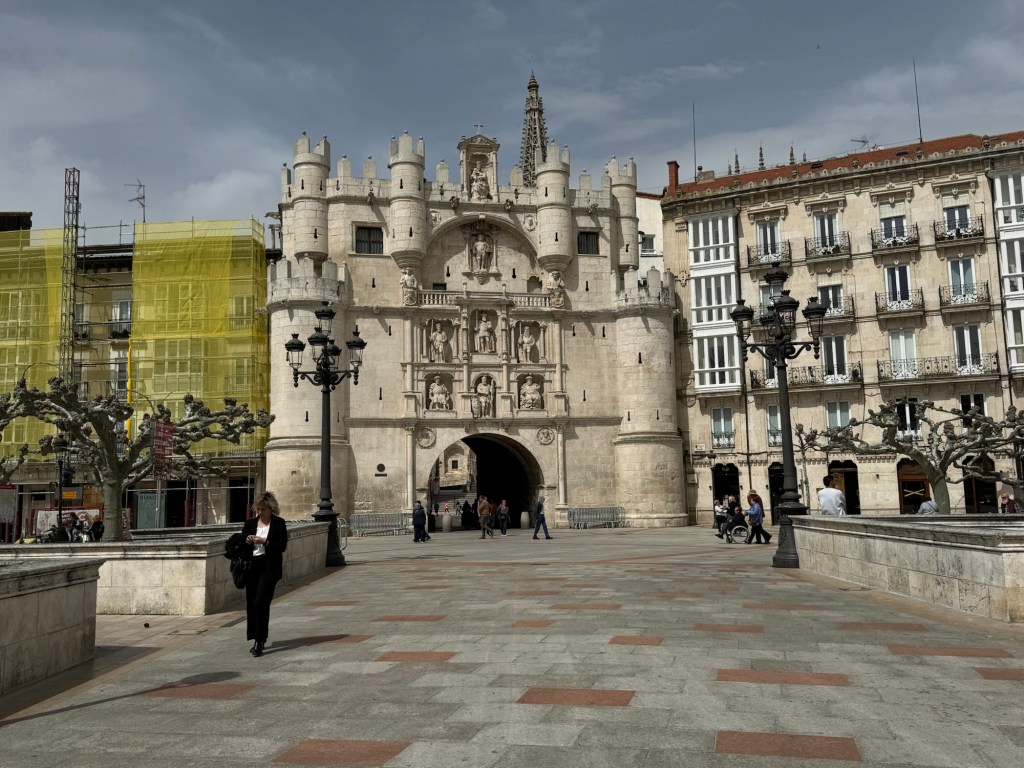
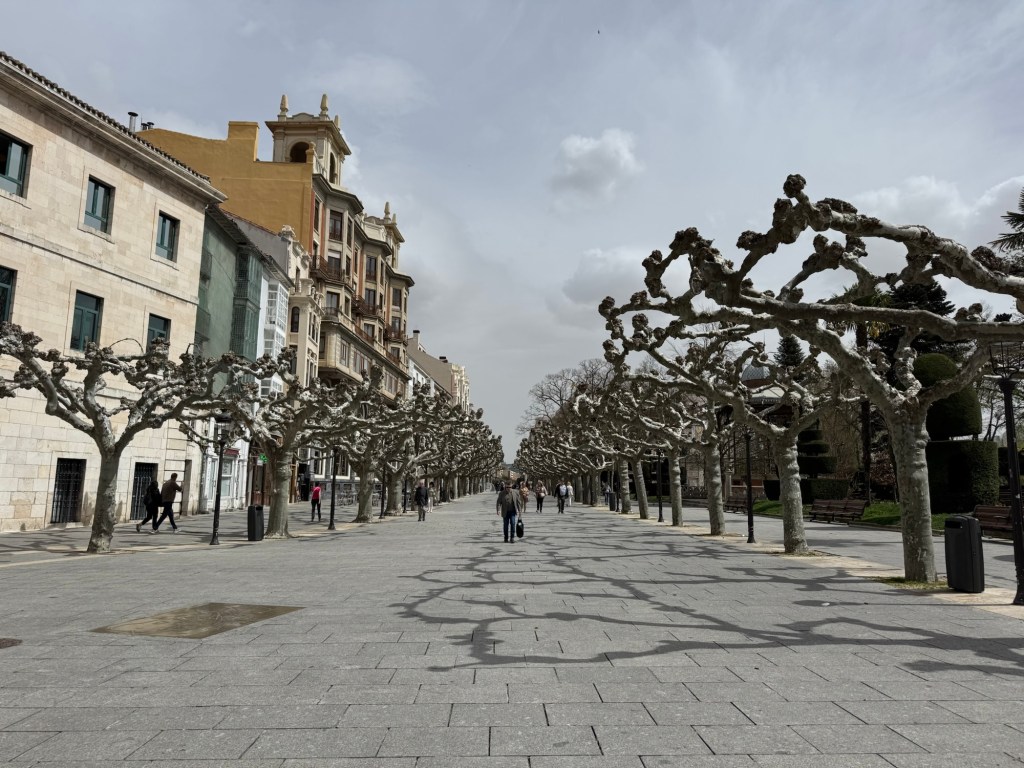
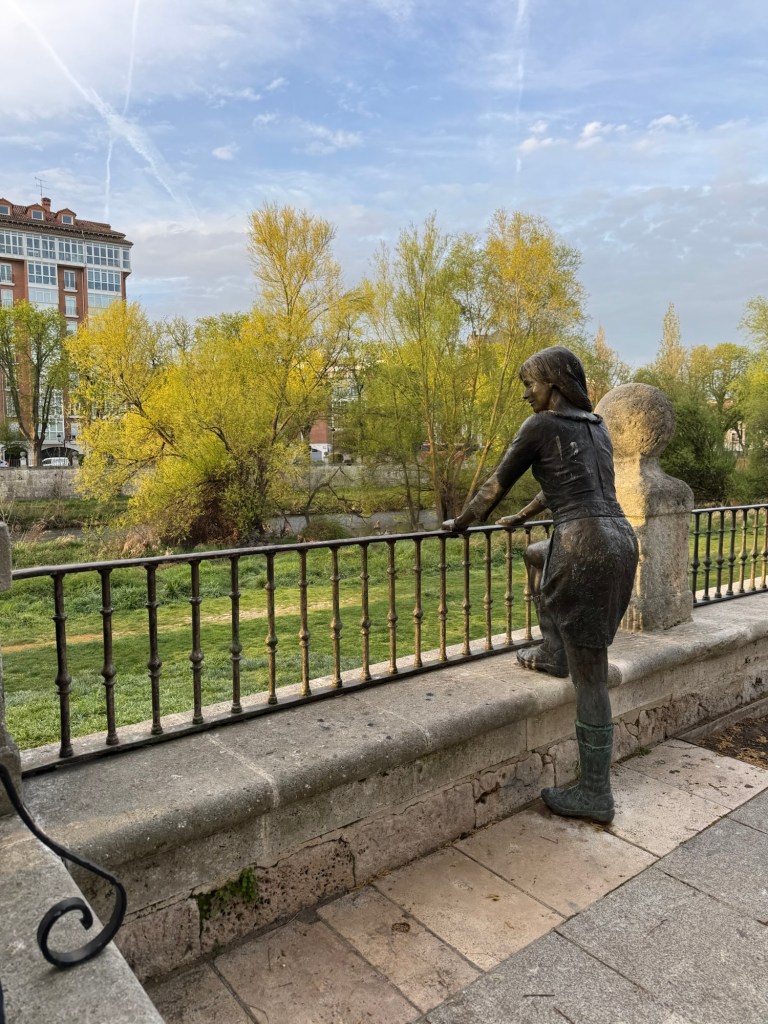
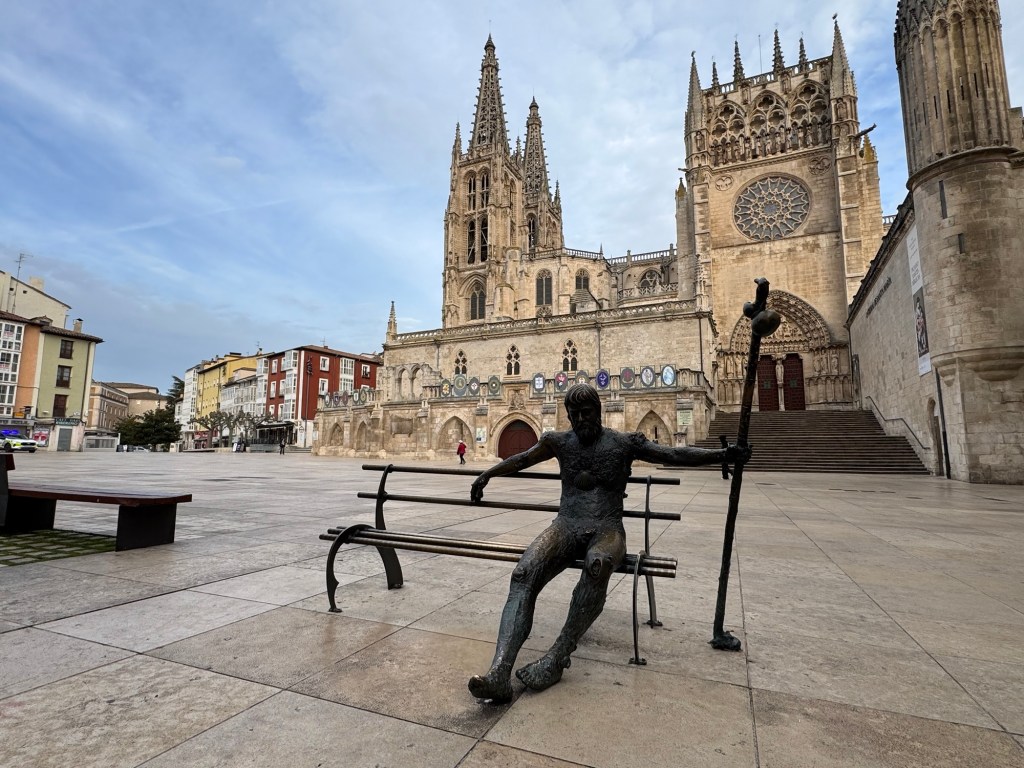
I chose to stop in Burgos — about a 3 hour bus ride from Madrid — the halfway point to San Sebastián (Donostia in Basque). One can choose to fly to Donostia from Madrid. But I love Burgos for the friendly people, its old town and walk along the river that runs through it. The Burgos Cathedral is a World Heritage site and its main gate was once part of the wall surrounding the city. The bus station is less than a half mile from the main gate.
Burgos Main GatePark Along The RiverWalk Next To The RiverBurgos Cathedral
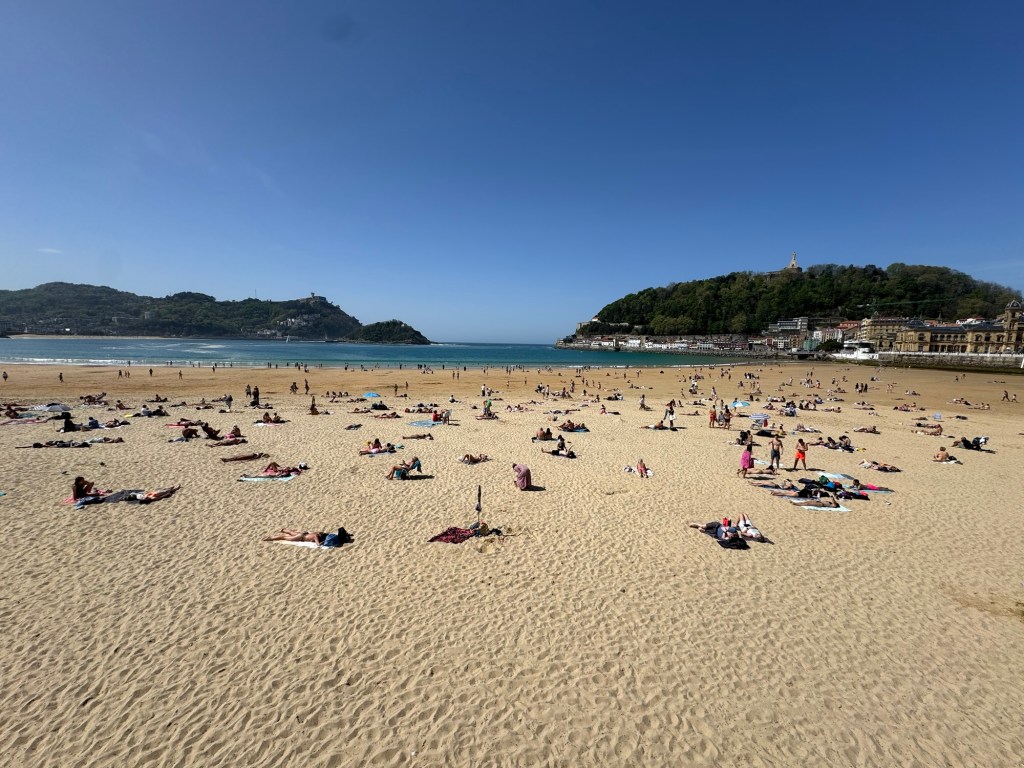
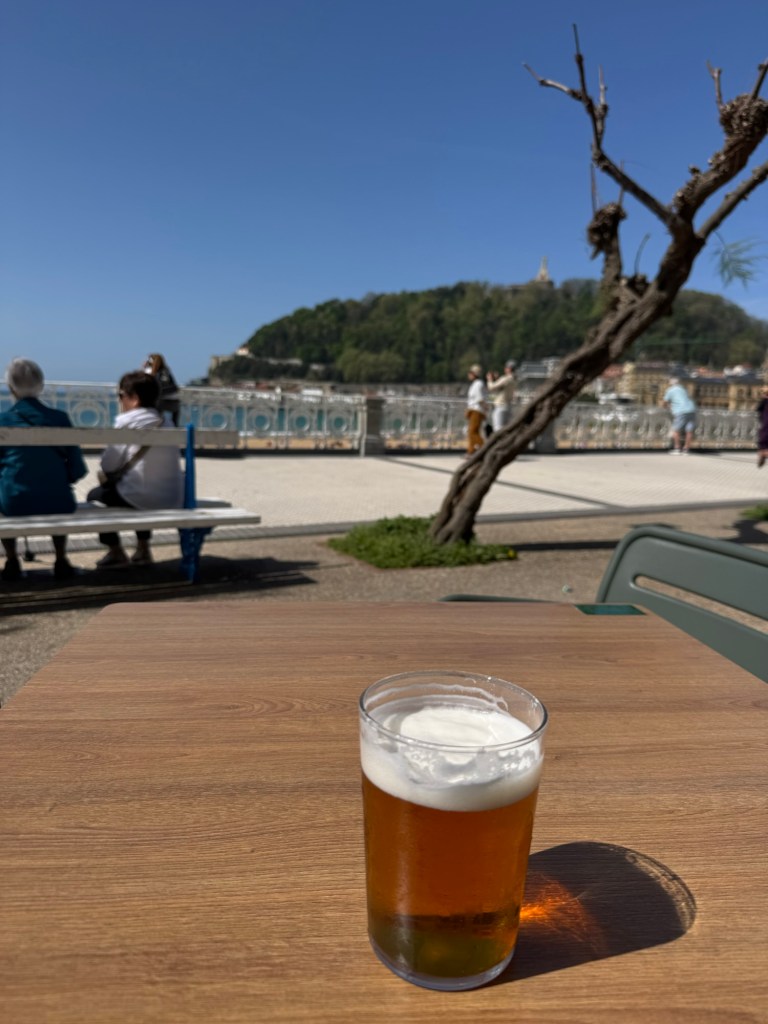
The next day, I arrived mid afternoon in Donostia. The sun was bright and the sun worshippers were soaking up the rays. I enjoyed the view and started with my first beer on Camino. Thanks Laird for starting the tradition.
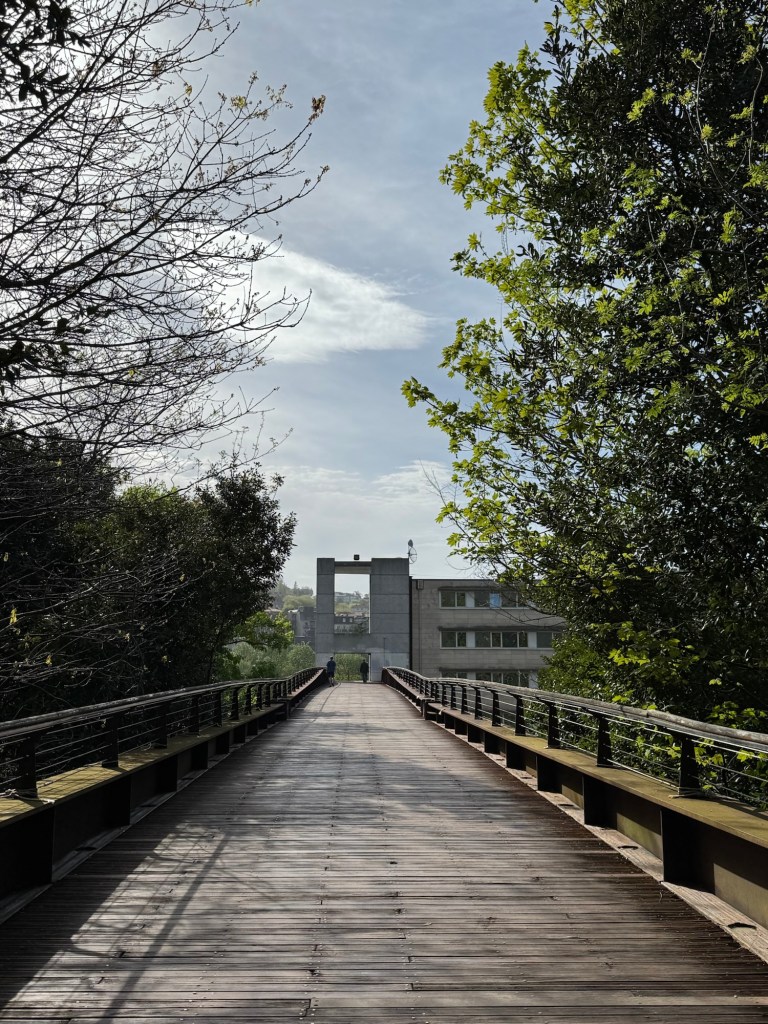
Donostia BeachFirst Cerveza!Walk Outside Of Old Town
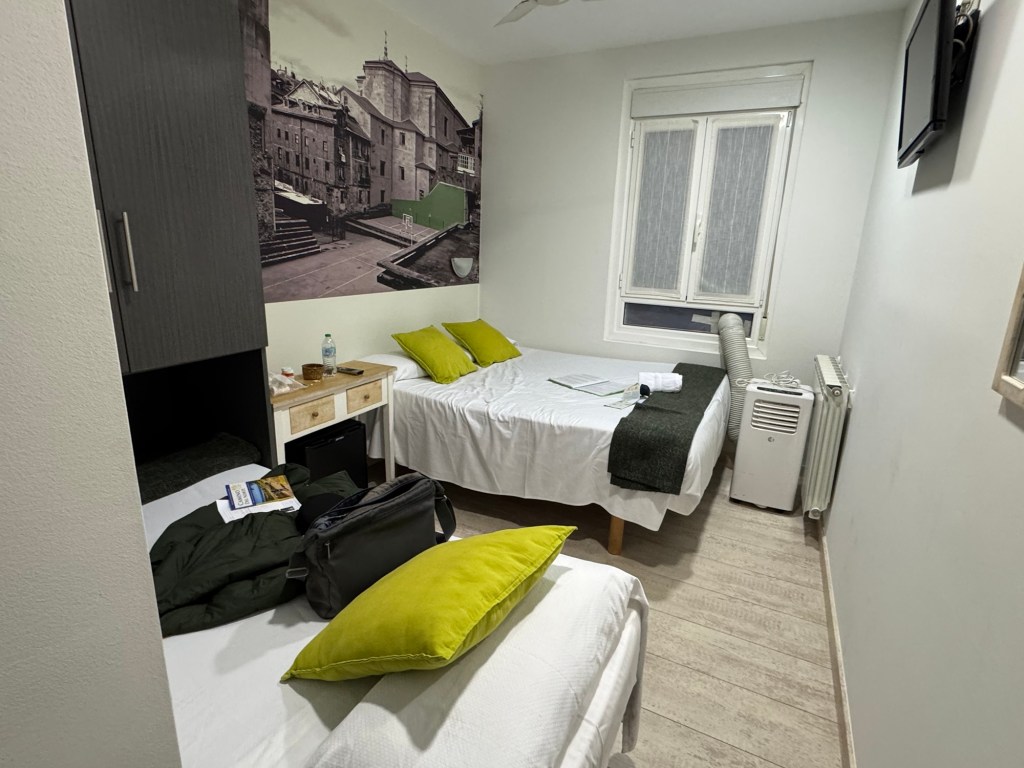
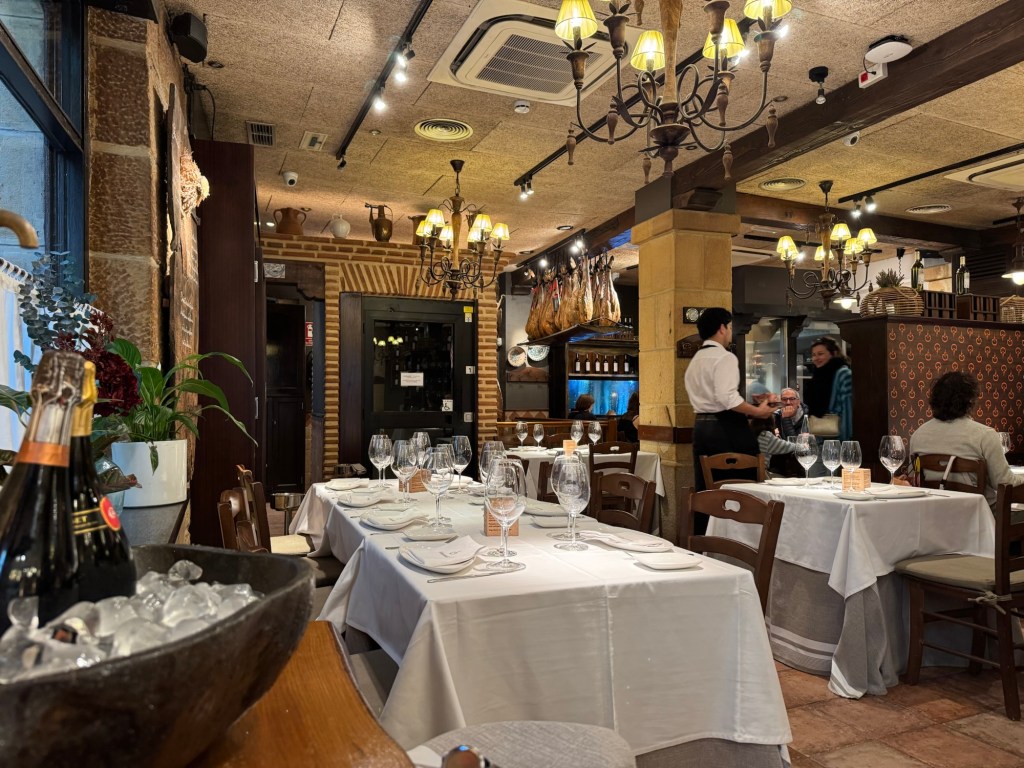
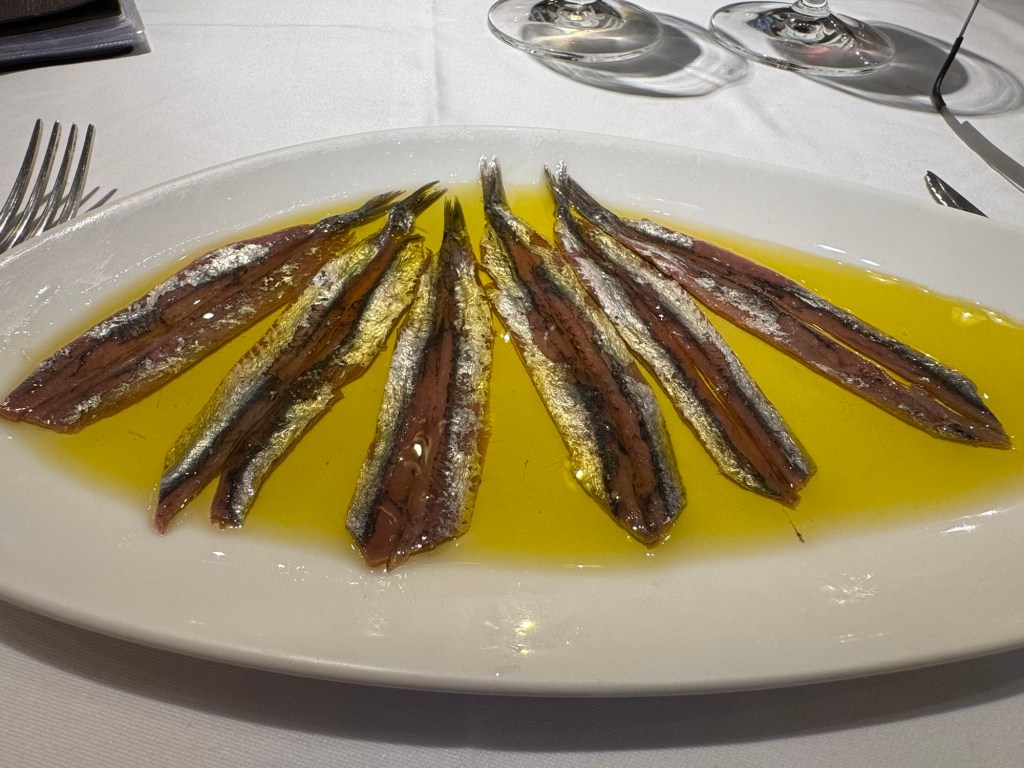
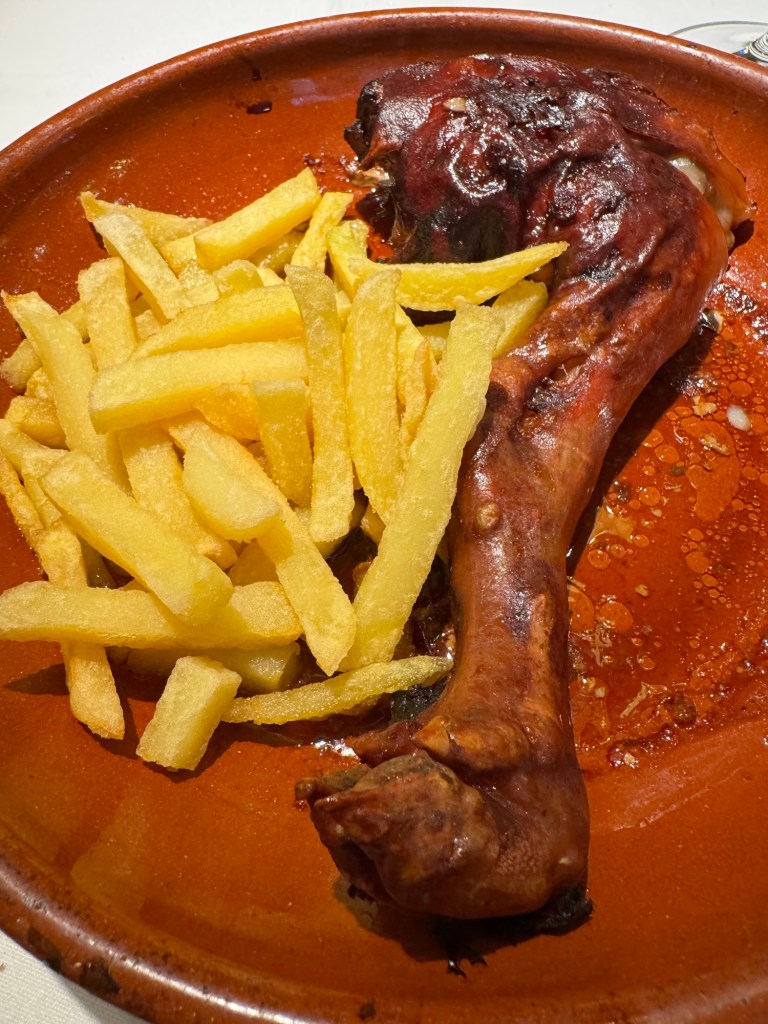
Before dinner, I walked around areas outside the old town and corniche. Dinner time in Spain still starts around 8:00 PM. One can taste pinxtos (aka tapas) at happy hour and make a meal of them. I opted for an early dinner at Casa Gandarias down the street from my pension located across from La Vina, a famous bar in Old Town. I could not resist the anchovies (with a glass of Albariño) and the roast suckling pig (with a glass of Rioja) which I first tasted 52 years ago at Casa Botin in Madrid. No dessert.
Room At Pension KaxhaCasa GandariasAnchoviesRoast Suckling Pig
Now for the Camino information.
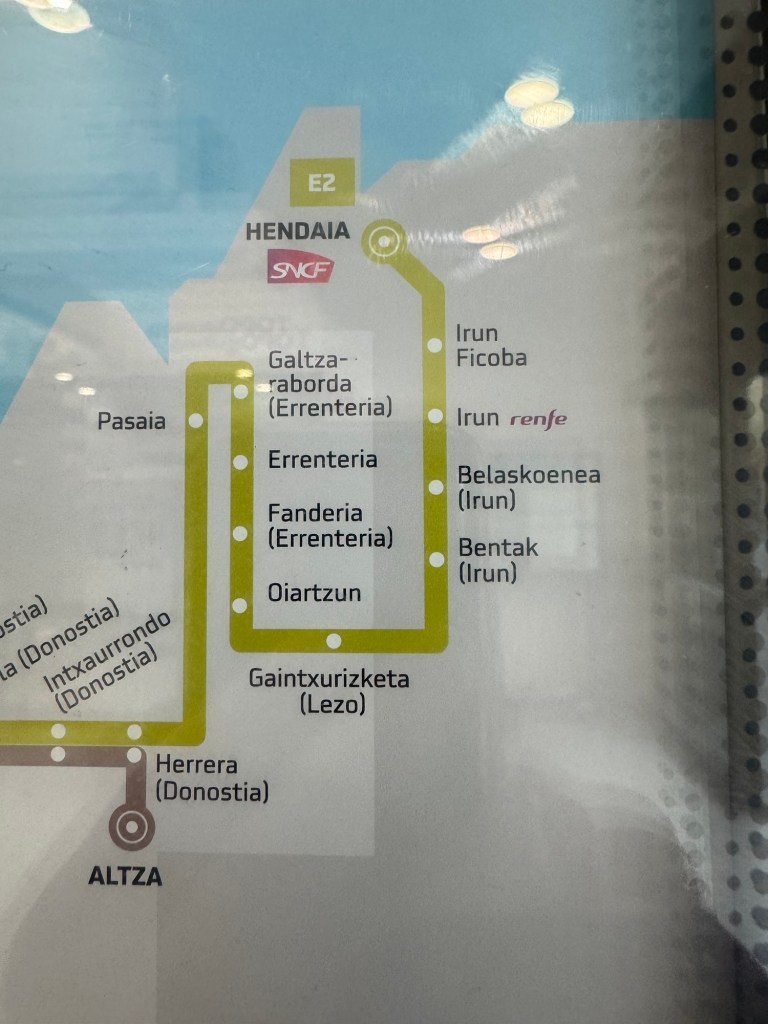
Obtaining a credential was easy. Just go to the information office near the corniche in the Old Town. To get to the French-Spanish pedestrian bridge, walk to the Amaro station (about one mile south from Old Town) – a one way ticket is 2.90 Euros — route E2. Get off at the Irun-Ficoba station, the last stop. Ya Esta. Voila.
E2 Route
This morning, I was on the 8:45 train. By 9:15, I was at the border which is about 200 meters from the Irun Ficoba station. A kindly cyclist took my photo at the start point, a sign post that on one side displayed the coat of arms of the RF (Republique Francaise) on one side and Spain on the other.
The Start Point
I wound my way through Irun, first along the river and then the busy main street on alert for the yellow arrow of the Camino.
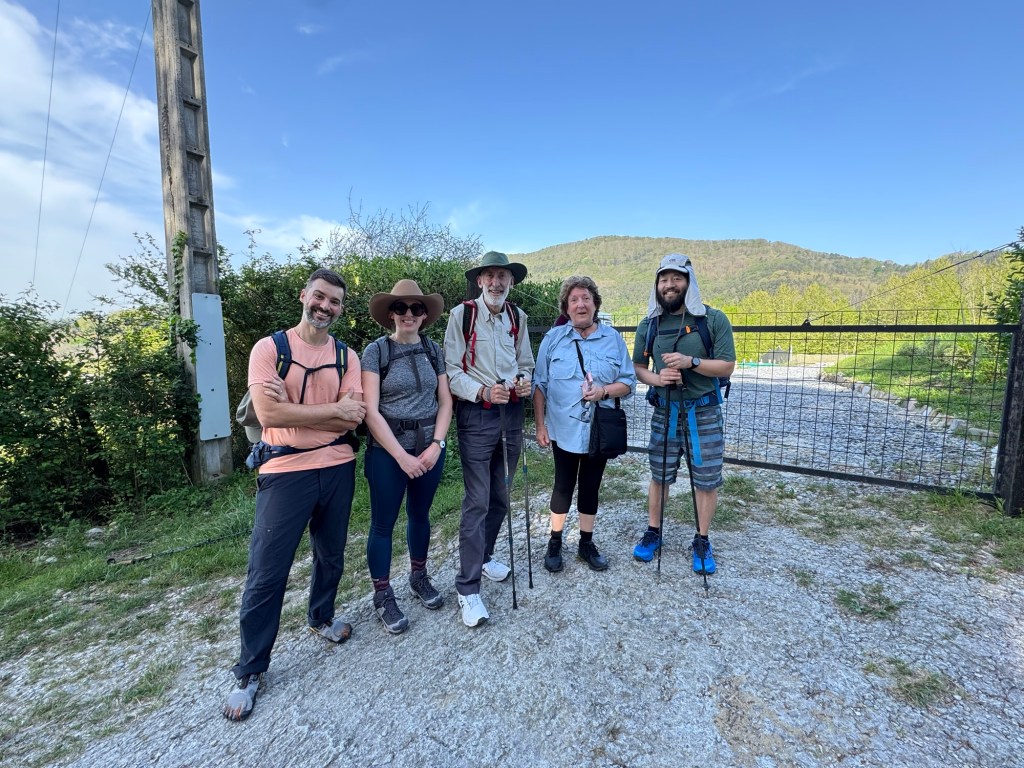
Bidasoa RiverFind The Arrow — Test #1Find The Arrow — Test #2Juan, Genevieve, Tim, Margaret, Kevin
At the edge of town, I spotted a group of pilgrims. I followed them as we left the main road for a dirt road that cut through farm land. I caught up with them. Four of them were Australians; one, a fourth generation Japanese American who grew up in Gardena, CA and now lives in Basel, Switzerland. All but one had doctorates; the other an MD. They are walking the entire Camino del Norte over the next two months.
View From Guadeloupe
We reached the church of Guadeloupe by 10:30. I said farewell because I had to make time in order to complete the stage by sundown. They were stopping overnight at the halfway point.
Less than a half mile later, I turned right to climb up the mountain to take the high route — 100 meters up in about 400 meters. As the guidebook stated — steep!
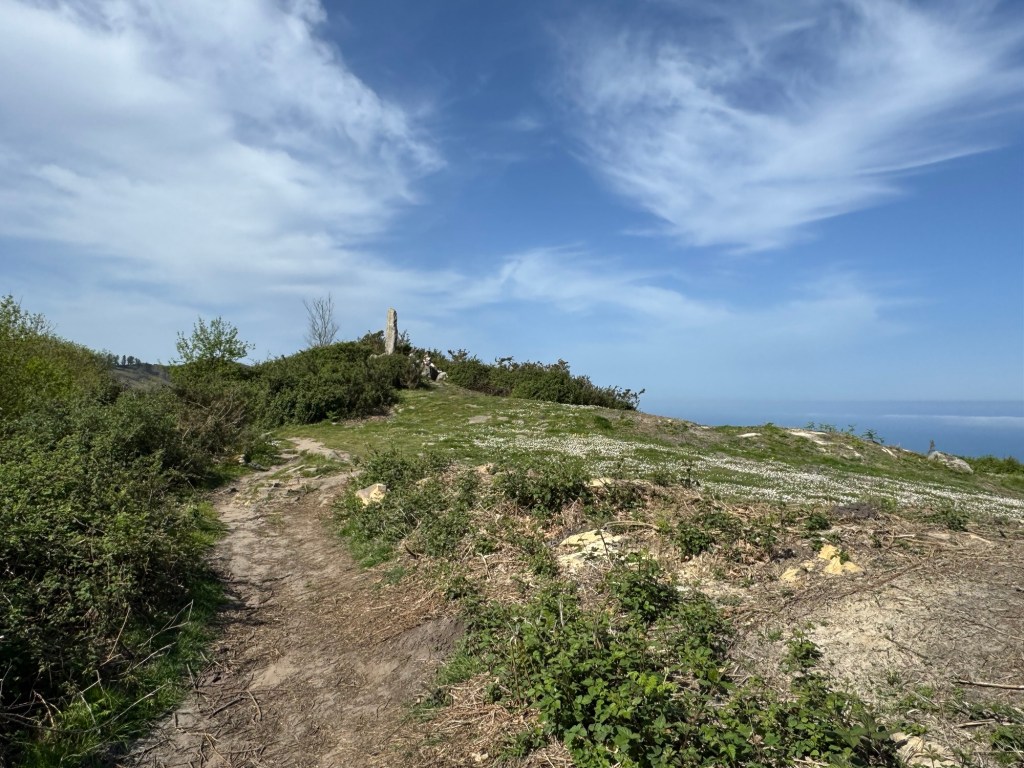
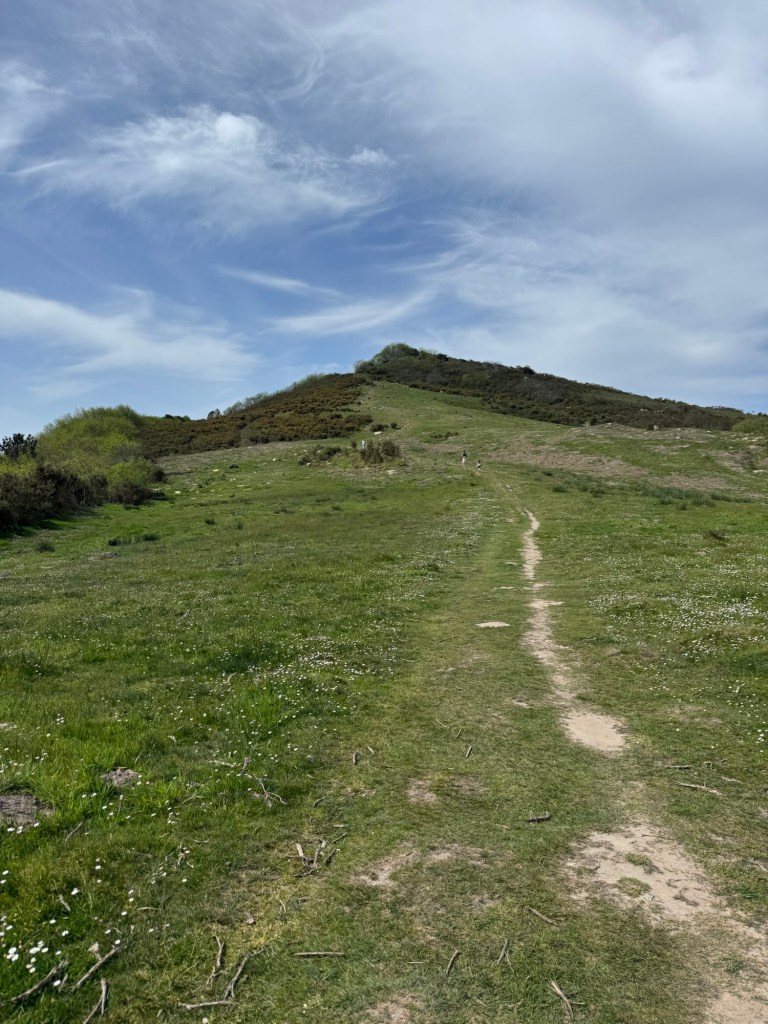
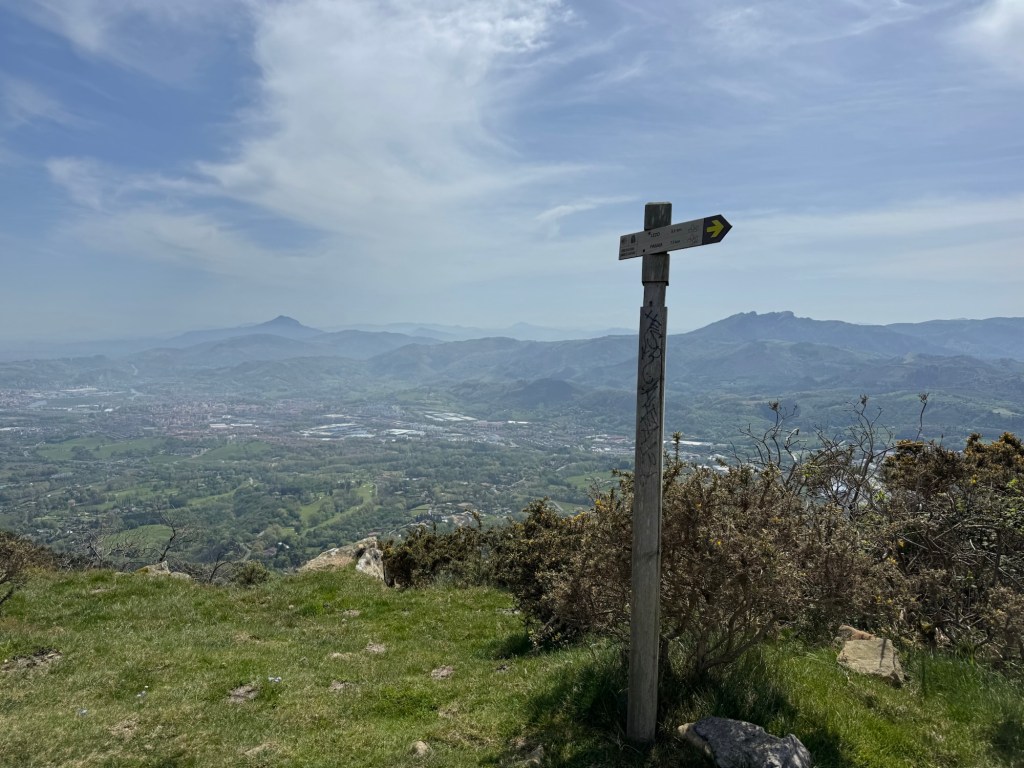
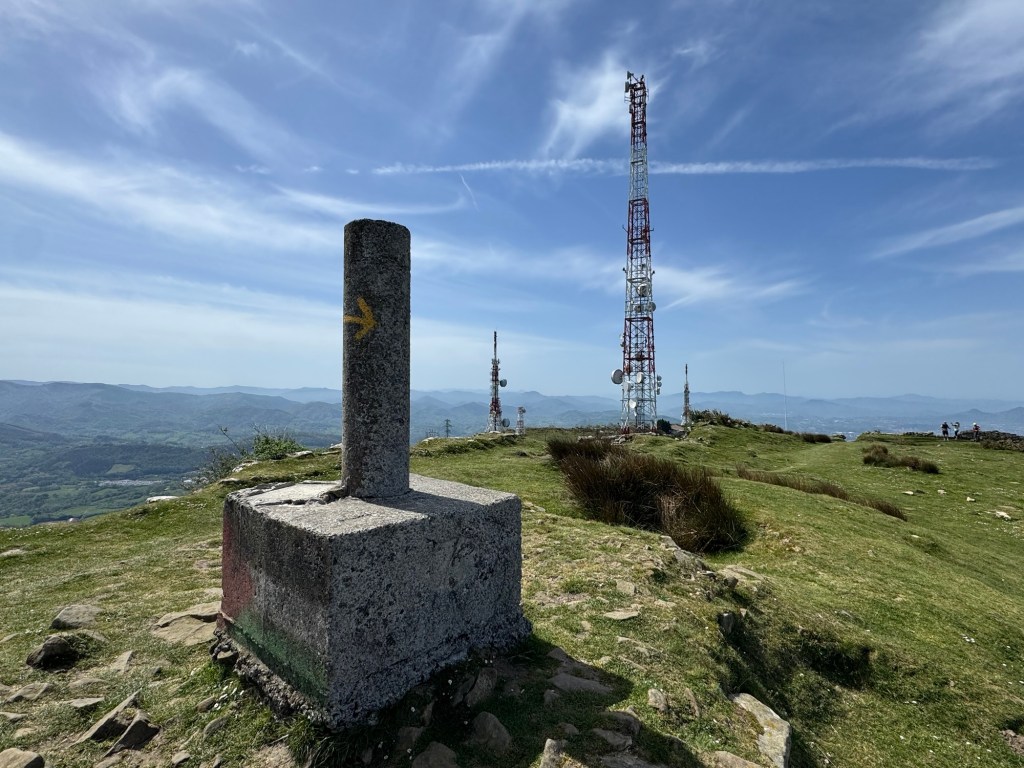
I expected more stretches upward. They were mostly gentle waves of up and downs interspersed with long steep rocky climbs. After the third one, I was pretty much spent and shared some rest time with the communication towers at the top of the ridge. This segment was as hard as the climb over the Pyrenees or the O Cebreio on the Camino Frances and several of the mountains on the Camino Primitivo. Certainly a challenge.
Top of Climb #1Climb #2Near The TopAt The Top
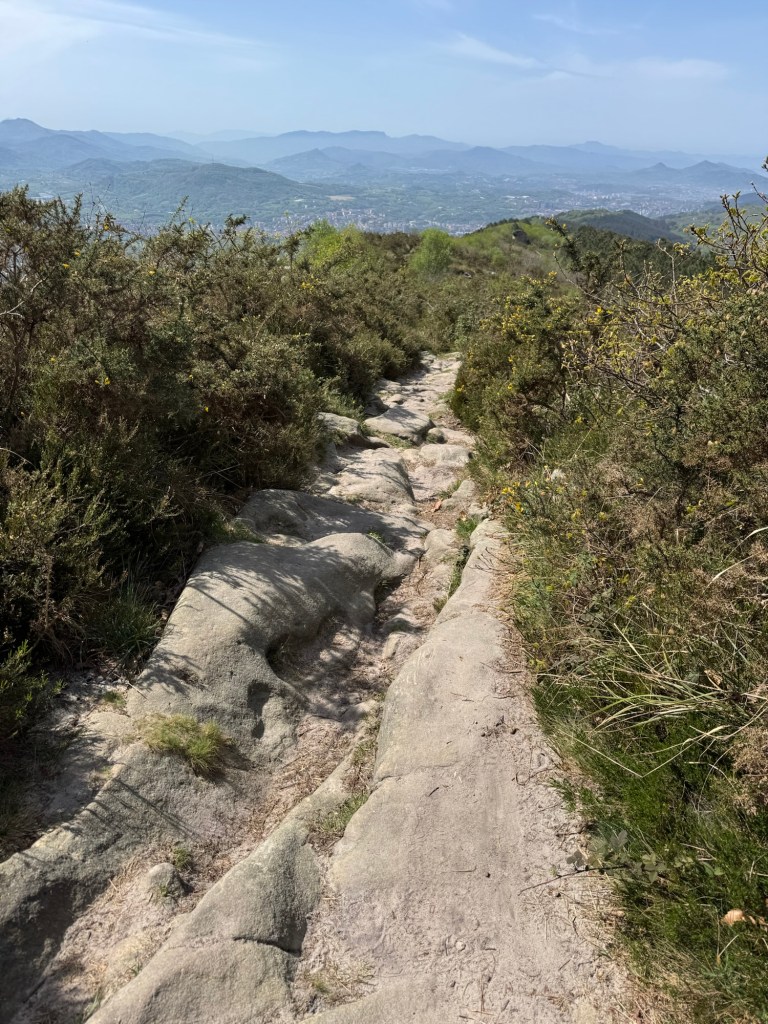
It was around 1:00 PM. I was not even halfway. The downhill was severe at some points — very rocky, similar to the rutty terrain in the Pyrenees.
Unpaved Trail
An hour and a half later, I was off the mountain in Lezo with a beer in hand and a slice of tortilla. What a welcomed relief.
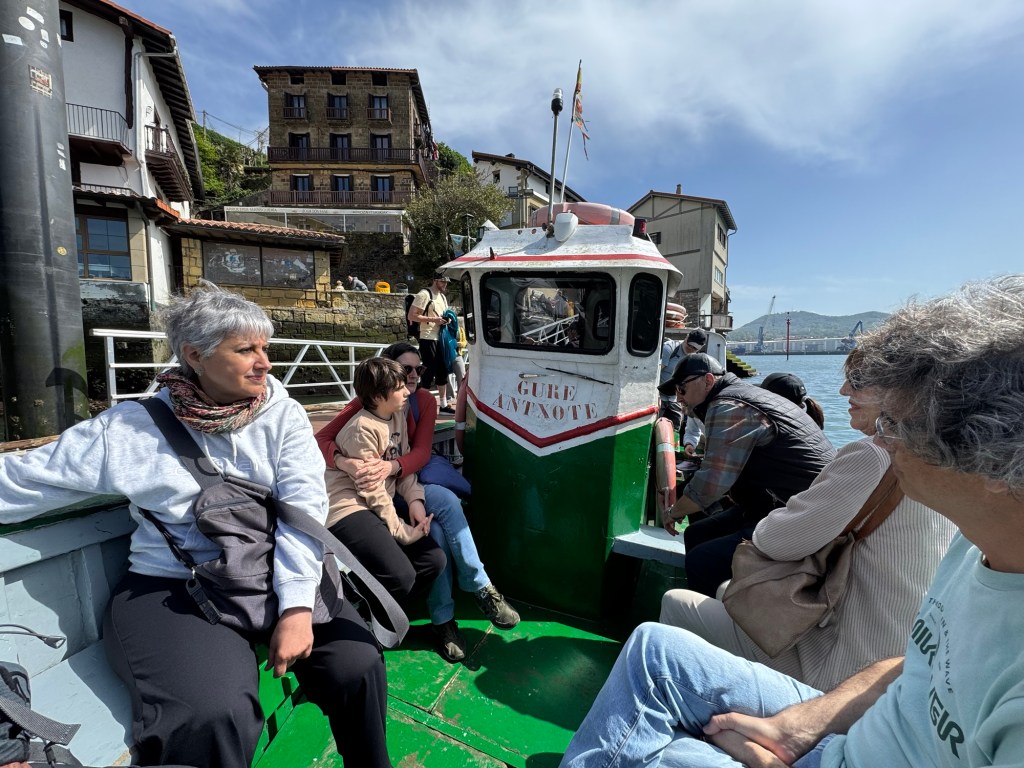
However, another mile and a half was ahead to reach the ferry which was a small boat. The fare was 3 euros, cash. People with credit cards were turned away. Cash is king here.
Crossing The Channel
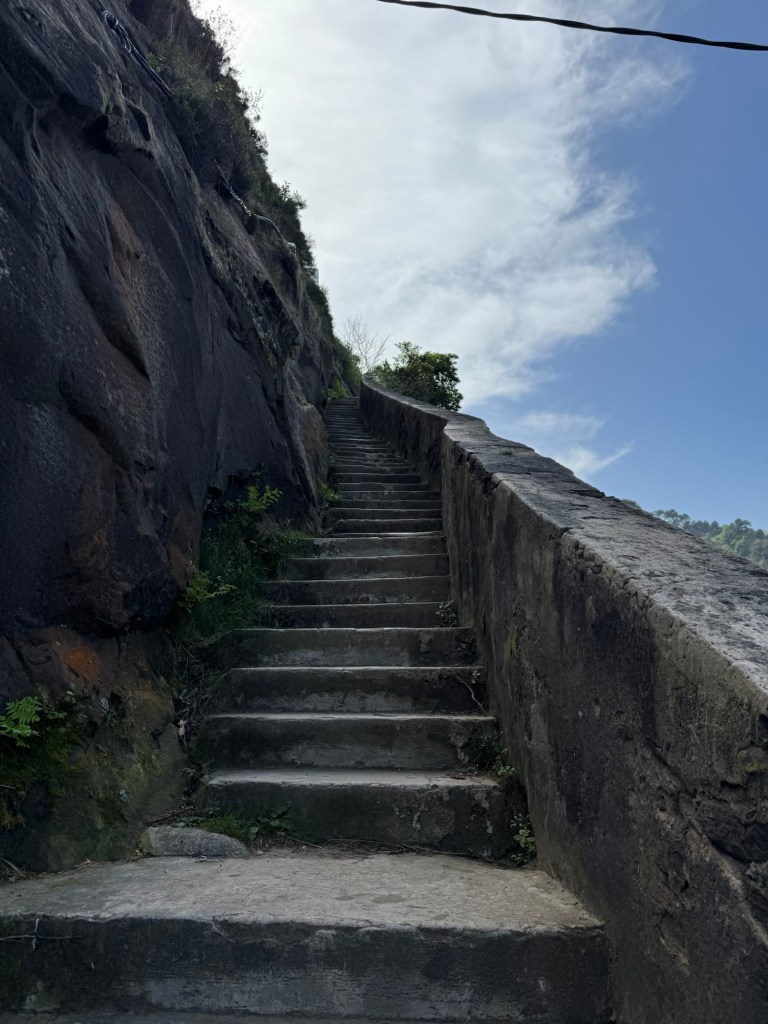
You might think that the upward climbs were over? How about a 400 step stairway! You can imagine what went through mind.
Stairs To Heaven
The trail continued in parkland where I encountered assorted recreational walkers, serious runners, and dogs. Unlike at home, these dogs were all business and off lease. No petting or kissing.
It was now 4;00 PM. I sat by the road inhaling raisins and pumpkin seeds when a pair of Camino hikers came by — John from England and Daniel from the Netherlands who later informed me that the Serbs displaced the Hollanders as the tallest people in the world on average. No way. Daniel was an excellent example of tall Dutch people.
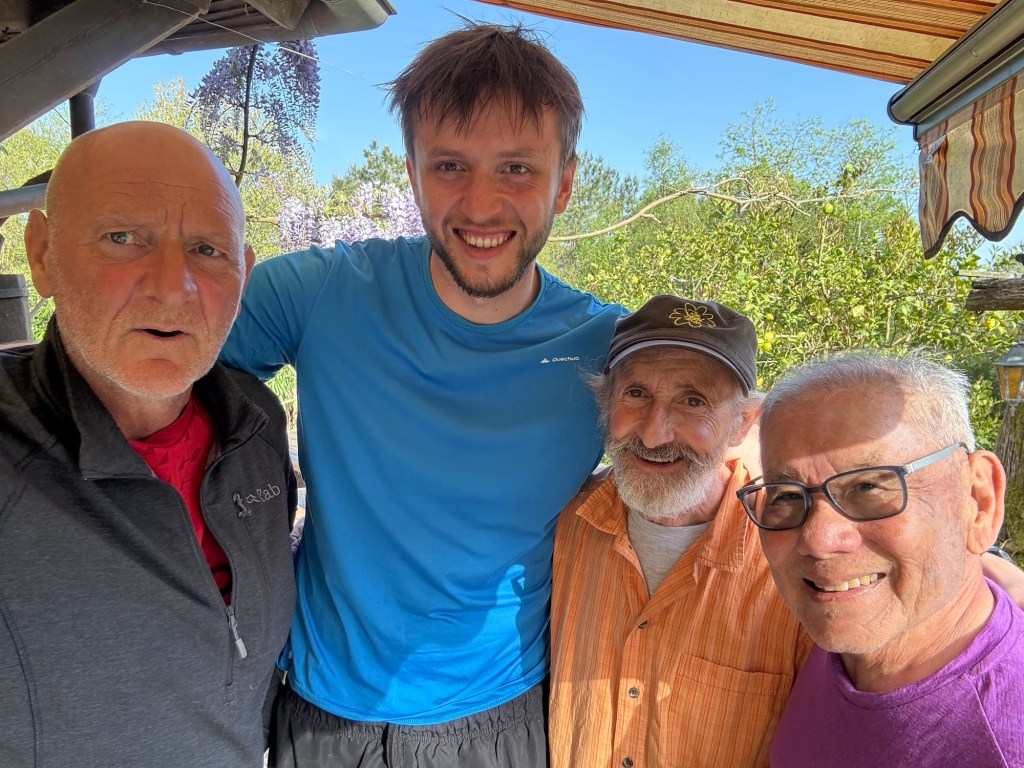
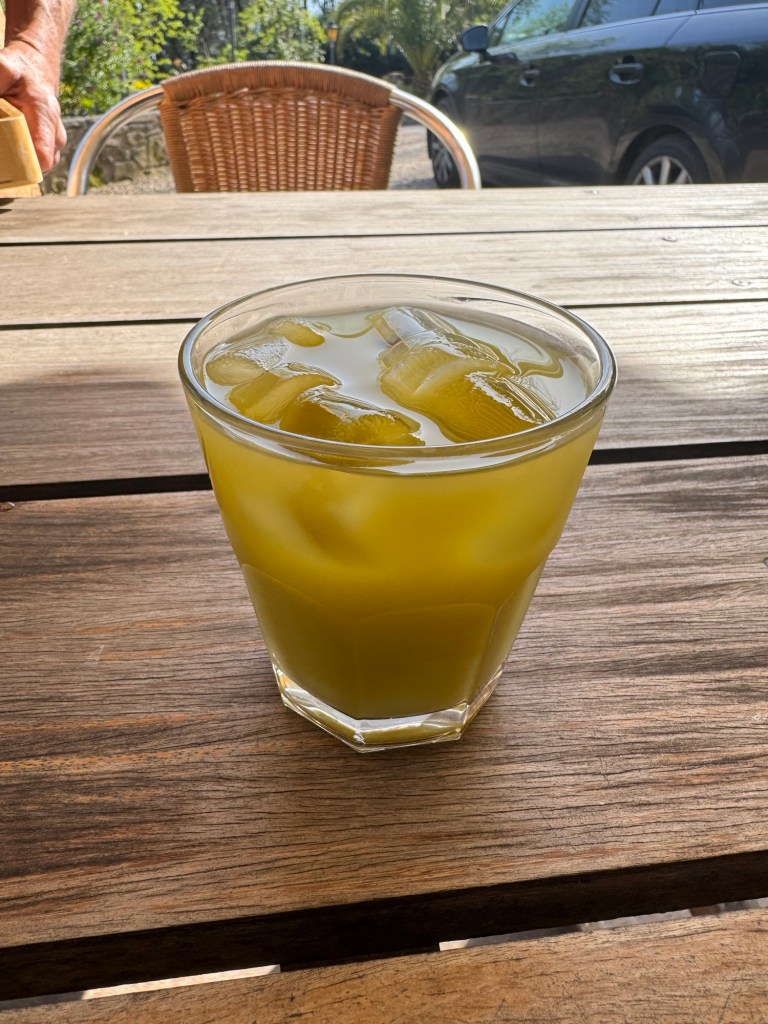
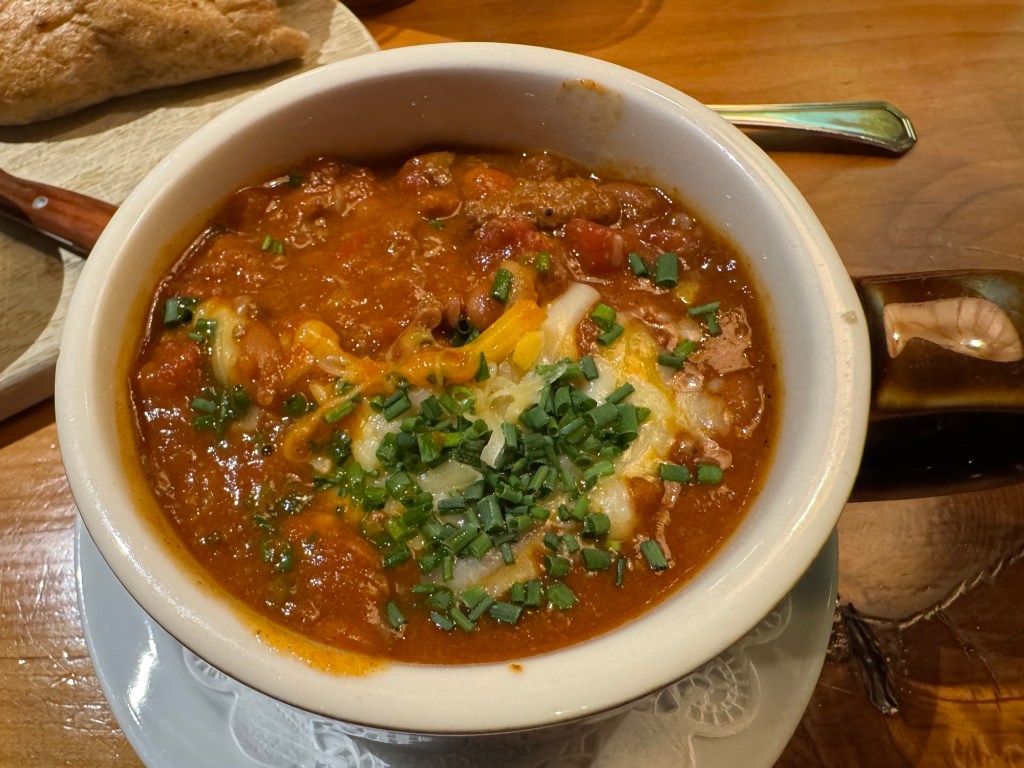
We walked along together and decided to stop for some beer at a B&B along the road. No beer here but iced matte was offered. We were skeptical at first about the drink. Matte is the go to drink in Argentina. But cold matte? This version was delicious and rejuvenated us for the final two miles into Donostia. Here we are with Pedro who also recommended his commune’s restaurant, the Yellow Deli, in the city. Sounds like old hippy language. I suspect that they were. We arrived there at 7:45. No Basque food here. John and I had chili con carne and Daniel, a Reuben. Even in northeastern Spain, the offerings are global.
John, Daniel, Pedro, RonnyIced MatteChili Con Carne
My pension was nearby. I thought about having a beer to end the journey. Alas, I settled for some stretching, a shower, and bed.