Day 1: A Pilgrim Lands in Japan (4 March 2019)

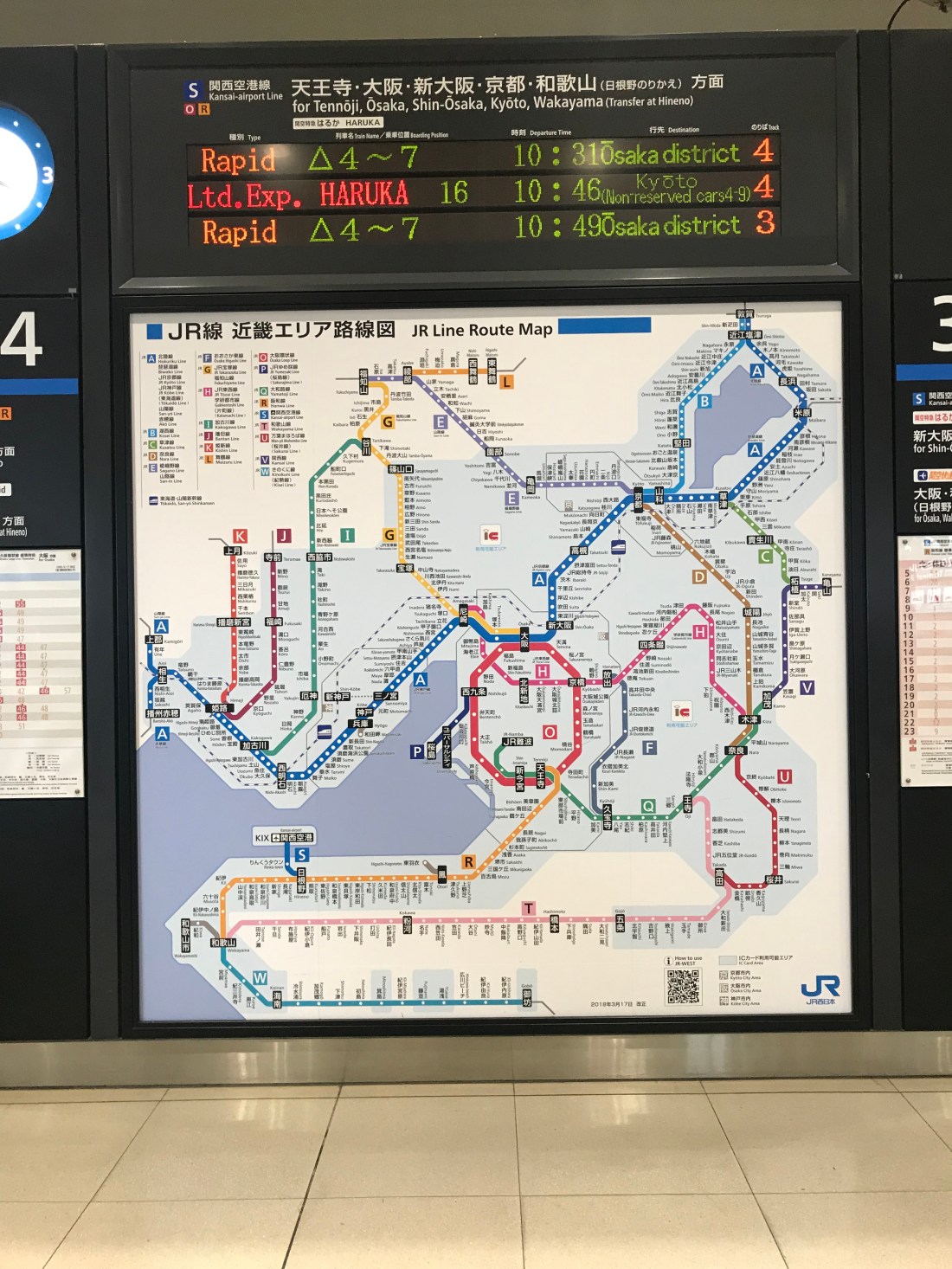
After 19 hours of flying time, I touched down at Kansai Airport. KIX, its airplane code, is located on a man made island about 30 miles south of Osaka Japan Rails (JR) station. If you are a train enthusiast, Japan is the place for you. Photos of the Lufthansa flight at the moment of landing and the JR map of the Kansai region (Osaka, Kyoto, Kobe, Okayama, and Wakayama) are provided below. I boarded the 10:46 Haruka for Kyoto.

As I may have mentioned, you can easily obtain Japanese currency by using the ATM at the post office office or 7-11 (you’ll recognize the sign) on the 2nd floor of Terminal 1. No need to get currency before coming.

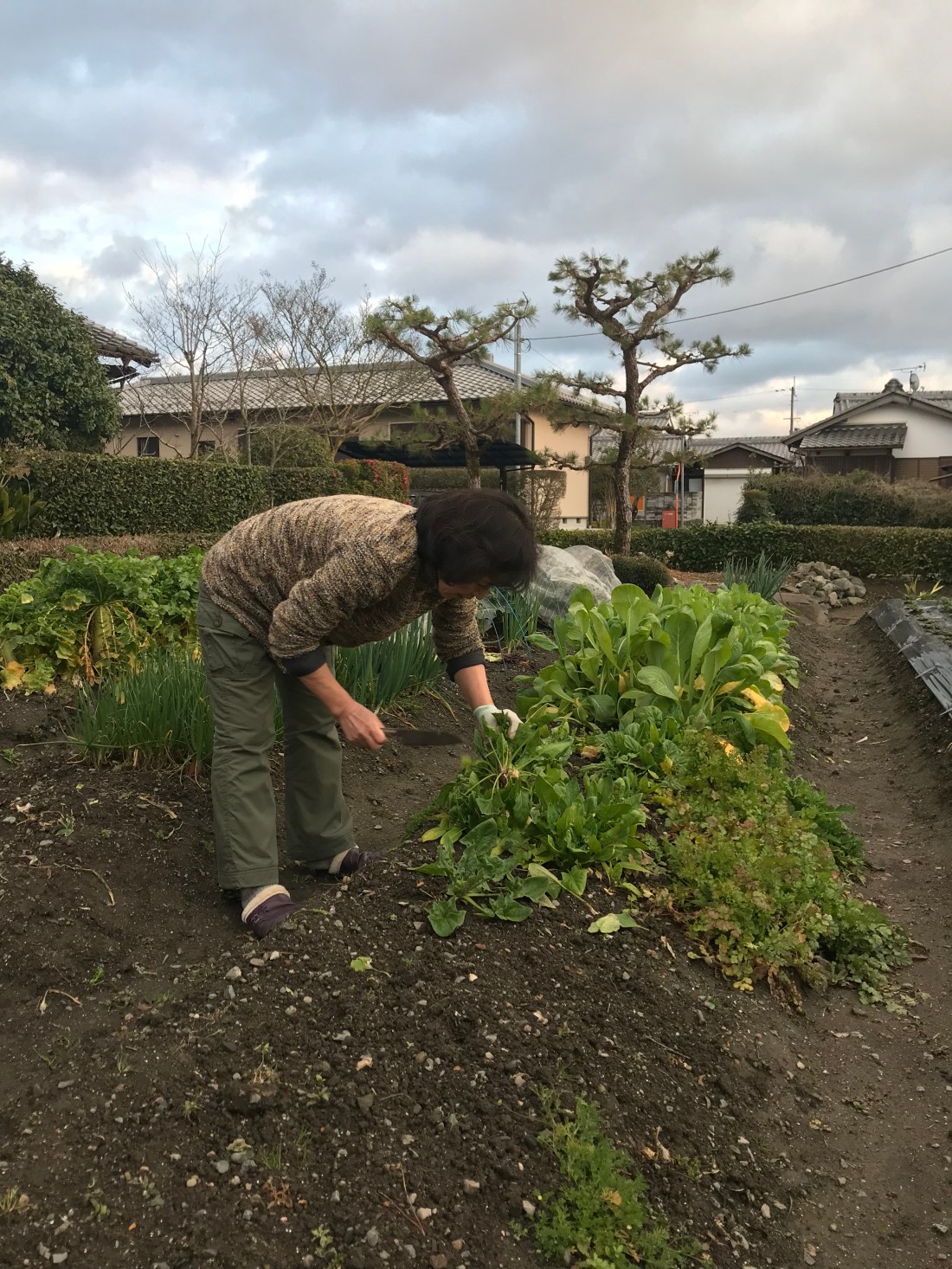
Fukiko met me at the Kameoka train station. She made lunch and dinner which included scallions and spinach from her own garden – that is farm to table! That’s Fukiko digging up spinach from her garden.
Her home has been in her family for several generations. When her parents died, she came “home” to live in order that the home remained in family hands. She will pass along this home to her daughter who lives in Germany. If her daughter decides not to return to Japan, Fukiko’s brother’s son has promised to move his family here. She indeed puts life into the phrase, a house is not a home. I wonder how many of us feel this way.

In between lunch ( a hot bowl of sunuki udon, chicken, an egg, topped with Fukiko’s scallions) and dinner (teriyaki tuna, crab and seaweed salad, spinach mixed with sesame – just like my grandmother’s), we went over the koseki of my grandmother’s and grandfather’s family. See the photo of dinner below. 80 more days of this cuisine! Fukiko is holding a lacquer cup with sake brewed in her village – delicious at room temperature.

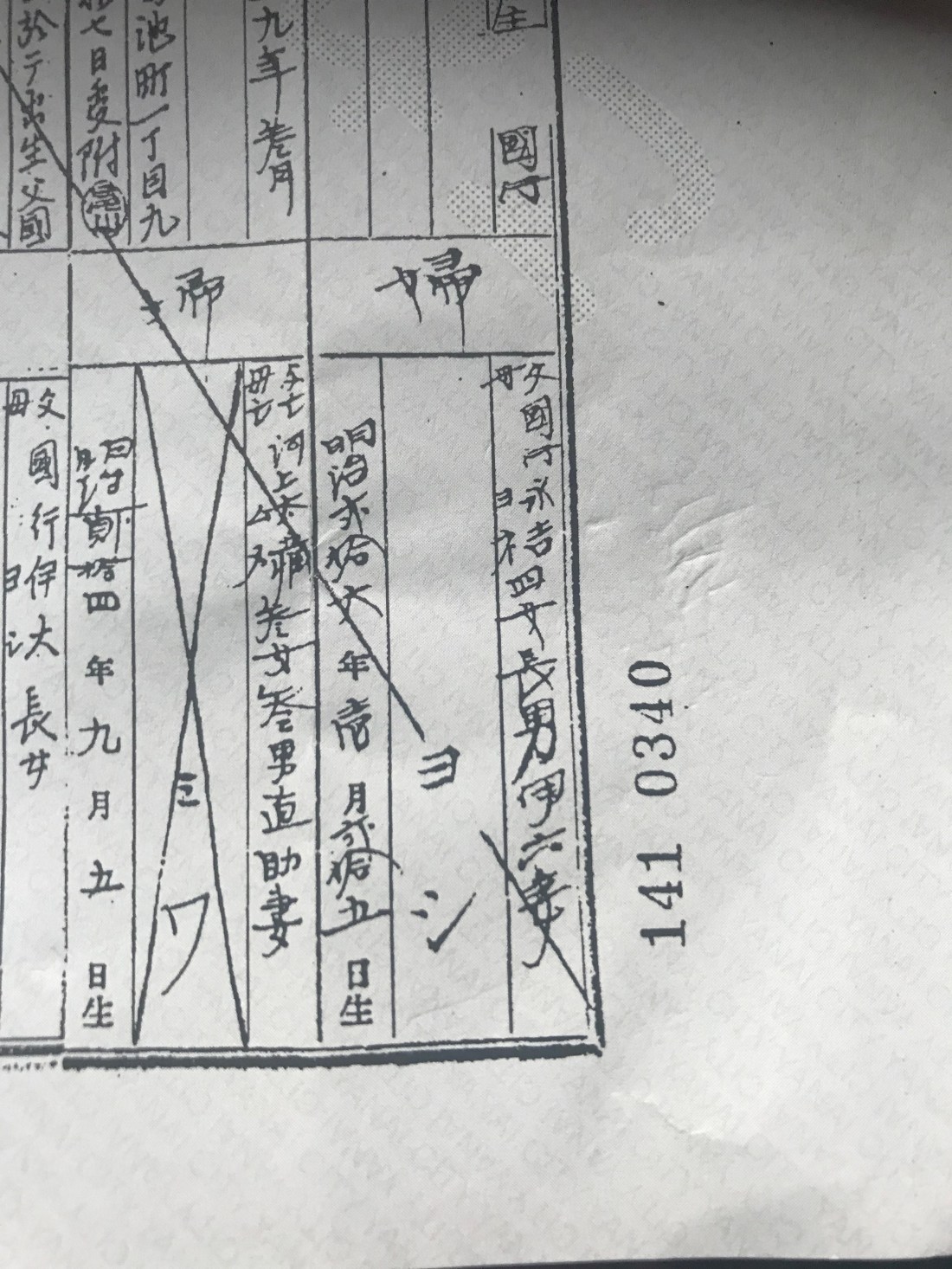
I felt like a guest on Henry Louis Gates’s Finding Your Roots program. The Yanai City Hall provided two separate records, each three pages long. One record was of my grandmother’s family and the other of my grandfather’s. The connection between the two was, of course, my grandparents, both with the family name Kuniyuki. In a population of 110 million Japanese, only 420 families currently have this last name with most living in Yamaguchi, southern Honshu, and Kagawa, one of the four prefectures of Shikoku. Takamatsu where I will be going tomorrow is the capital of Kagawa.

Yoshi, my maternal grandmother, was the fourth daughter and the youngest of seven children. Iroku, my grandfather, was the first born son in a family of seven. His brother, Tomozuchi, who migrated to the US and known to my sister and me, was the fourth son and youngest in his family. Another surprise was that my mother is recorded in this koseki meaning that she was a Japanese citizen! I had no indeed because my grandparents never wanted to talk about the past. The kosekis only went back as far as 1830, the birth year of my maternal second great grandfather (Kuniyuki Dikki-zo) who relocated from Kobe.

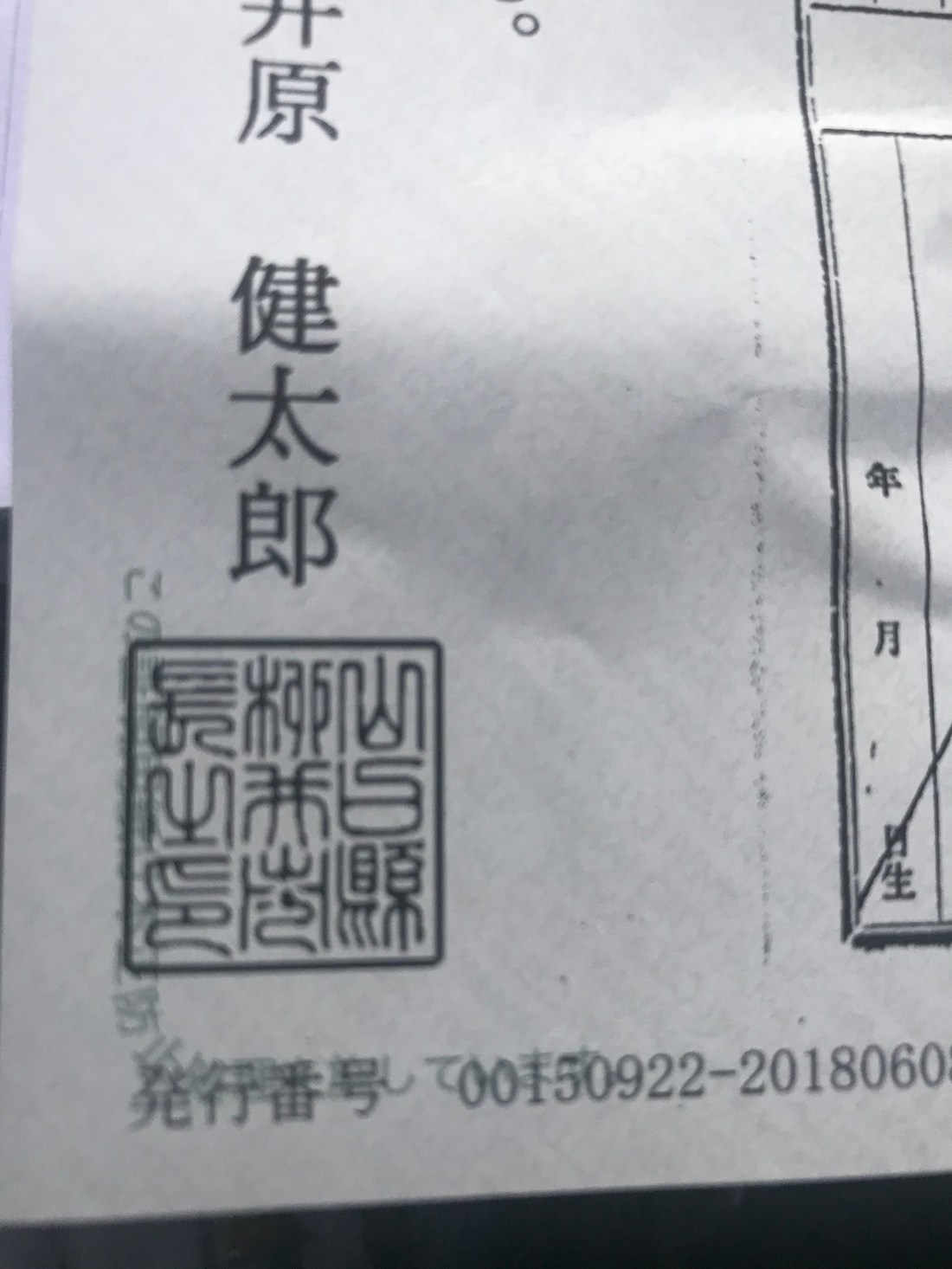
Without more information, we could not determine how closely related my grandparents were. Was my grandmother’s father (Kuniyuki A-kichi, born in 1852, son of Dikki-zo) a cousin of my grandfather’s father (Kuniyuki Tamizo, born in 1861) but whose father is not recorded? A mystery for further search when to travel to Yanai on 16 May. Besides finding my grandmother’s home, I plan on staying a few days to visit our families’ gravesites and to get a feel of the city. I included a close up of my grandfather’s, grandmother’s, and mother’s entries along with the Hanko (official seal) of Yanai City.

What remarkable and courageous people to have left their families for America. I am humbled and honored to walk in their footsteps and make the pilgrimage.

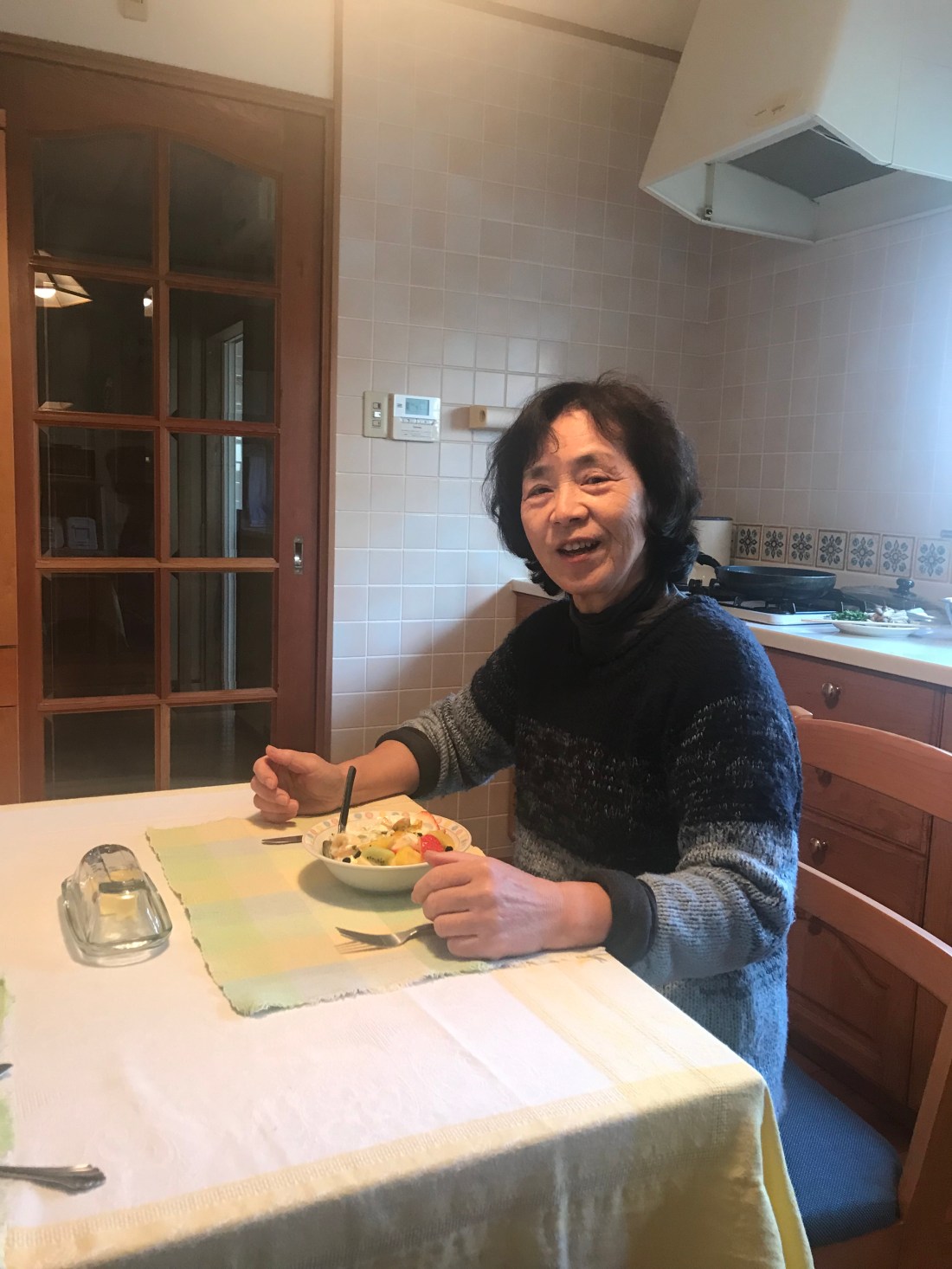
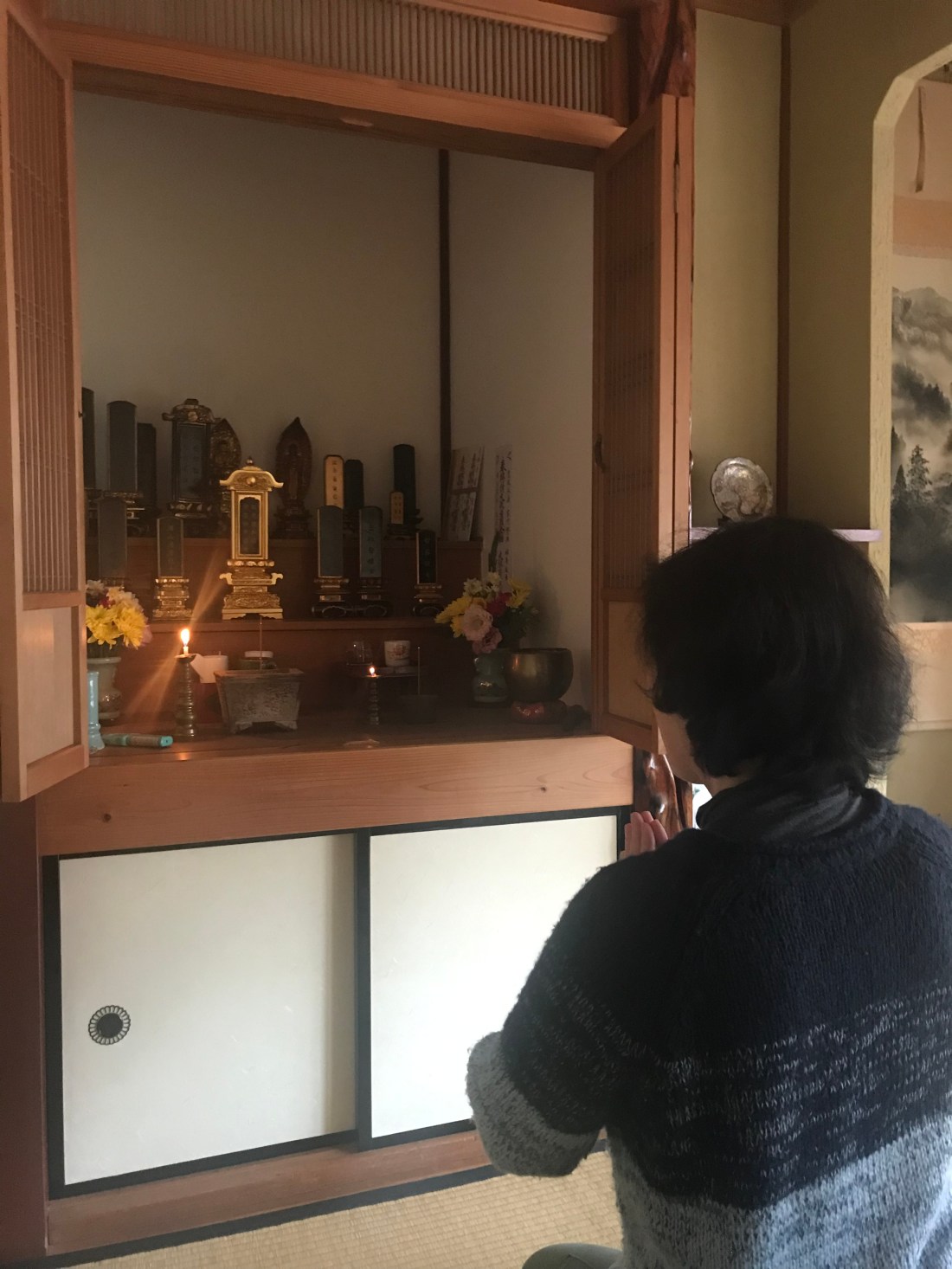
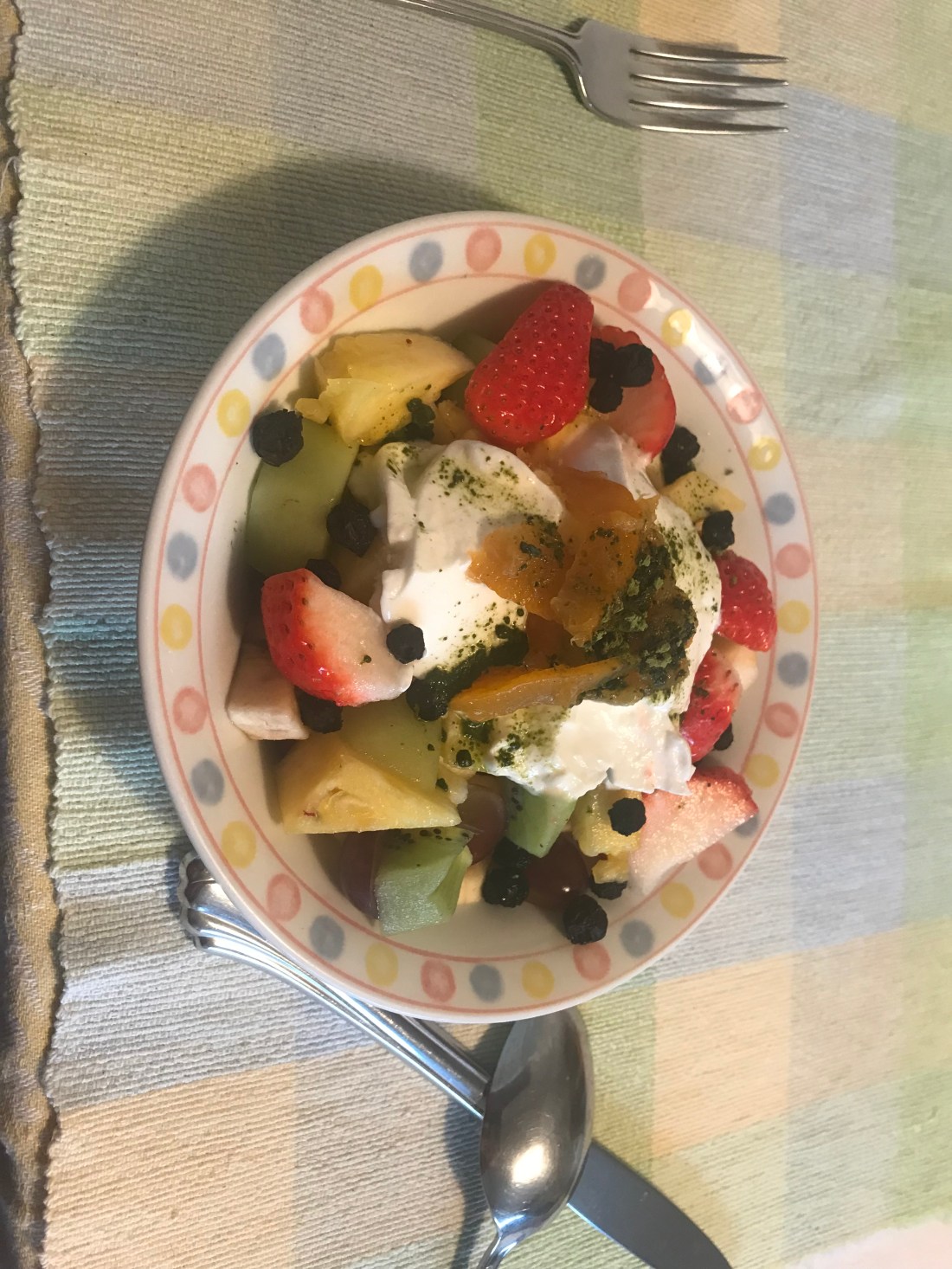
This morning before breakfast, Fukiko invited me to pray at her family’s shrine – a daily ritual in traditional Japanese families. Afterwards breakfast started with a fruit salad topped with homemade yogurt, dried orange peels and blueberries. Voila, a photo of Fukiko.
Stay tuned. Off to Takamatsu tomorrow morning.

T Minus 3: 27 February 2019

Three days before setting off on my 88 Temple journey on Shikoku Island.  If you want to see and read more about this pilgrimage, type in “88 Temples” on your browser.  Many links will appear.  Particularly helpful is the one for the PBS documentary on the pilgrimage.

Why am I doing this walk?  I have known about this walk for about five years.  The catalyst for deciding to commit to the journey occurred in November 2017 when Sharon and I were on a bus leaving Koya-San, the temple complex founded by Gobo Daishi who is the patron of the pilgrimage, in Wakayama Prefecture.  We met a 40 year old Australian policeman who had just completed the pilgrimage and his visit to Koya-san.  I asked him, “What effect did this journey have on him?” He said that the pilgrimage “restored his faith in mankind.”  About a week later, I said to Sharon that I wanted to make the pilgrimage starting in March 2019.  I have planned to complete the pilgrimage in 60 days plus 10 (the extra 10 for days when I am tired, ill, or wanting to wander around an especially beautiful area).  If all goes according to my general plan, I should complete the journey on 14 May, my father’s birthday.

I will then have 13 days in order to visit my maternal grandparents hometown, Yanai City, Yamaguchi-ken and perhaps other areas of Japan.  My maternal grandmother left her village in 1915 and arrived at Seattle.  She married my grandfather three days later.  With her passport in hand, her marriage certificate, my mother’s birth certificate, my mother’s marriage certificate, and my birth certificate, I was able to secure my grandmother’s koseki, her entire family history from the Yanai City archives.  My contact in Japan will have translated the koseki.  She will give me that document when I arrive at her home.  Sharon and I had a homestay with her on our last visit to Japan.  With the koseki in hand, I will travel to Yanai City where a member of the city staff will take me to the address given on my grandmother’s 1915 passport.  Who knows what physical structure if any will be on the site.  Regardless, I will stand on the grounds where my grandmother lived and left when she came to America as a 22 year old woman.

The reasons for making this journey run deeper than the snap decision of December 2017.  I have mentioned to some of you that I have only two regrets in my life: not learning Japanese, and declining to go on junior year abroad in 1968-69 to Waseda University in Tokyo.  I often think about what my life would have been like if I gone to Japan at that time.  What would I have become if I had chosen the other road as Frost wrote?

For years, I have felt awkward in knowing that I am Japanese by origin and looks yet not being comfortable to speak Japanese and to be around Japanese people.  According to my mother, I spoke only Japanese until I was five.  Then, regular American schooling ensued.  My parents did send me to Japanese language school on Saturdays.  I was a total failure.  I wasn’t interested in learning the language; baseball and playing with friends were higher priorities.  I must add though that the school served native Japanese speakers and thus those of us English speakers were literally placed at the back of the bus.

My first trip to Japan was in 2004; Sharon made the trip before me a month after 9/11.  My Japanese was almost non-existent.  I did discover that I could read most of the kata-kanaand hiraganacharacters.  We spent 12 of 14 days in Kyoto experiencing a city that has 20 World Heritage sites. Kyoto is Sharon’s favorite city in the world; it is my second favorite.

I returned a few years later to Tokyo as a member of a school accreditation team.  Remember — my spoken Japanese was almost nil. The awkward moment came when the chair of team, who was white but who had spent over 30 years in Japan, explained in Japanese to the head of school, that I was an American, third generation (Sansei).  The head of the school nodded with the universally known phrase, A-so desu after exhaling the sound, huh.  It is hard to write out what that sound is but it is not honorific.

Then came my third trip in November 2017 and our encounter with the Australian policeman.  Since then, several of you have seen me walking around Bethlehem.  I have also walked to Coopersburg.  Lehigh has been an excellent training grounds by providing uphill and downhill slopes as well as the seemingly endless steps to climb.  While walking, I have listened to hours of Japanese lessons.  I think that I have ascended from a toddler to perhaps a seven year old.  I will need this Japanese when I walk through the mountains and villages of rural Shikoku.  My favorite phrase is: oka-wari, meaning second helping.  Preparing for this trip has been enriching and has helped me become more confident in order to talk with people whom I will meet.

The most important aspect of the journey will be how it will affect my views on life.  I will not speculate about how I will answer the question that I posed to Australian policeman.  I will let you know after the journey is finished and after a time of reflection.

I await Saturday with great anticipation.

T Minus 2: 28 February 2019

Besides building up my walking base and Japanese language skills, I spent plenty of time learning about how to be outfitted for this journey.  I consulted my friend from kindergarten, Eddie, who competes in Firemen Olympics and rides his bicycle for weeks on long distance trips.  I had some good laughs reading Bill Bryson’s text about his adventures at a clothing store when he readied himself for the Appalachian Trail.  Like him, I had no clue that merino wool clothing whisked away your perspiration and could dry in a few hours.  Leslie clued me into a neighbor of hers that hand made ultralight backpacks.  I bought the second to his last backpack.  Light as a feather, it will hold about 10 pounds of clothing, meds, electronic gadgets, and my camera.  The task for today is to experiment with what will actually fit into this pack.

I will be traveling via Lufthansa to Frankfurt and then to Osaka arriving on 4 March in the morning.  By JR Rails to Kyoto and then to Kameoka (a small town to the west of Kyoto), I’ll be staying with Fukiko Teramachi who will be my go to person in Japan.  Fukiko has helped me secure my grandmother’s koseki.  She will be sending a care package halfway through my journey — my second pair of hiking boots and my warmer weather gear.  I will send back my winter clothing and any other miscellaneous items I don’t need but still have.  Many thanks to Fukiko.  If you are interested in a homestay, Sharon and I highly recommend Fukiko as a host and guide.

On 6 March, I will take the train to Takamatsu, Shikoku.  The following morning, I will board the local JR train to Bando station which is near Temple 1.  I plan on walking to Temple 5 the first day.  The second day, I will be visiting Temples 6 through 11.  Temple 11 is located at the foot of the mountain where Temple 12 (Shosanji) is located.  To reach Temple 12, the cumulative increase in height will be 3,500 feet — Lehigh’s South Mountain is a mere pimple by comparison.  After reaching Temple 12, I will be staying at a ryokan (Japanese inn) about 3 km down the mountain.  The following day will entail an 18 mile walk down the mountain, stopping at Temples 13 through 17, before reaching my hotel in Tokushima City.  After this point, I have no lodging reservations.  The real test of faith that I will have roof over my head each night begins.