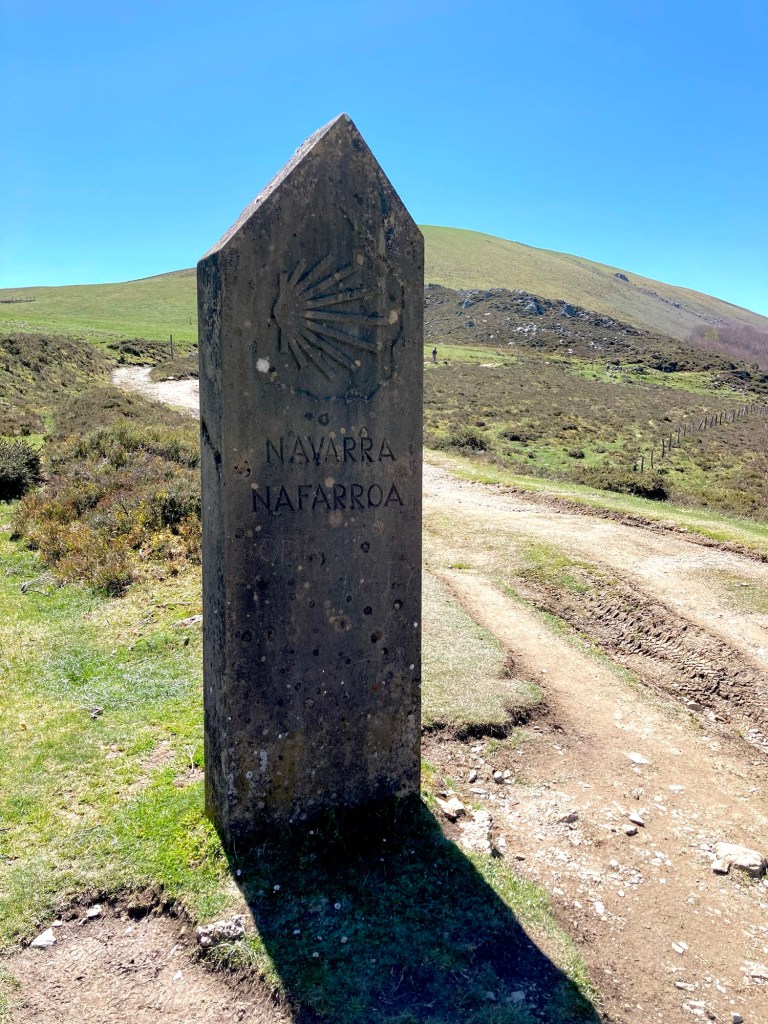
Day 10 (29 April) From Vineyards To Fields — 15 Miles

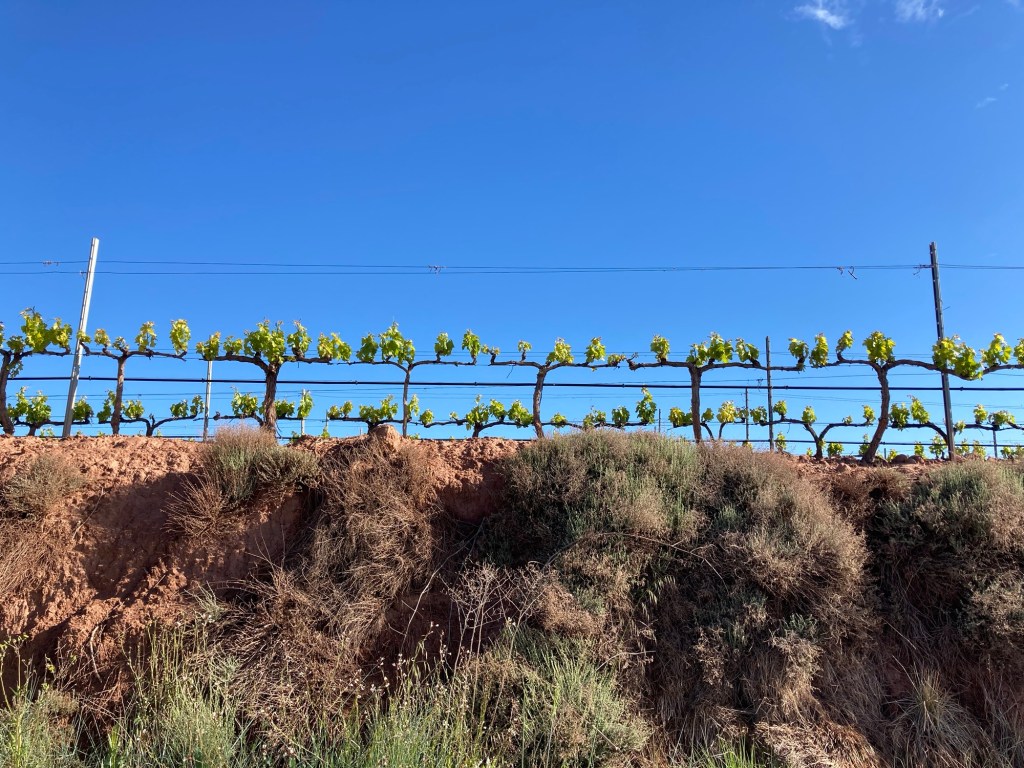
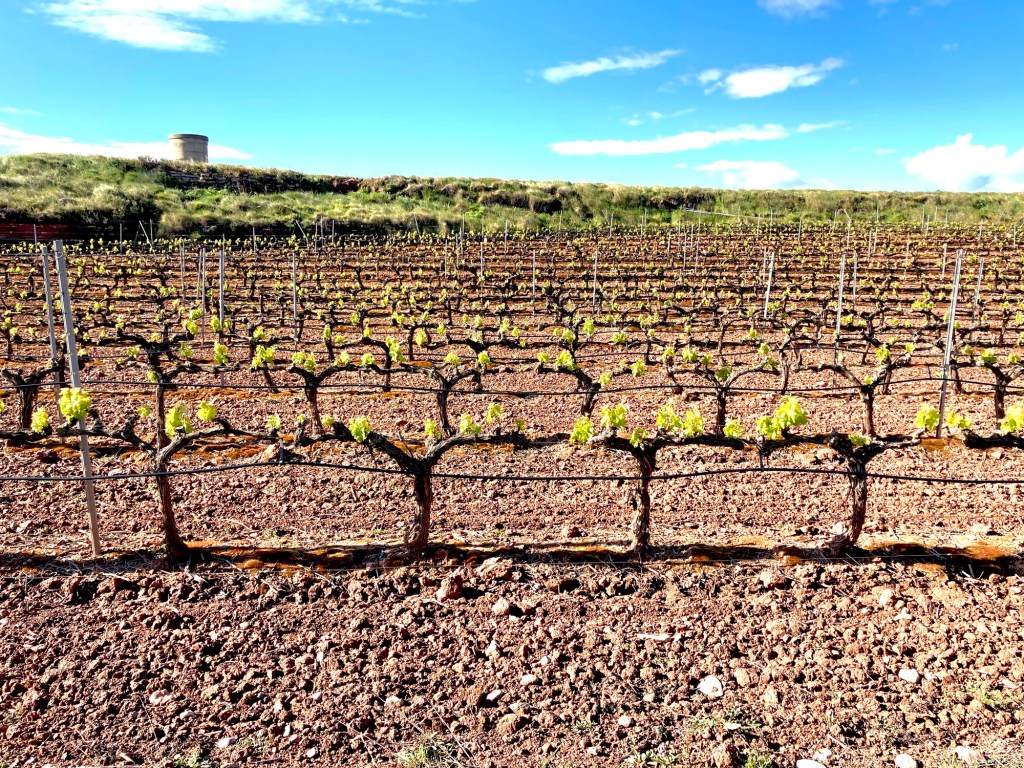
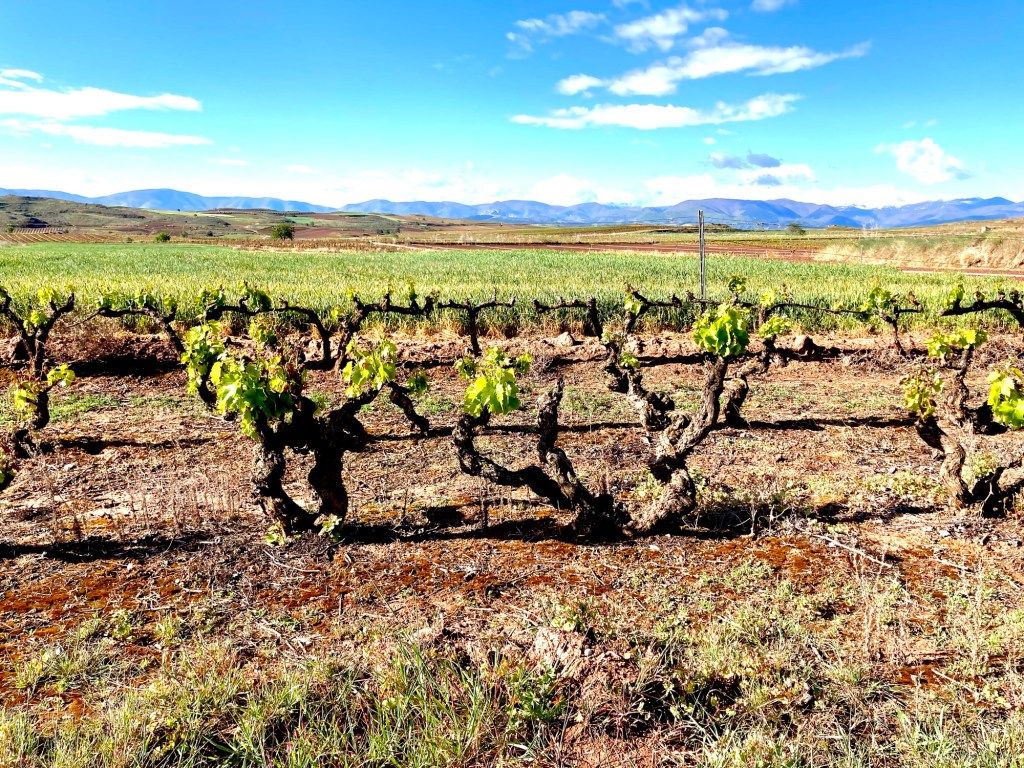
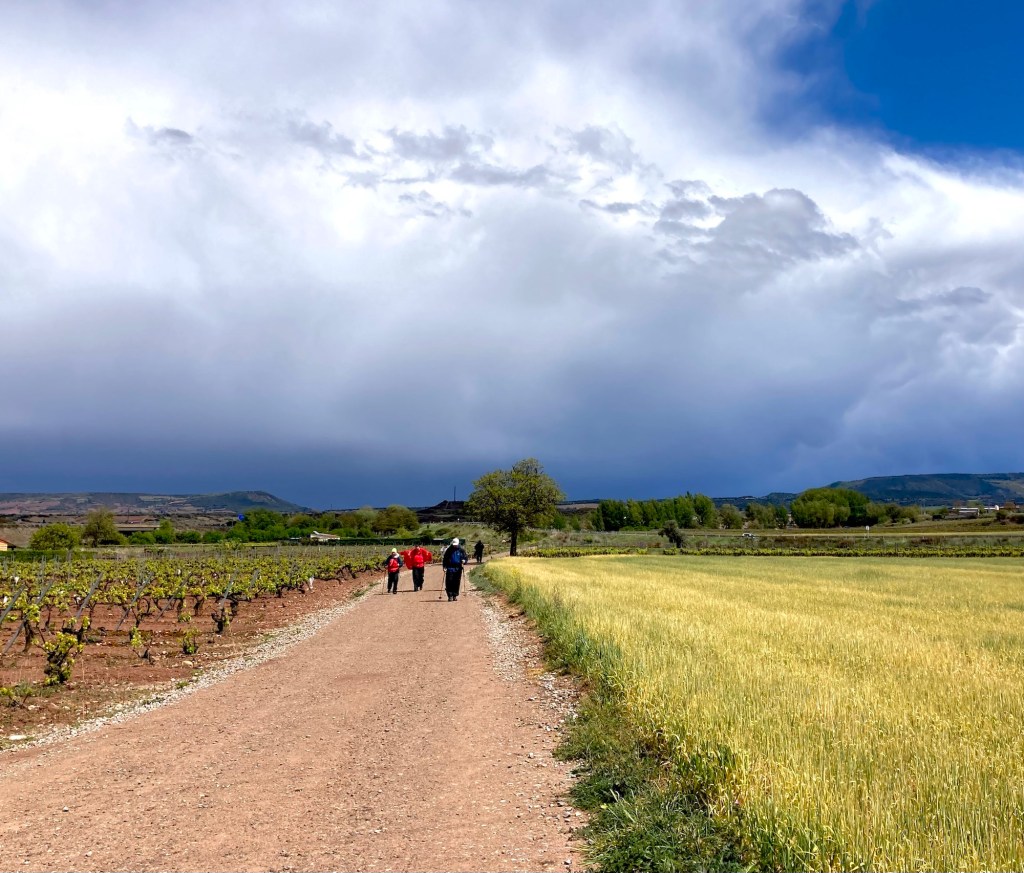
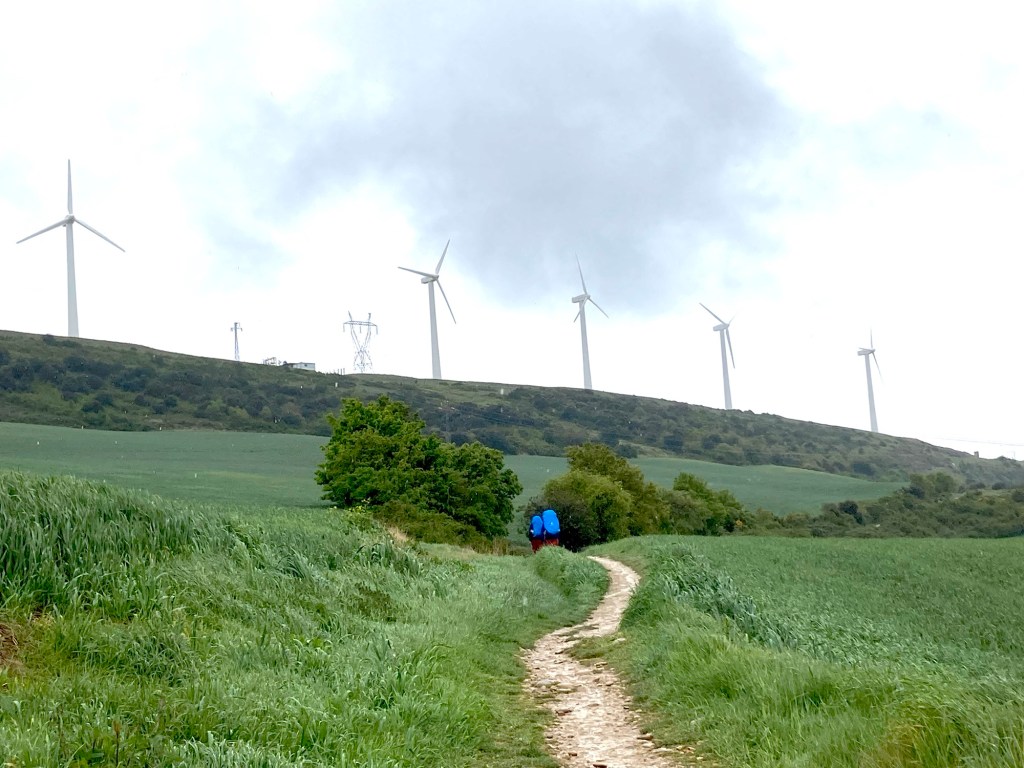
The vineyards of the past two days have given way to fields of wheat, oats, and soybeans. Plots of onions are interspersed here and there. The early mornings are still cold (in the 30s) but afternoon temperatures reach the 60s. It is indeed important to have a range of outerwear that can be layered as conditions change.
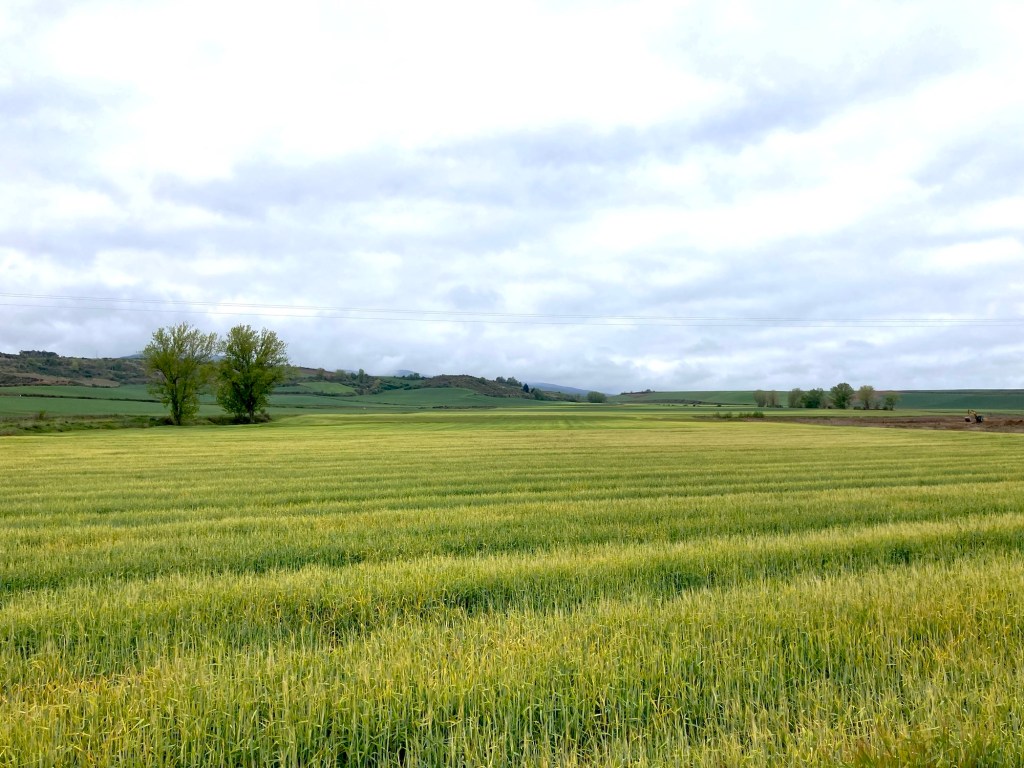
Wheat Field

Grañón is the first town on the road after leaving Santo Domingo. Pilgrims receive a very warm welcome as they enter the town. At the top of the steps is a food truck offering hot/cold drinks as well as breakfast and lunch snacks. I ordered a double cafe con leche to boost my energy level.
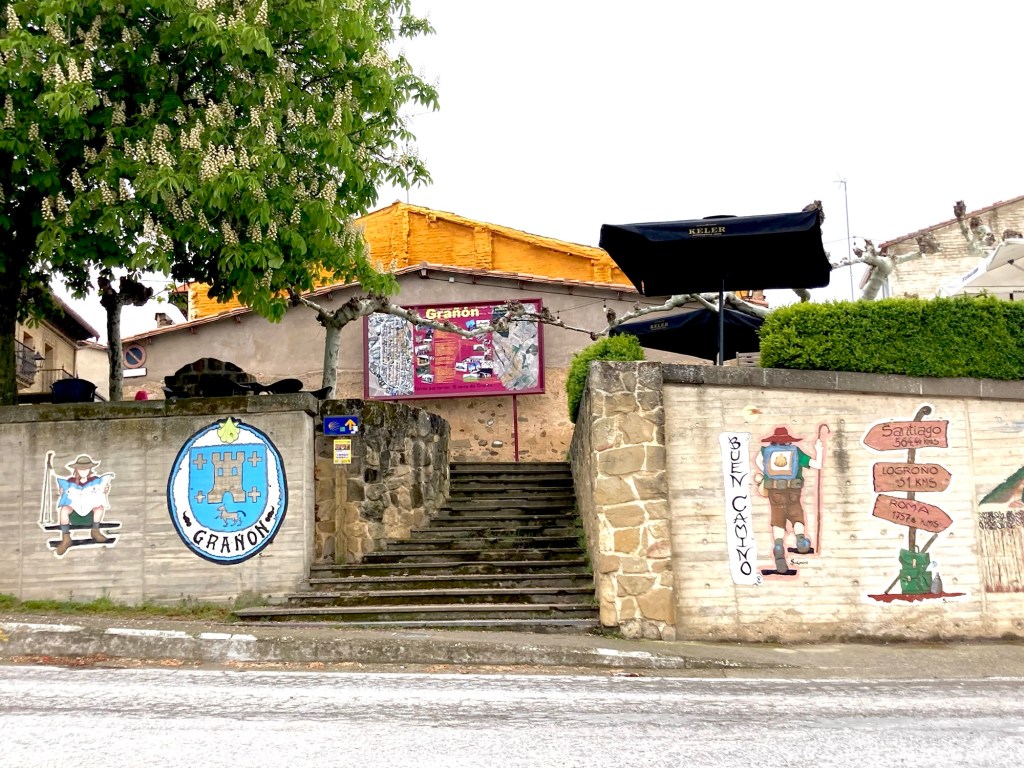
A Grañón Welcome
A Pilgrim’s Delight

About 2 miles down the road, an ostentatious sign marked the border with Castile and Leon, the largest state in Spain. I guess that’s why the powers to be put up such a sign. As we move from Basque land, tapas replaces pinxtos as the proper name for those small bite goodies.
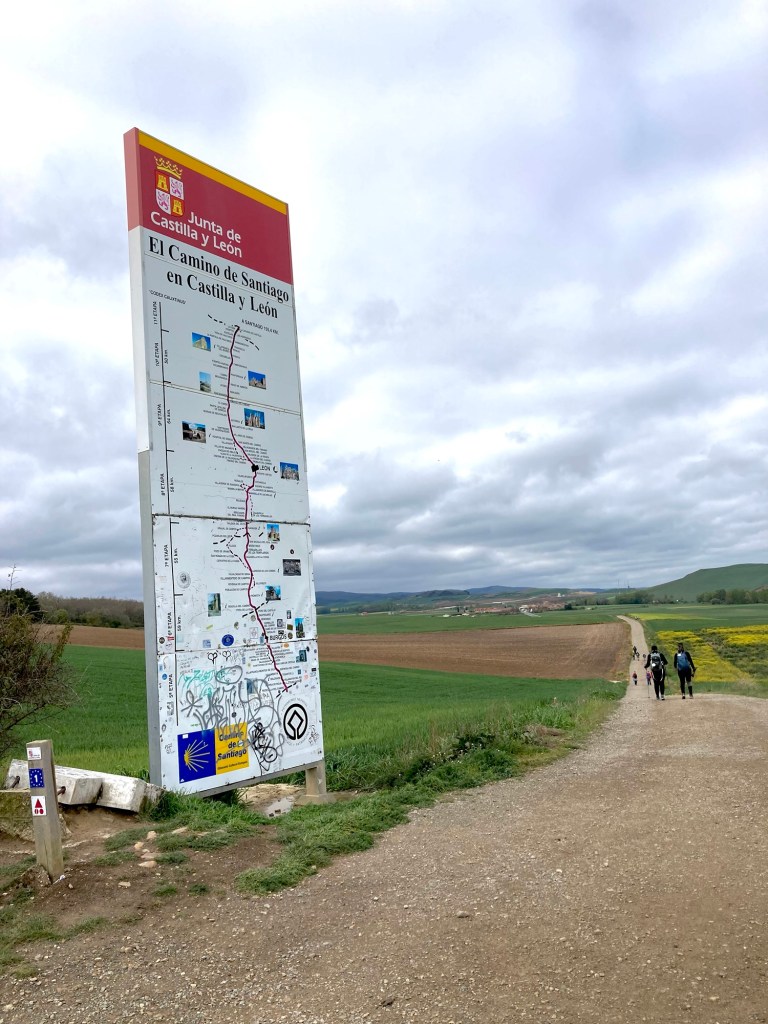
Big State – Big Sign

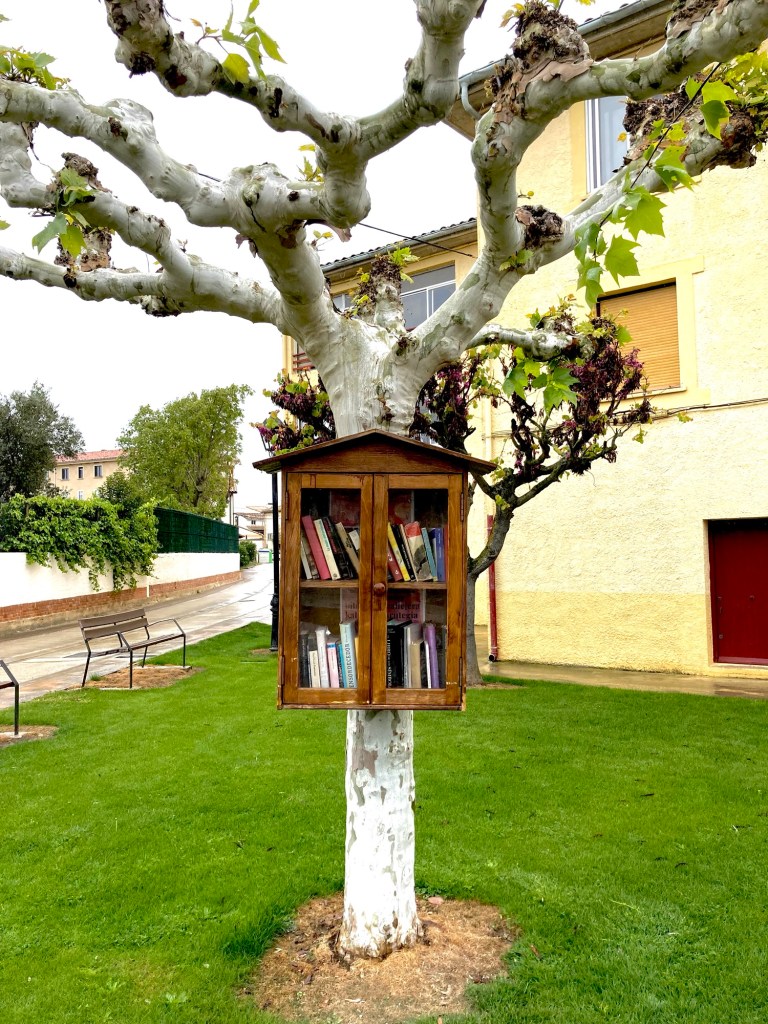
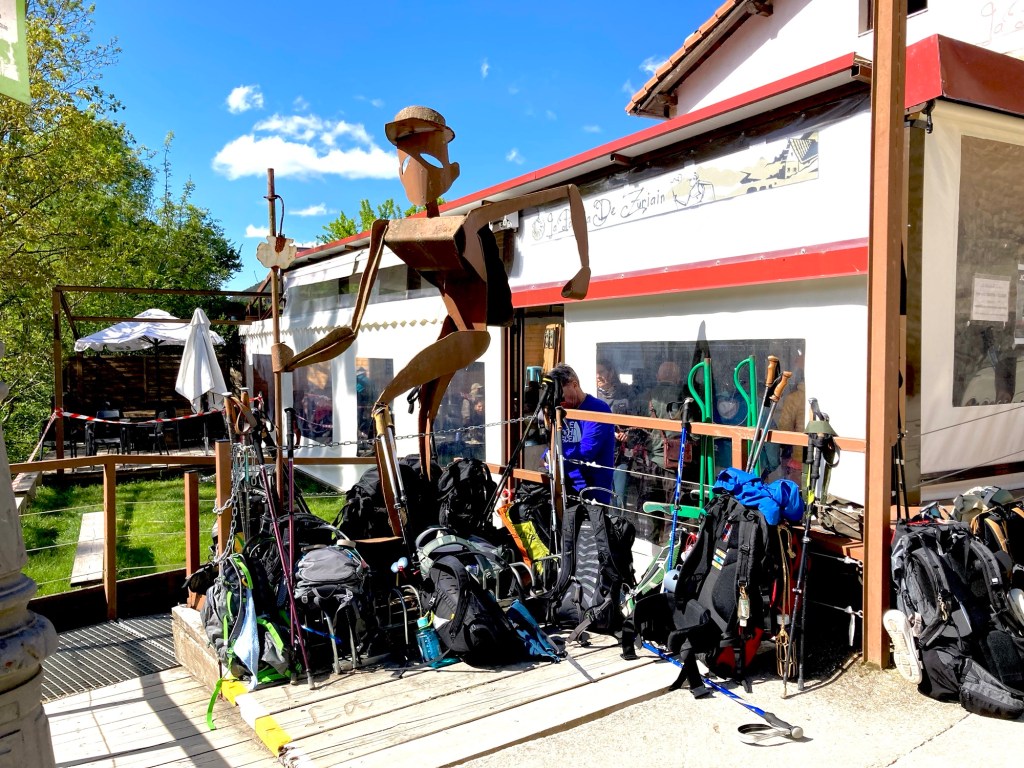
Down the road a piece, a recent metal sculpture was placed in Redecilla dedicated to Camino pilgrims. The small towns along this stage are really quiet with few people out and about. Also, much of the Camino path goes along a major highway. Thank goodness pilgrims can walk separately from the highway.

On this stage, I took time off from reflecting. I listened to an Ann Cleeves novel, Red Bones, a crime of mystery set in the Shetland Islands. This book tells the story of Detective Inspector, Jimmy Perez upon which the first season (two episodes) of an excellent British TV series, Shetland, is based on. How does this book tie into the Camino?

While walking to Los Arcos (Day 6), I met a fellow named Don who lives just south of Edinburgh. He is a retired Scottish detective. He told me that he had heard good reviews of Shetland. However, he does not watch police procedural shows because he would be constantly criticizing them. He now works part time guiding walks around Scotland. Given his pace, I don’t know if I could keep up with him after a few miles.

He said that on one of his tours, an American woman who was a Shetland fan wanted him to take her to the pier where the ferry from Aberdeen to the Shetland Islands was docked. Her reason was that the central event in one of the Shetland seasons was a murder that was committed on the ferry. Don said, “Can you believe it?”

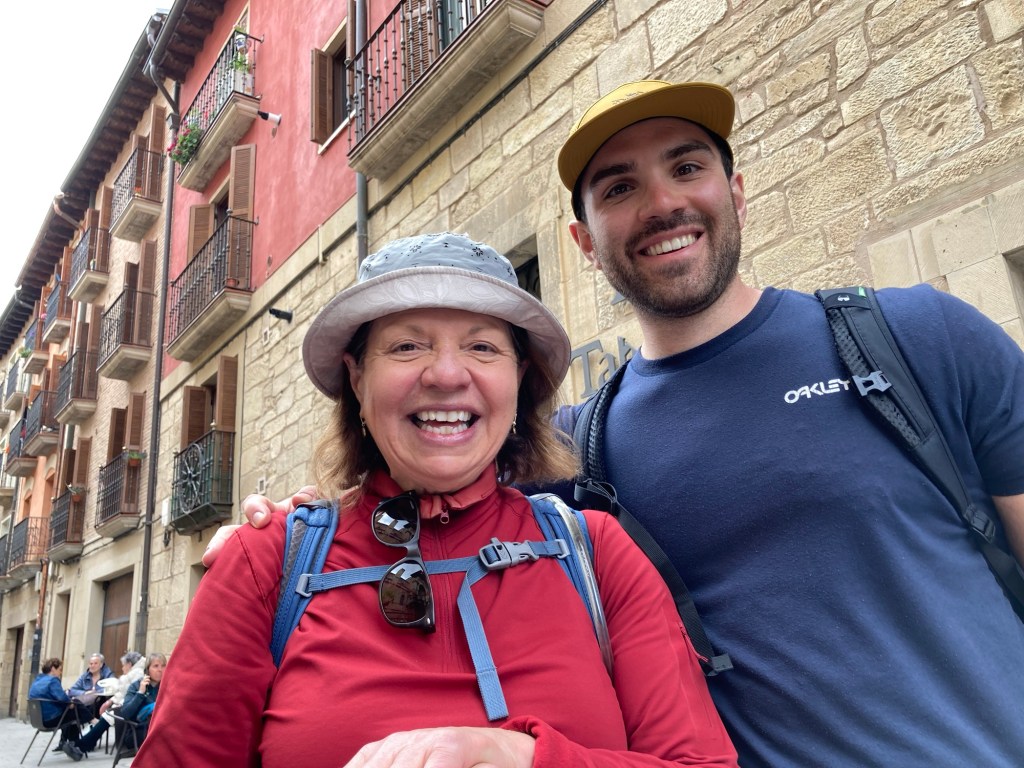
I’ll digress with two more stories. This is the first time on any of my walks on which I met a mother, Manon, as she said like in the opera, Manon Lescaut, was walking with her son, Martin, an attorney. They are from Trois-Rivières, Quebec. She had already taken her older son and daughter separately on other segments of the Camino. Manon and Martin also hiked the Pyrenees on the same day that I did. No taxis for her.
Manon and Martin

The other story was told by Lizzie from South Africa. I met her at the end of my first day along with Raye, Holt, and Daniel (see Day 2). Lizzie completed her residency in pediatrics and was taking a break before deciding where to practice. She told the story about her mother who without warning told her husband and four children that was taking a “gap year” from her family to do the Camino. She did so but not for year.

Her mother thought the experience was so profound that she invited her husband to go with her to Lisbon to do the Portuguese Camino. They started together but after three days, she told her husband that he was on his own because he needed to learn how to wash his own clothes and manage how to feed himself. She would meet him in Santiago.

Lizzie said that they are still married. I had never heard this reason for going on the Camino. I am sure there must be equally interesting stories that are yet to be told. Lots of material on the Camino for a soap opera.

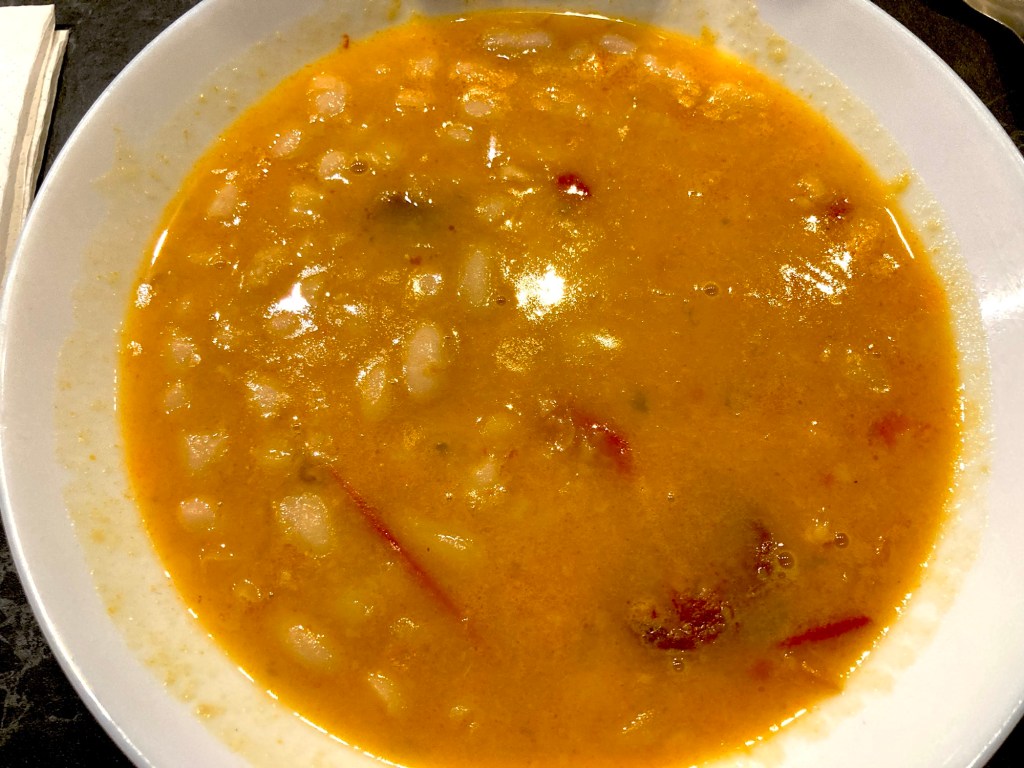
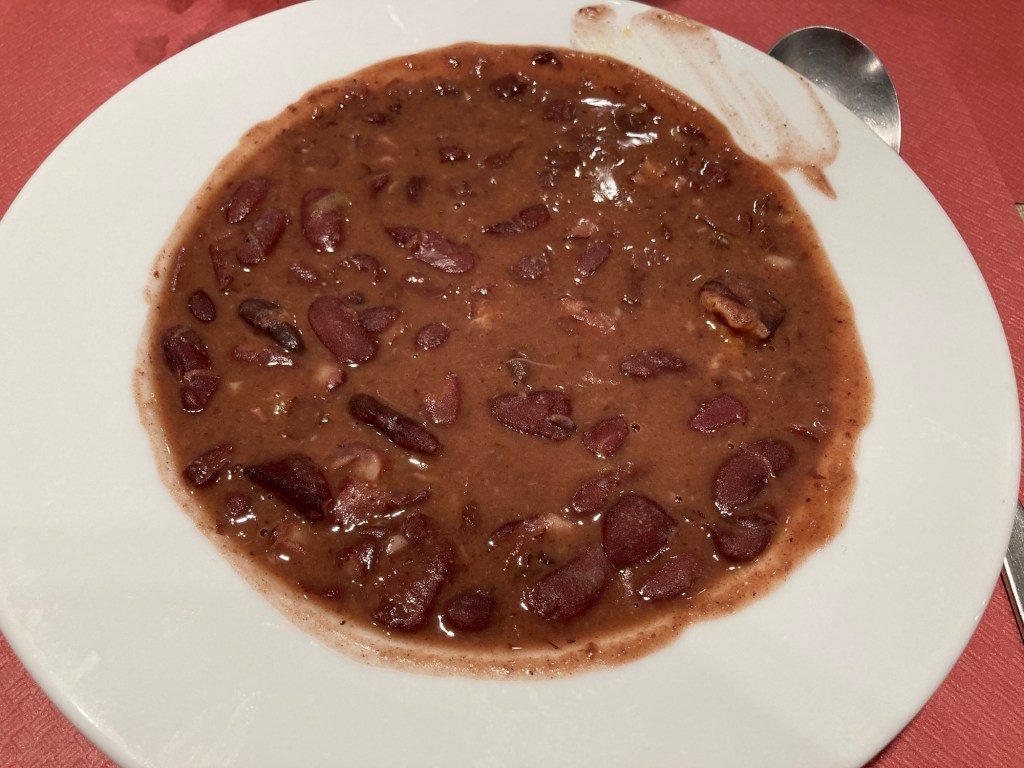
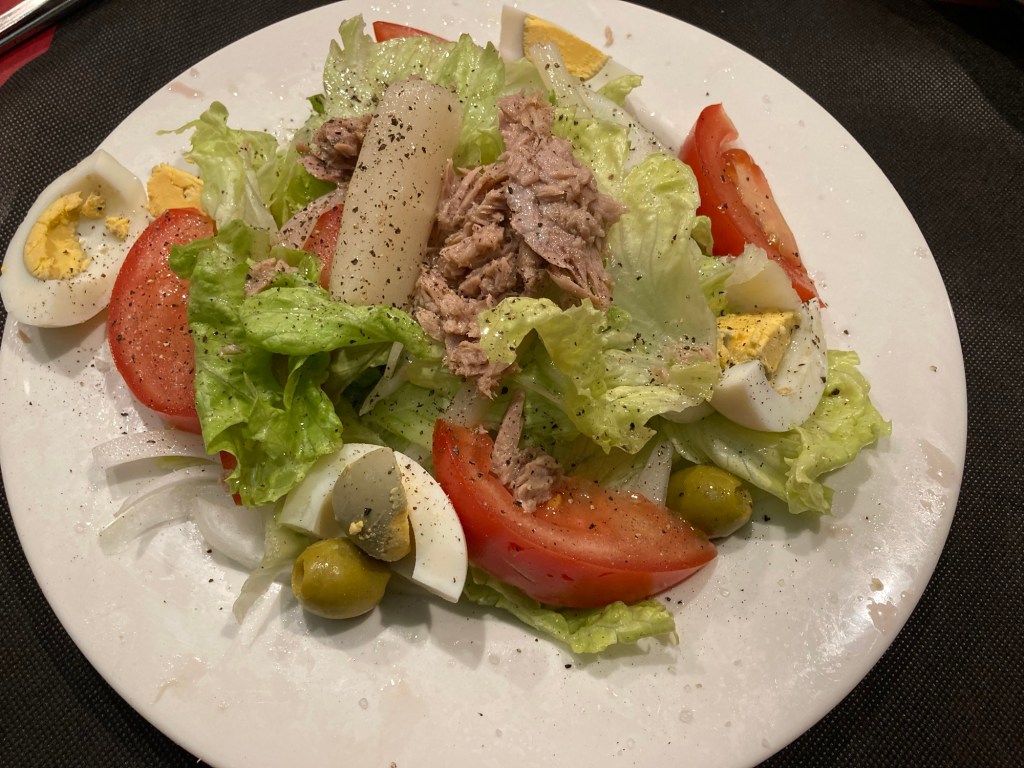
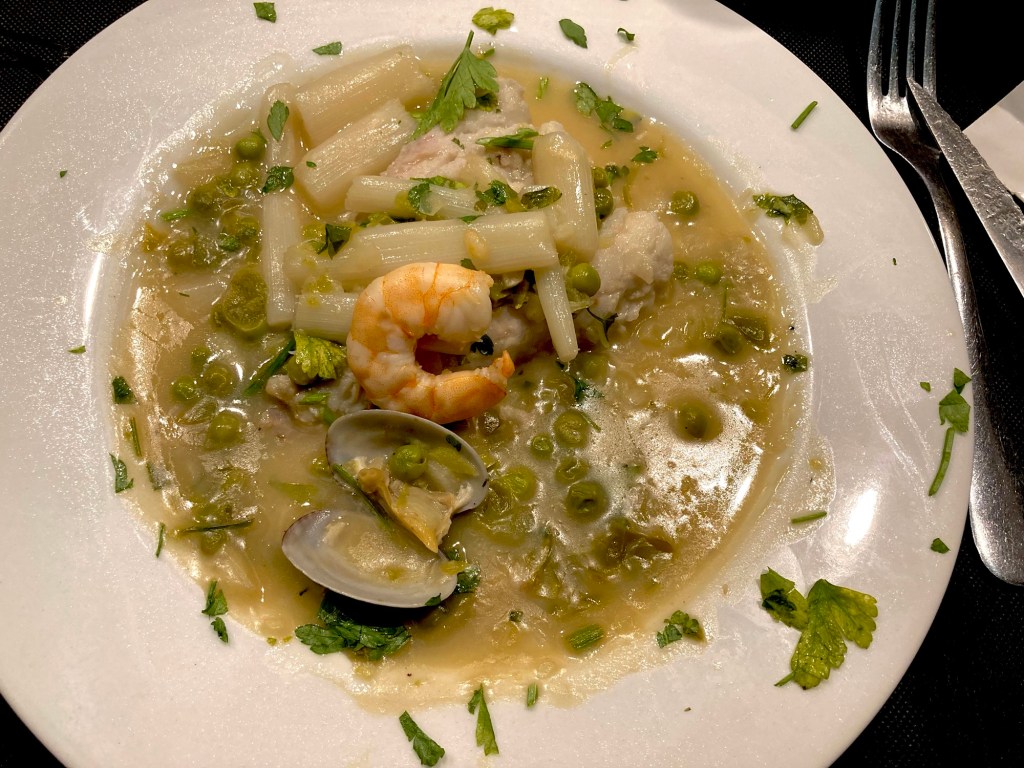
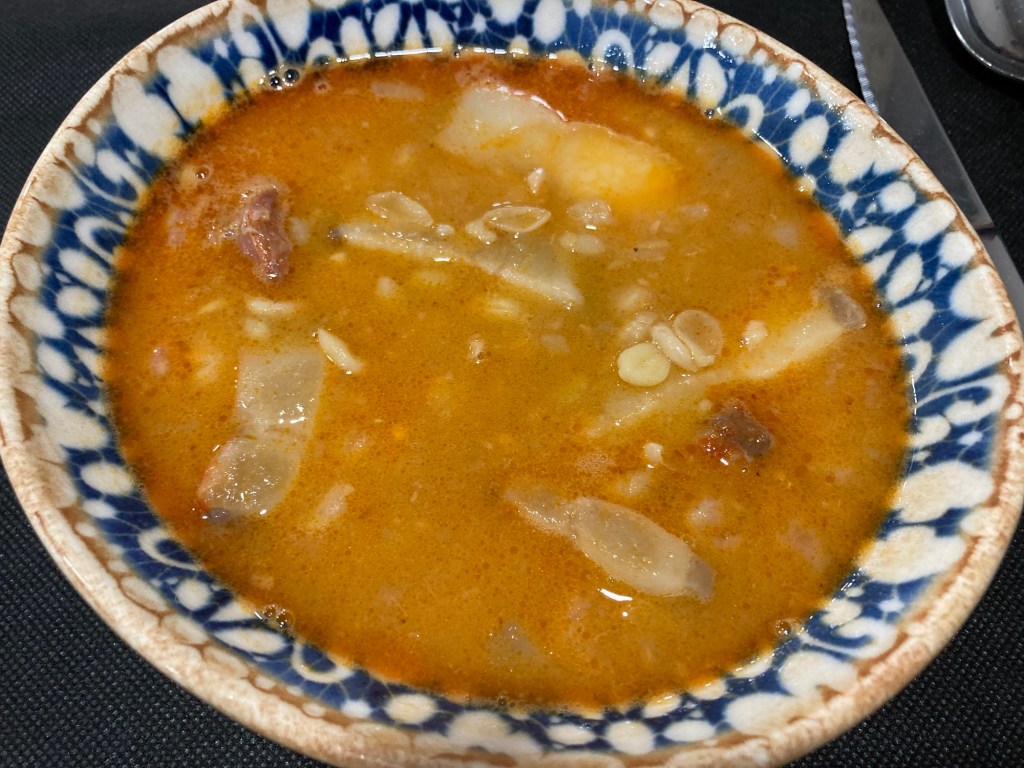
I against enjoyed dinner with Roy and Shannon who graduated from McGill University. To my McGill friends, her dorm was Molson Hall. Dinner was adequate but I’ll add that the beans (my fifth) were superb. Can’t get enough.
White Beans

Hotel Verdeancho: 2
Day 9 (28 April) Reflections On Old Vines — 14 Miles

Living in the present is one of the principles that the Camino is said to help develop in its participants. Since doing my 88 Temple walk in 2019, I think that I am better at doing just that in all aspects of life. My Camino walks have reinforced that behavior. The images that I include in the blog represent my take on the experiences of the present, of the moment, and the beauty contained within them.

Today, I saw snow covered mountains in the far distance, massive clouds that appeared so powerful as they dominated the sky, and the never ending trail. It is unfortunate that the photos present only one of the senses. You are missing the chirping of birds, the warmth of the sun, the babbling of streams, the bracing wind on the face, and the words “Buen Camino” that fellow pilgrims say as they walk by.

Snow Capped Mountains
Cloud Formations
Seemingly An Endless Trail

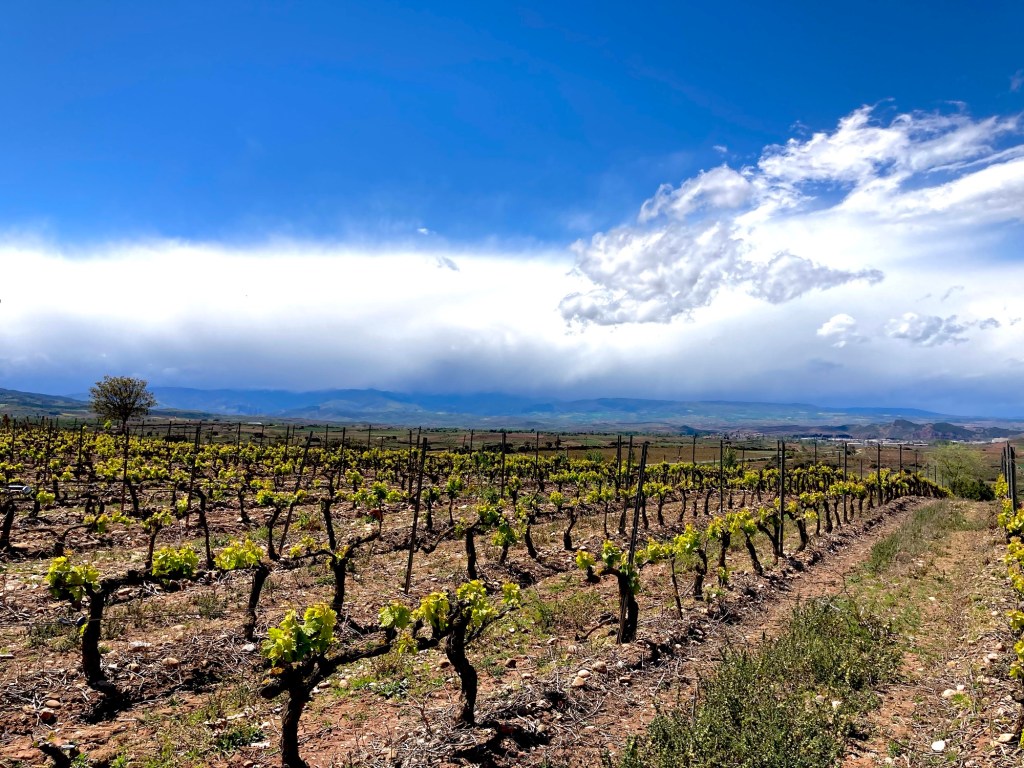
Away from distractions of daily life, the Camino also offers opportunities for reflection. Acres of vineyards in La Rioja are on both sides of the trail. They are planted with young, mature, and old vines. Seeing them over and over, hour by hour, made me think about them as an analog about life.

Newly planted vines are thin but straight. Their young branches need support and guidance as new sprouts form each spring. The grapes usually yield wines that are said to be fresh but lack depth.

New Vines

As the vines mature, their bases thicken and their outer bark start to show markings of age though they remain mostly upright, trim, and straight. These vines have experienced several seasonal changes and climatic events. Depending upon where they are cultivated, they may yield grapes that form reserve wines.

Mature Vines

Finally, I passed many plots with old vines, some of which could be as old as I am. These vines have unique shapes and vary in height. They have undergone transformation from years of pruning and bear the marks of age. Yet every year, they develop new growth and yield grapes that are prized for their richness and complexity. Perhaps you have seen wine labels that proclaim that the grapes come from old vines (vieilles vignes – French; vinedo viejo- Spanish; vigna vecchie – Italian).

Old Vines

I was thinking that my life can be seen now as an old vine with my unique experiences that have formed my shape and the wrinkles on my skin, nuances in thoughts, and vigor in spirit — my height has remained the same since I was fourteen. I continue to form new growth that helps me renew but also gives me the opportunity to nourish others. Take these thoughts for what they are — a happy traveler on the Camino who has time to clear his mind and review his past, present, and future.

Dinner was in the sister hotel from mine. I met up with Roy and his daughter, Shannon – the second father/daughter combo that I have met on this Camino. We have run into one another from time to time. This was the first time that we had an opportunity to talk.

Roy is an American with a duel citizenship in Canada. He is retired but still consults in waste management. He completed the Camino from St Jean to Santiago in 2018. His dream is to take at least one of Shannon’s daughters on a Camino. Shannon graduated from John Jay/ CUNY but now does project management in Toronto.

Sharon and Raye

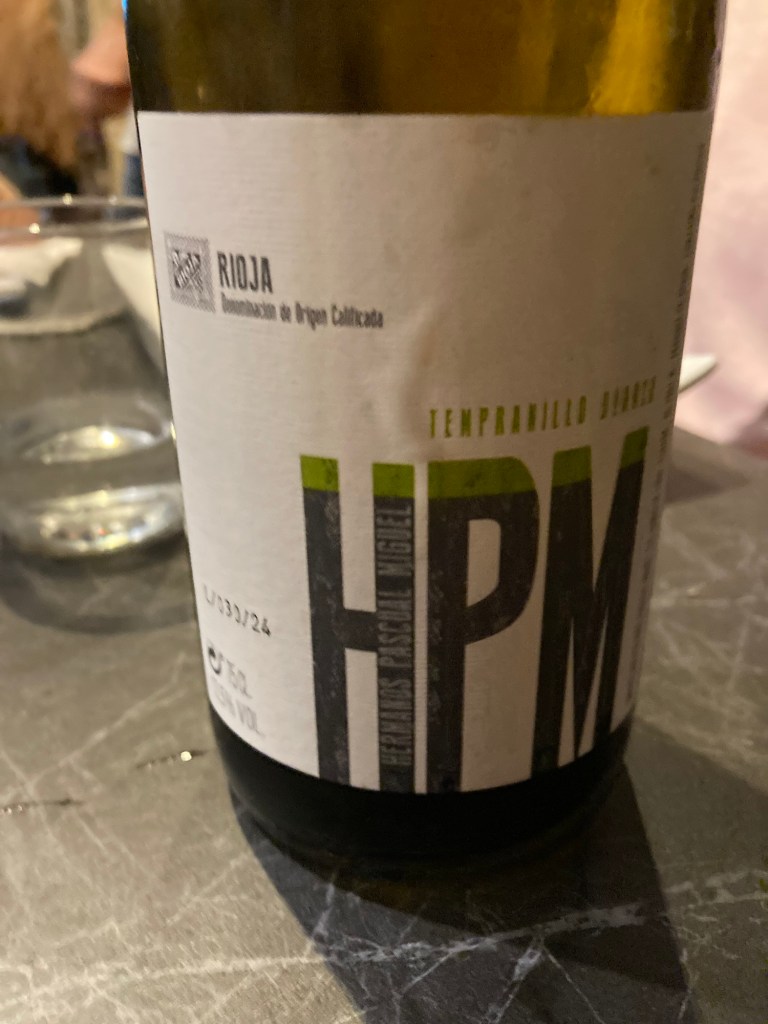
We dined together at a restaurant owned by the same people who operate Hotel Rey Pedro I. I started off with beans, of course, but white instead of red. I tried the pimentos rellanos (stuffed peppers) and ended with flan. The beans were top notch. Seeing Shannon’s plate and hearing her comments, I should have opted for the eggs with mushrooms. The flan was very good but I liked the one from yesterday better which I judged as my ATF. We all agreed that the wines were excellent both red and white (must be old vines).

White Beans
Stuffed Peppers
Flan
Rioja Blanco

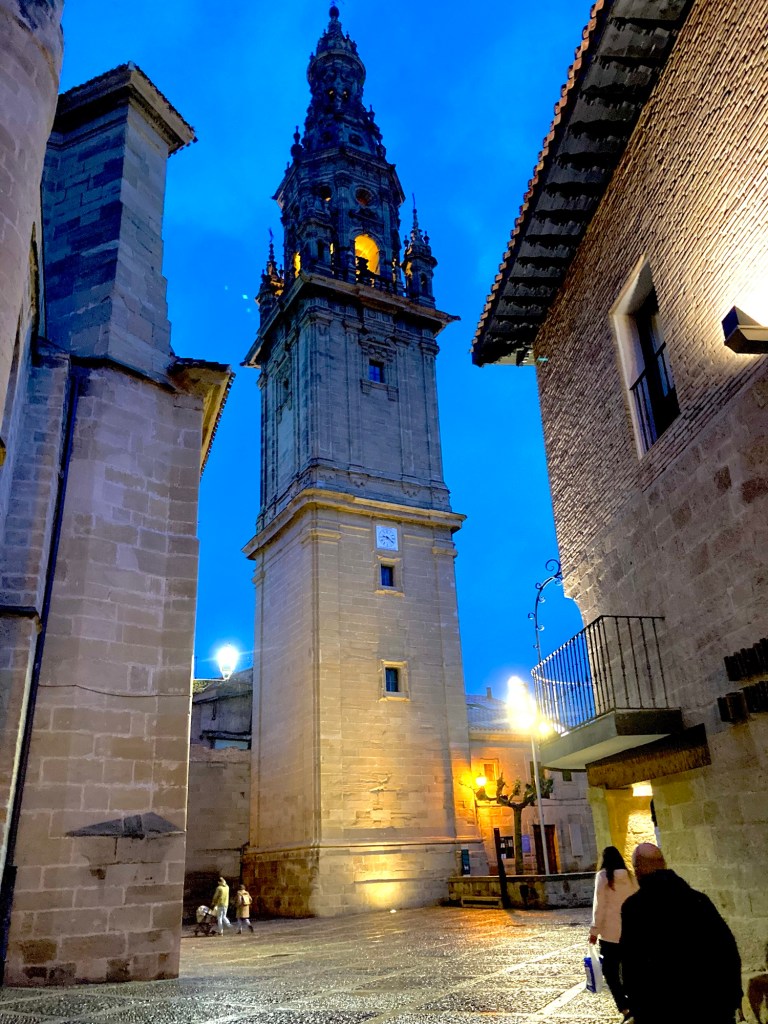
We walked back to our hotel as night fell. Oh hum, another tower from the 18th Century.

Hotel Rey Pedro 1: 1.5

Day 8 (27 April) Three Waves Of Rain — 20 Miles

I was in full uniform (raincoat, rain pants) when I left Logroño because it was pouring. I didn’t know it then but this morning’s rain was the first of three to come during the walk.

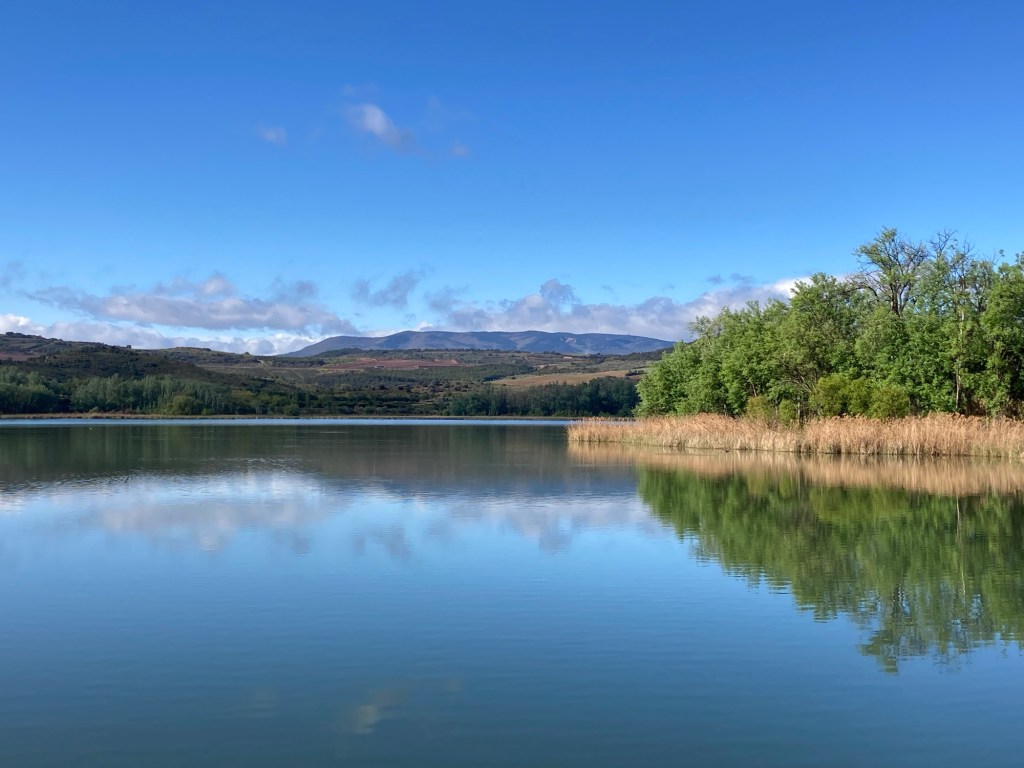
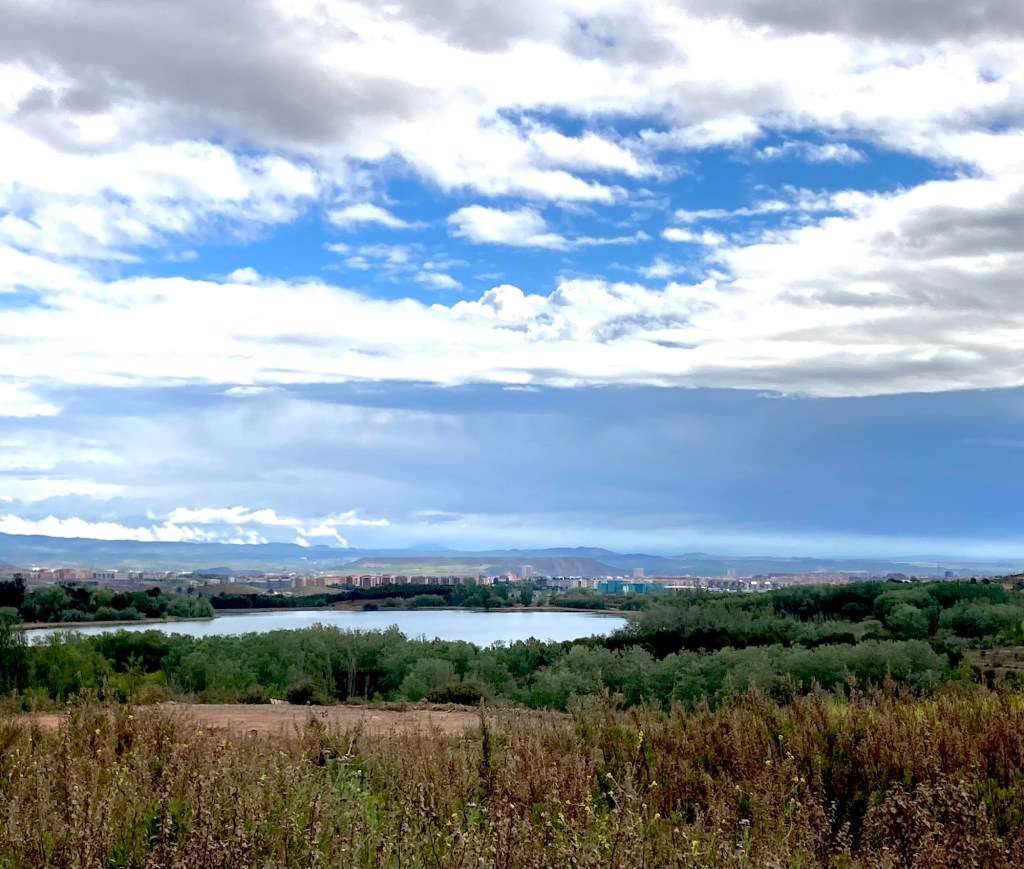
My hotel was on the Camino. I turned left out of the hotel and went on the Marqués de Murrieta (you may have seen the name on a label on a bottle of Rioja) before I started on a long trail in a city park. It eventually came to the city reservoir where fisherman were sitting talking up a storm waiting for a hit. Perhaps their talking helped end the rain. By then, I had shed my raincoat and rain pants. The scene was sublime especially in the morning light.

Hill climbing began after leaving the reservoir behind. I passed through vineyards of aging vines until I reached the top of the final hill from which I could see the reservoir and Logrono in the distance.

Aging Vines
Goodbye Logrono

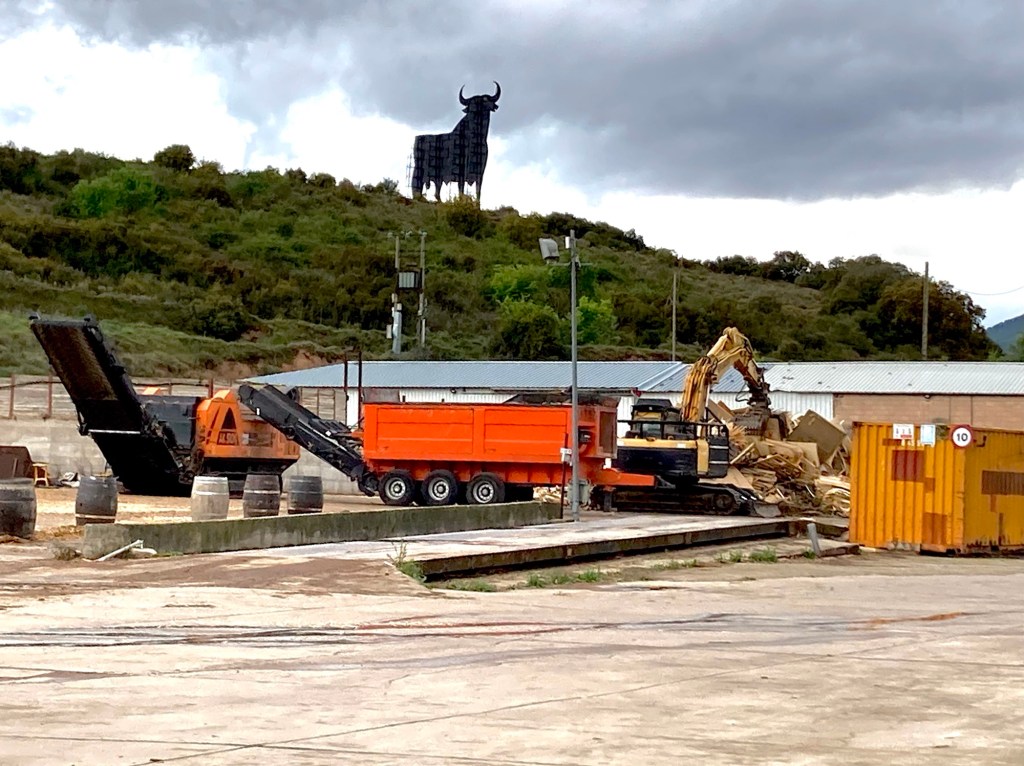
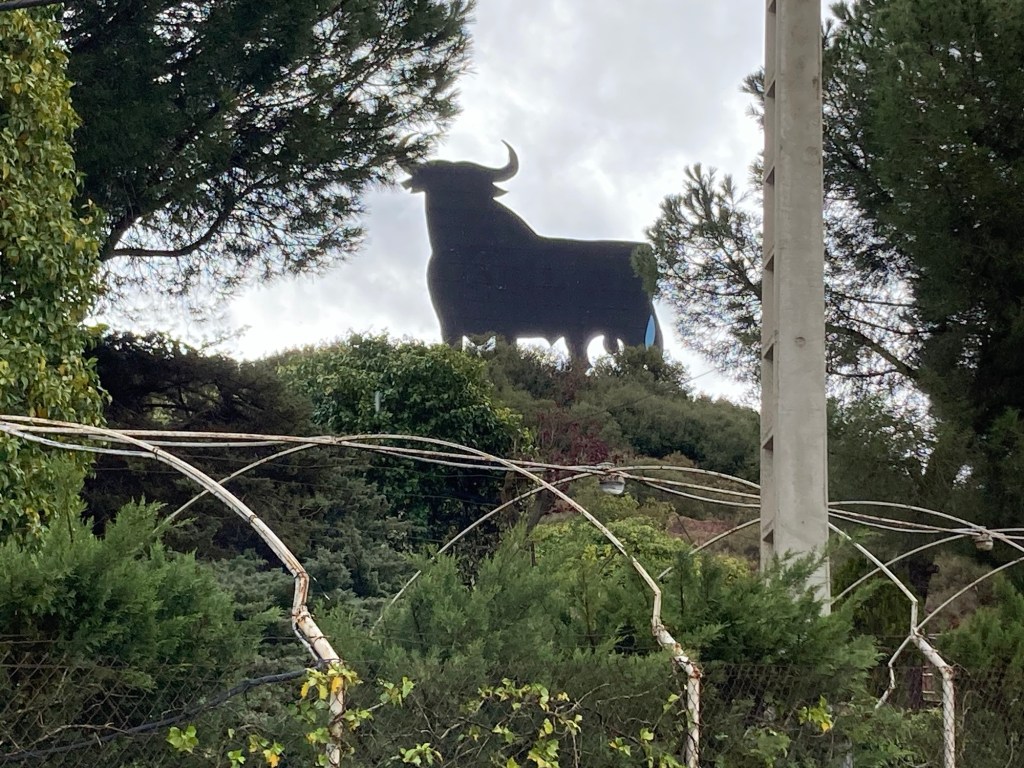
Once over the hill, my sights were set on reaching Navarrete, the halfway point of this stage. I was immediately taken with the image of a large bull on top of the next hill. I have no clue why it was placed there. Even in the 21st century, the bull holds a special place in the Spanish imagination.

At this point in the walk, I thought that I had beaten the odds of being rained on. I was humbled again. Black clouds appeared; the skies opened. I could easily put on my raincoat but what about my rain pants? I endured 30 minutes before being able to put them on while in the Navarrete’s cathedral. The church was dark so who knows what else happens in the pews. I was stunned by how ornate the main alter was as was the alters of almost every church that I had entered on this trip. I can’t fathom how much wealth was concentrated in constructing these churches.

Within 30 minutes, the rain ended. Off came the raincoat but I decided to keep on my rain pants just in case. For once, I had made the right decision because with 6 miles to go, I could see another rain front coming from the high point of this stage, Alta de San Anton.

By the time I had descended into the valley, the storm was upon us. Not only did it pour but the wind was so strong that the raindrops felt like bee stings when they hit my face.

My fellow Caminoites endured the rain for four miles or about an hour and half. When the front went by, the skies cleared. I took this photos about two minutes after the rain went by. Hard to believe.

Looking Back

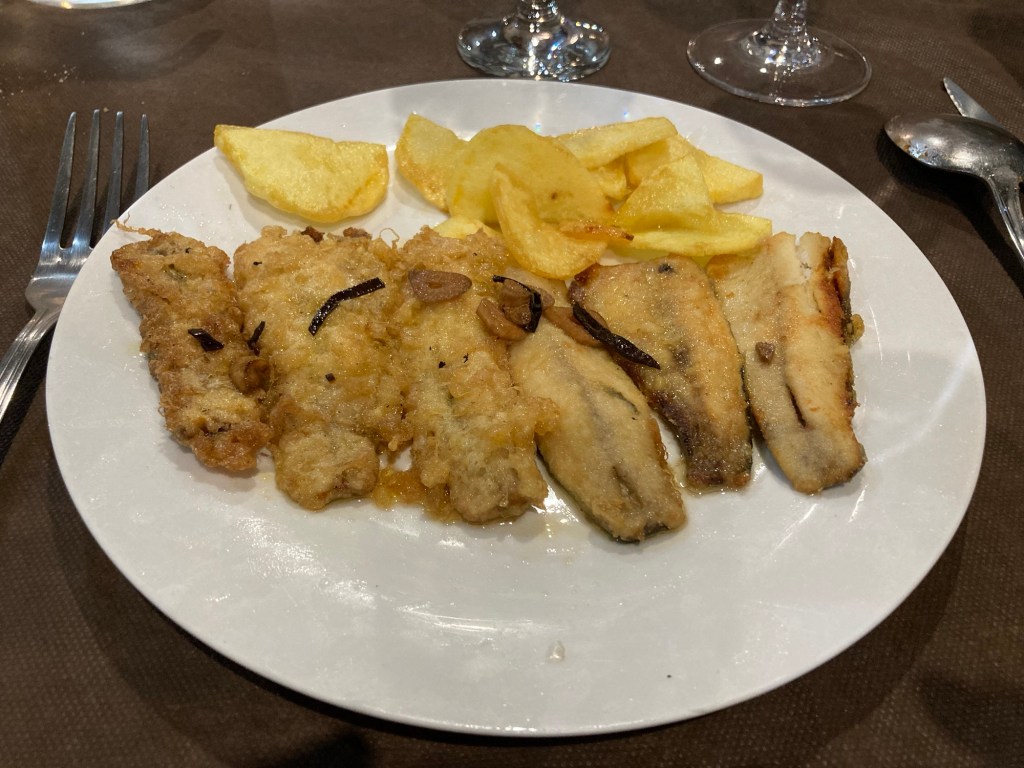
I continued along the path until I reached Najera. I stopped for a beer and some fish before checking into the hotel. I was famished. My walk clicked in at 20 miles (into the wind). I had made it.

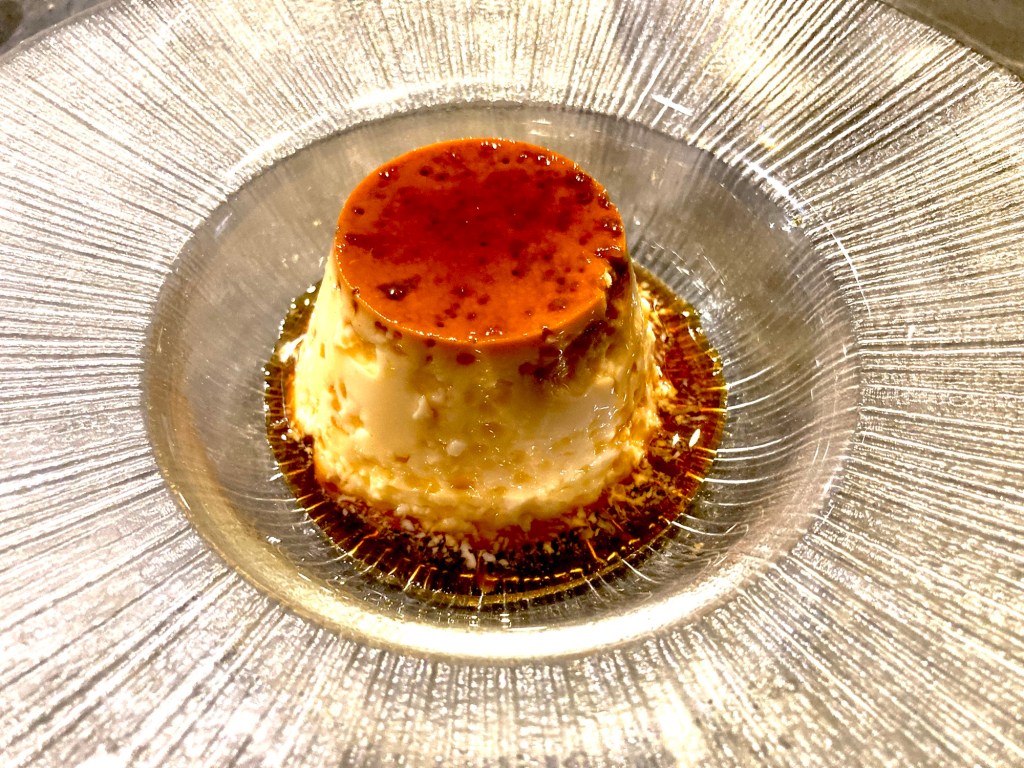
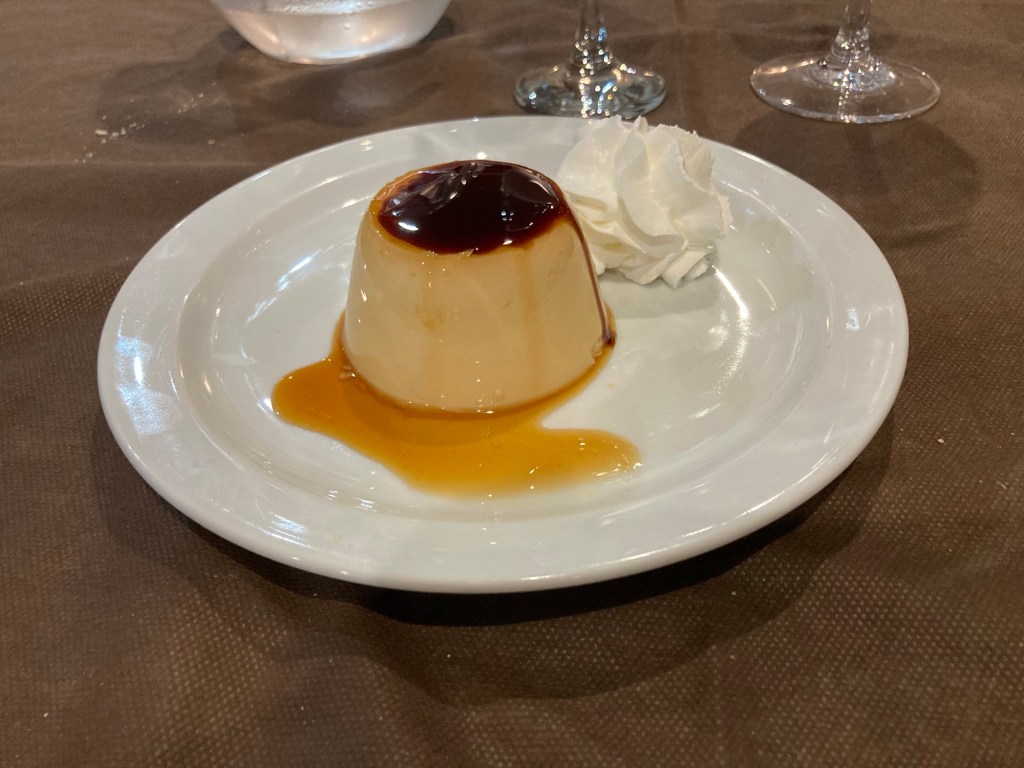
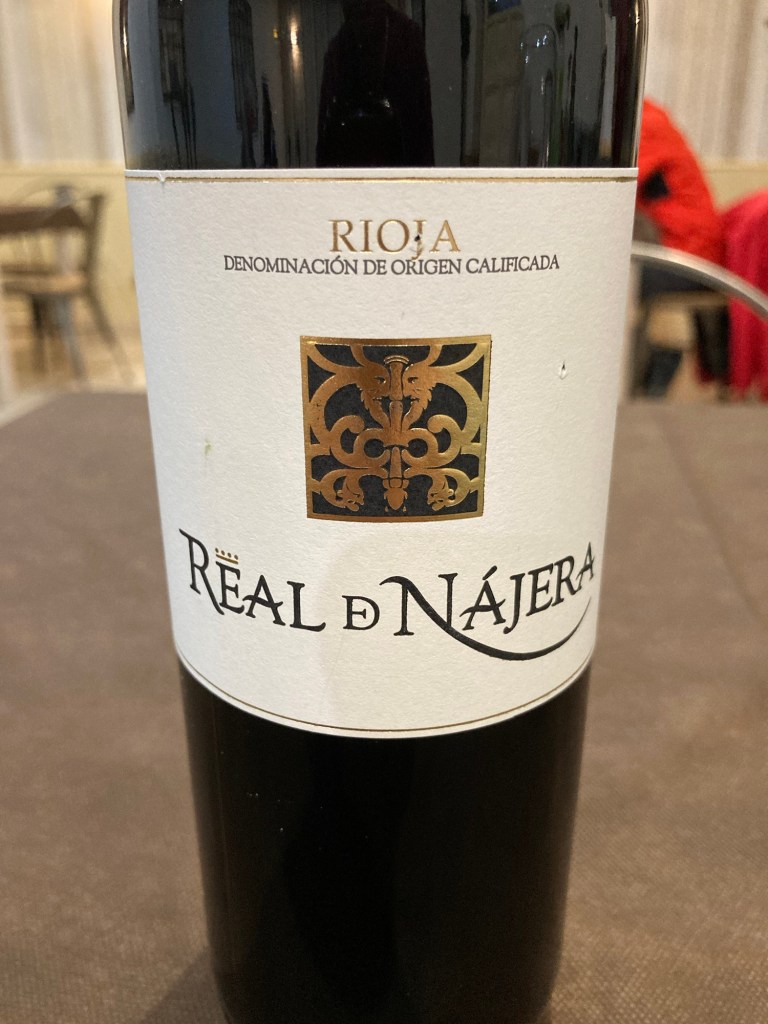
Dinner started early for Caminoites at El Trece (13) around the corner from the hotel. I couldn’t pass up ( or is it pass on) the red beans — for the third time. The main was qfried sardines. I ended with probably the best flan that I have ever eaten. The custard was firm and the caramel was slightly burnt and thick on the top. The local red wine was good.

The Third Red Beans
Sardines
Flan
Local Najera Wine

After dinner, I took a stroll with the other hundreds of locals. A carnival was in full motion. The Rio Najerilla next to the festivities was quiet as sunset was in progress. The churro truck that was mobbed a few minutes before was on a well deserved break. I walked back to my hotel.

Rio Najerilla

Hotel Hispanio: 2.5

Day 7 (26 April) Leaving Navarra – 19 Miles

Rain — the forecast predicted to start in the afternoon. I looked out the window of my hotel room. The skies seem to say that all will be well. Not to be swayed by my wishful thinking, I decided to start at 8 AM instead of my usual 9. Here are some photos from this morning walking through Sansol, Torres del Rio, finally stopping in Viana (about 2/3 of the way).

Cathedral Los Arcos
Near Sansol
Sansol
Torres Del Rio
Shrine of Remembrance

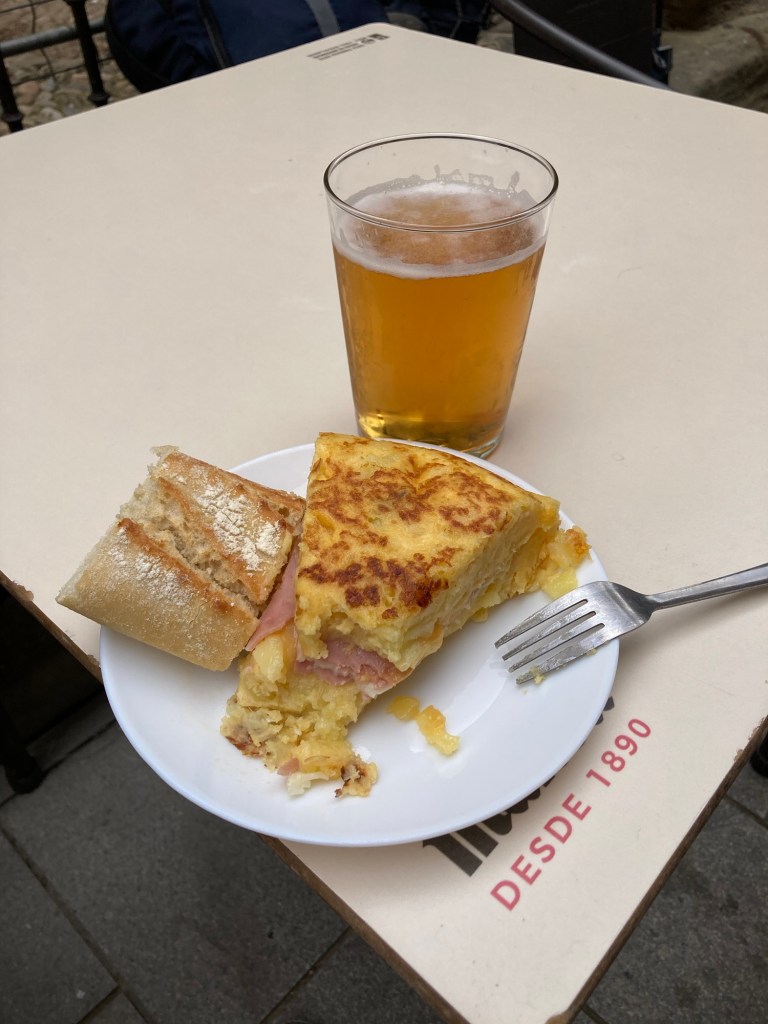
Near Viana, I met up with Robert who was talking by the side of the path with Kieran from West Cork. Along the path came Jerry formerly of Dublin, now Vancouver. We walked together towards Viana when I told them that they could go on. They are about 6 feet tall or more (see Jerry, second from left); their strides were so much longer.l than mine. I kept them in my sights. Eventually, with several uphill climbs to Viana, I caught them at LaTaverna on Viana’s main street. We all sat down (11 miles walked at that moment) and ate various types of tortilla (traditional, ham and cheese, and chorizo) along with beers. During that lunch, I became one of the four Irish Frances (after the Camino). I may apply for an Irish passport now.

Lunch Of The Four Irishman
The 5 Euro Tortilla and Beer Lunch

The last third of the journey was yet ahead. We wound our way out of Viana.

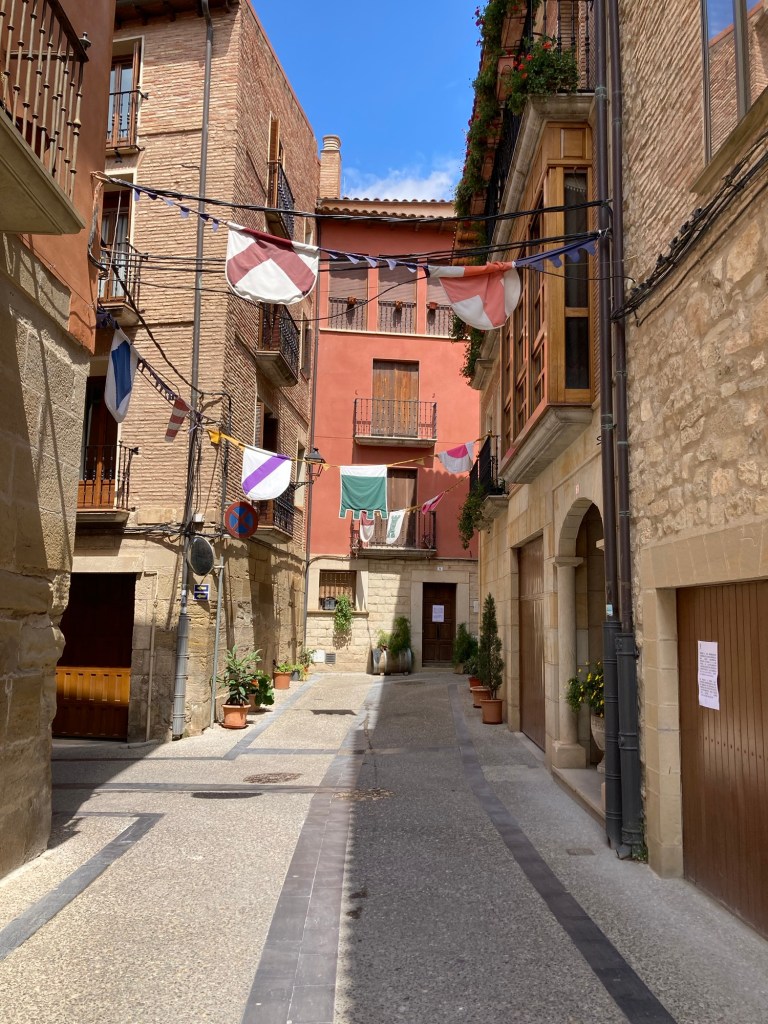
Flags Of Viana’s Neighborhoods
Portal Of San Felices
Go Right➡️

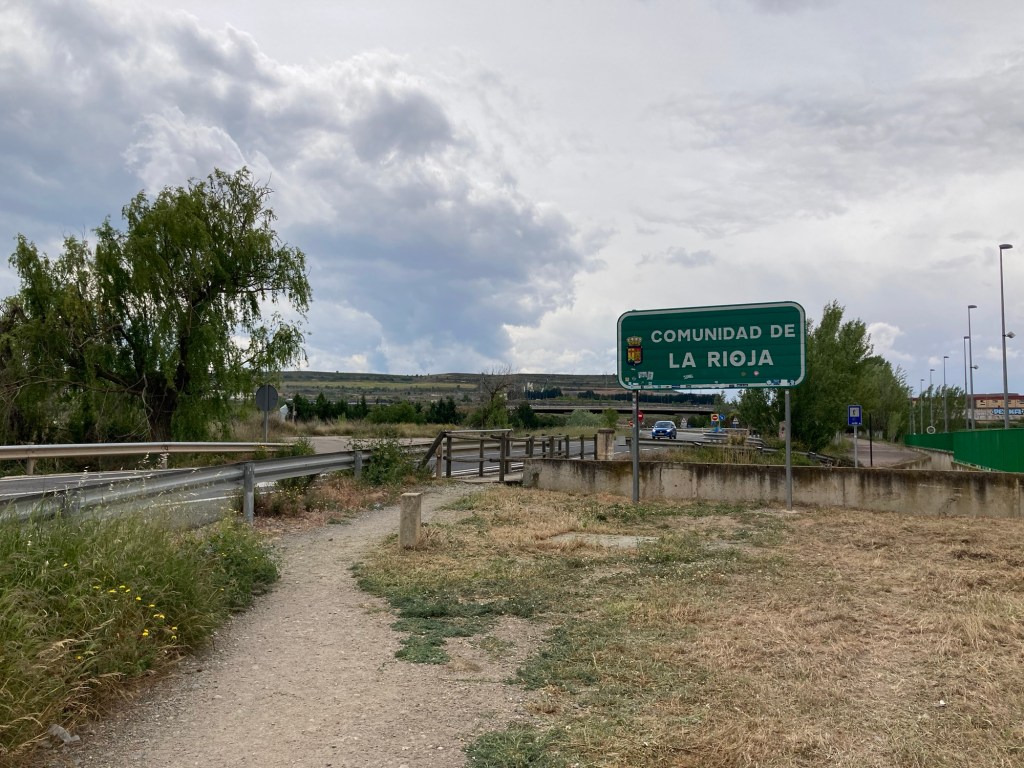
As before, my Irish companeros took off; I walked this last section alone. I did not get lost because all of the forks in the road had clear signs. I knew that I had entered Rioja by not only the sign at the border but also the old vines in many vineyards by the sides of the path,

Custom Made Sign
Entering Rioja
Old Vines

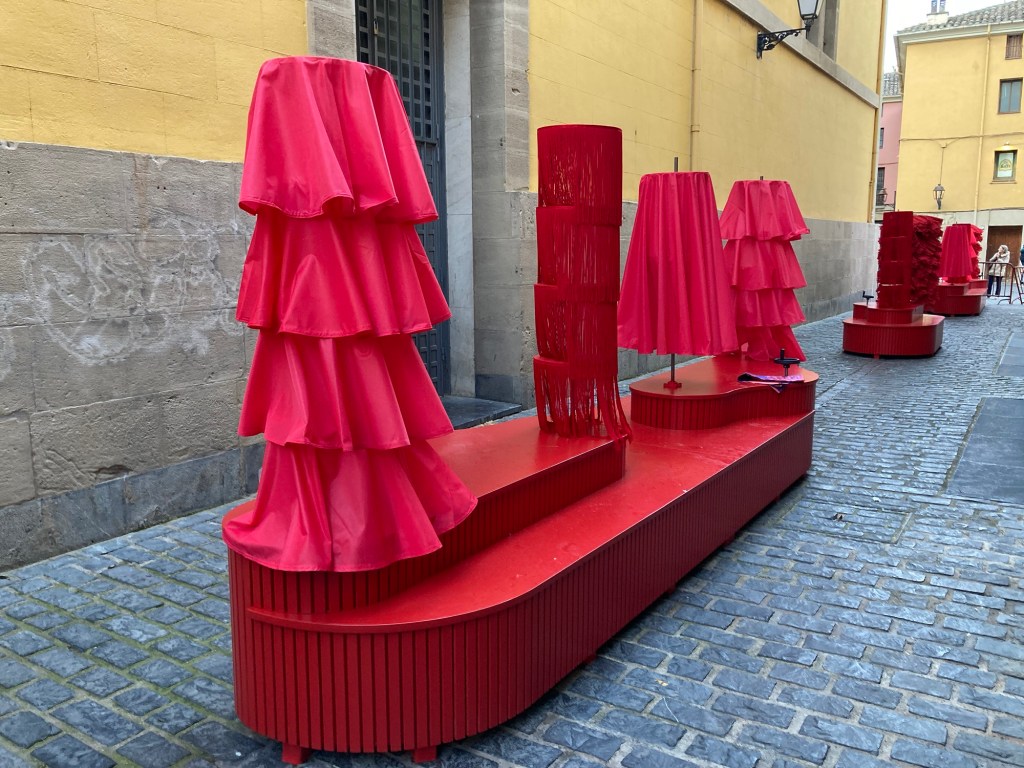
After a long descent but gradual descent, Logrono’s old city came into sight across the River Ebro. Turning right after the bridge, I walked about a half mile through old town until I reached my hotel. But before I did, I passed the parliament building for Rioja. An interesting object d’art was to its right. You can’t see it fully. It is made up of four large cleaning brushes like you see spinning on the sides of a car as it passes through a car wash. The woman was pushing a lever back and forth to make them spin. Perhaps it means — Rioja, maker of red wines, promotes clean government?Think about that piece next to our city hall.

Logrono
Object d’Art

When I went out for dinner, I passed by this exhibit. Indeed, the pieces were composed of spinning car wash mops. But my guess about cleaning government was wrong. Logrono was displaying outdoor art. These represented the swirling skirts of Spanish dancers entitled Dancing Carwash. It attracted many curious onlookers.

The Calle Mayor (Main Street) was filled with strollers and diners at 8:30. I spotted this restaurant that had no patrons on this very busy Friday night. Perhaps bad pr to get attention doesn’t always work out.

8:45 came. I had a solo reservation at Ajonegro (black garlic), a one star Michelin restaurant presenting Spanish-Mexican fusion food. I invited Robert who is leaving the Camino in Logrono to join me.

We chose the night “short” menu. The price was 72 euros. Robert ordered Aquarius, a flavored water brand, while I ordered various wines by the glass. The pours were 2 oz and were priced at 4 euros each.

I wanted to explore the cuisine as well as wine. I won’t describe every dish. I would be writing for another hour and a 20 mile stretch is ahead of me tomorrow. Every portion was small but more than satisfying. The use of Mexican chili spices was superb. Even after all of courses, we felt just right, not stuffed. Here are our three favorites.

We loved the artichoke. Lightly fried and baked with a Mexican chili and cheese. The plating enhanced the dish; the artichoke was like the center of the sun. My favorite wine of the night was the Rias Baixas from Galacia that paired so well with the artichoke.

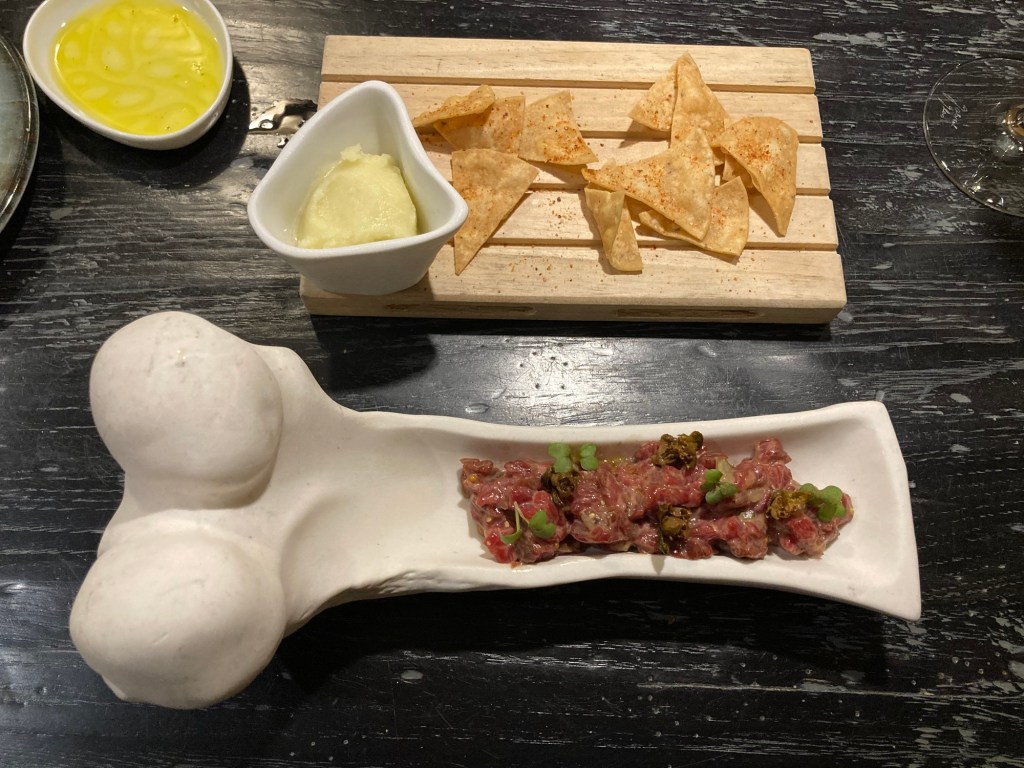
Our second favorite was the steak tartare. How about the plating? You can combine the meat with the mustard flavored ice cream and eat them with or without the chips that were dusted with chili powder.

Our final favorite was the confit of leeks. Vegans would swoon. I just sat quietly and complemented it with a Rioja white.

Our dinner complete, we were invited to the kitchen to meet the chef-owners who created this wonderful fusion – she is from Mexico, he from Spain. They have had the star for two years. Perhaps in the future, we will return to experience what magical combinations they will have created.

Magicians

Hotel Murrieta: 2

Day 6 (25 April) “Almost There” — 18 Miles

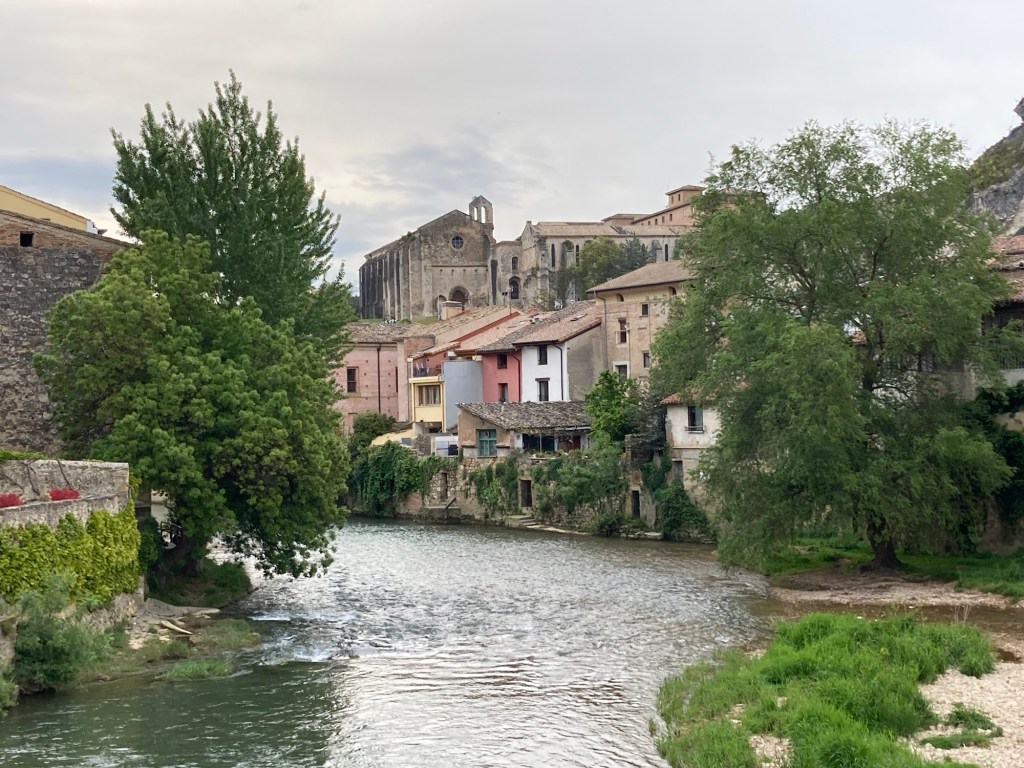
In order to resume walking on the Camino, I had to retrace my steps back to the historical center of Estella. If I were to return here, I would pencil in an extra day to explore the museum and the various medieval buildings. Also, part of the town hugs a stream that creates a beautiful scene.

Estella – North View

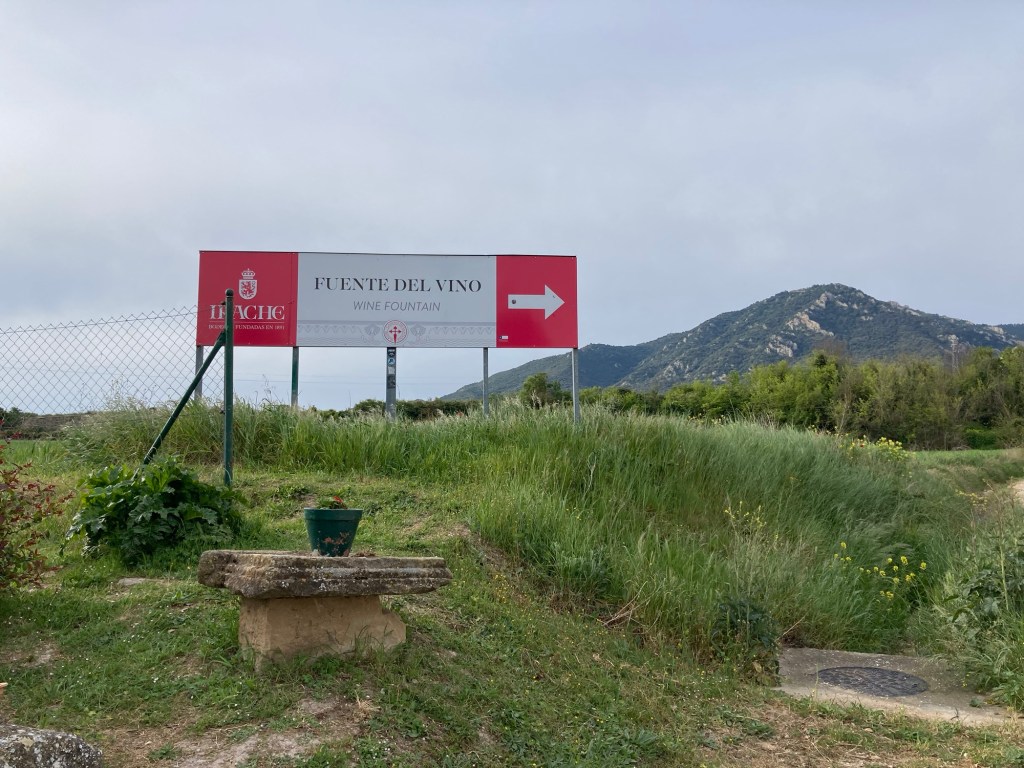
Shortly after leaving town, the Camino goes by the Bodega Irache, one of the most popular stops on the Camino, because it offers free wine at its fountain. Eager pilgrims lined up to fill their bottle. I passed on taking any wine – 9 AM is way too early for drink though I have to admit to over pouring alter wine to priests when they said 6 AM mass. I can remember them swaying when we finished mass. I still had miles to go and not afford using energy to walk straight. I also explored the cellar below where some of the wines are aged in barrels.

Fountain of Wine
Aging Barrels

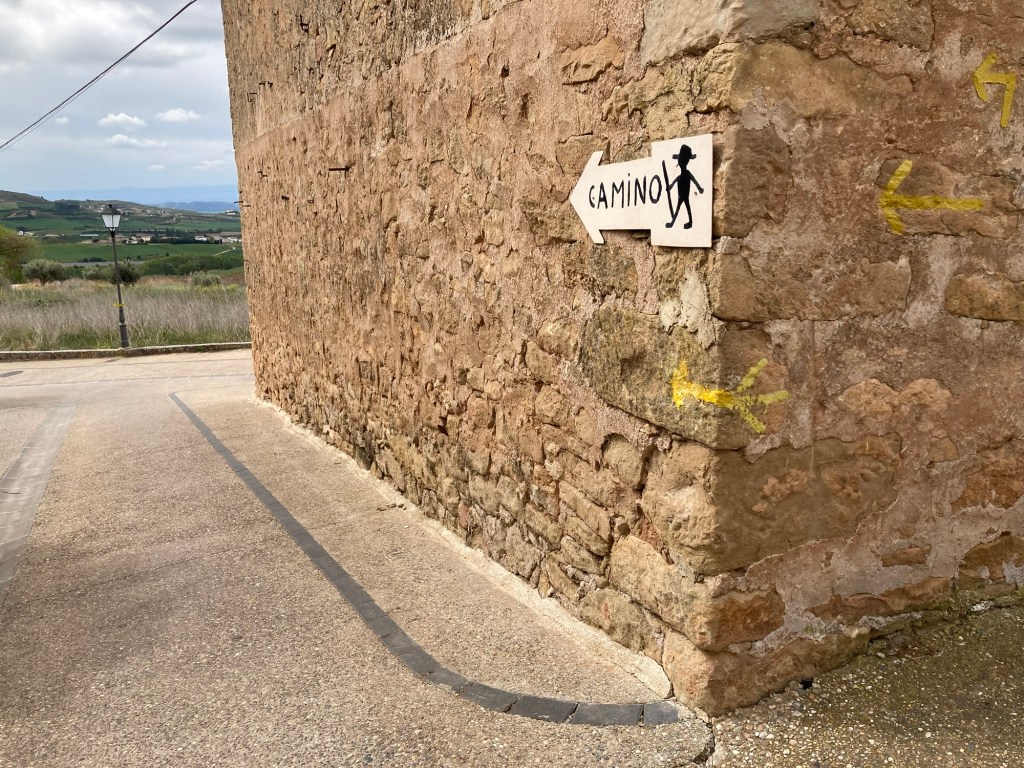
After this excitement, I took the wrong fork in the road (the last time I’ll follow Yogi Berra’s advice) but after a mile or so found the trail. Here are some photos of the countryside and pilgrims on the path.

Go Left Young Man
Straight As An Arrow
Wheat Fields
Hillside

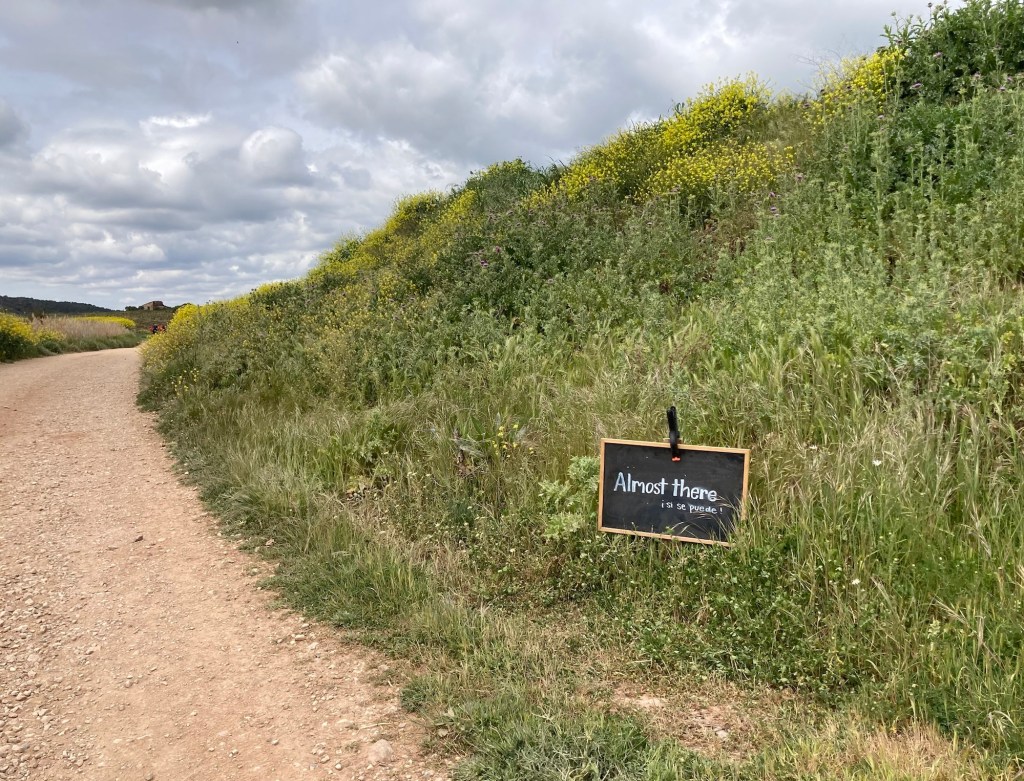
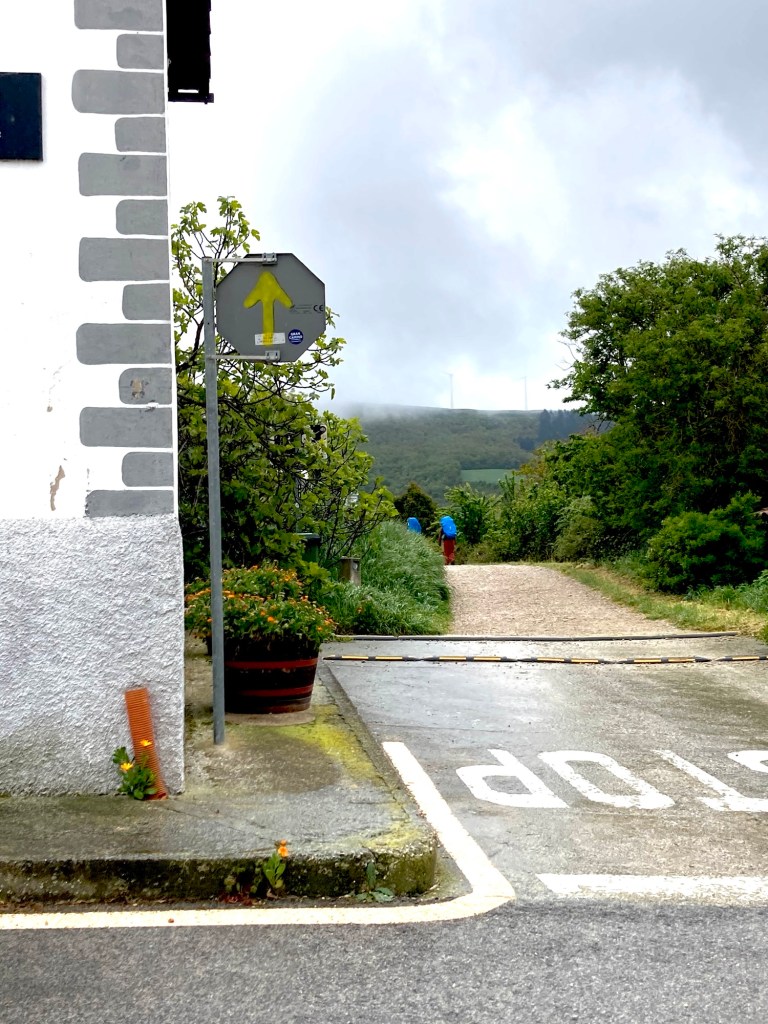
I have had issues with how distances are reported in guide books. They always seem to underestimate distances. What caught my attention today was the sign “Almost There.” It reminded me of onlookers at marathons when you had 6 miles to go and were in pain. They would say “You are looking good. Keep it up. You are almost there.” Well intentioned but really….?

We got there -Los Arcos – 3 miles later. Again, I crashed on my bed while listening to the arguments and questioning at the US Supreme Court concerning Trump’s claim of absolute immunity.

I stayed awake the whole time. The questioning ended just in time for dinner. The restaurant overflowed with Caminoites. I shared a table with Michela from Italy and Robert from Ireland (see yesterday’s blog).

Dinner was tasty and satisfying. I had beans again along with trout. The best news of the day was hearing that Sharon’s minor knee surgery appeared to be successful. She was home. I will sleep well tonight.

Beans Again
Trout

Hotel Monaco: 2

Day 5 (24 April) Cloudy To Bright — 17 Miles

The big decision of the morning was whether to wear rain gear or not. I ended up carrying my rain jacket and pants. It was iffy until about 11 AM when it seemed that they weren’t necessary. But it was still cold (40 degrees with a wind chill of 32).

As I left Puente La Reina, I passed an example of a well preserved shop dating from 1905. It would have been fun to have had breakfast there instead of at the hotel though not outside. I also captured the profile of the Romanesque bridge from which I took last night’s sundown photo. These small towns have maintained their characters even in 2024.

La Puente La Reina

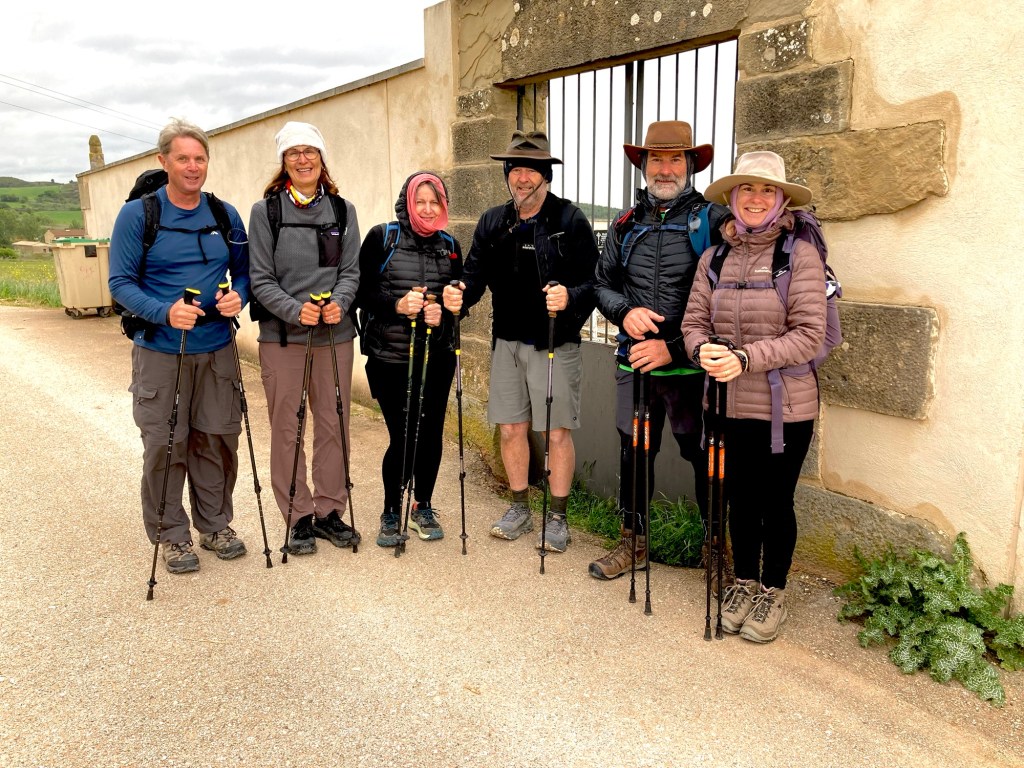
The first half of the walk was filled with ups and downs. The climbs were steep as were the descents. Along the way, I met up with some of the Kiwis and Aussies from my first and second days. Can you tell who belongs to each nationality? The couple on the left are Aussies and the four on the right are Kiwis. It’s the footgear that gives them away.

I must admit that I can more easily understand the Aussies. I was told that it has something to do with the way Kiwis pronounce vowels.

To The Top
Aussies And Kiwis

Eventually, we reached the hill town of Cirauqui requiring another climb. The town reminded me of those on the Amalfi coast and Sicily with their steps for sidewalks and hairpin curves. At one juncture, I had a choice. I think most pilgrims chose to go left.

Cirauqui In The Distance
Steps
Left or Right At 11 AM?
Hairpin Turn

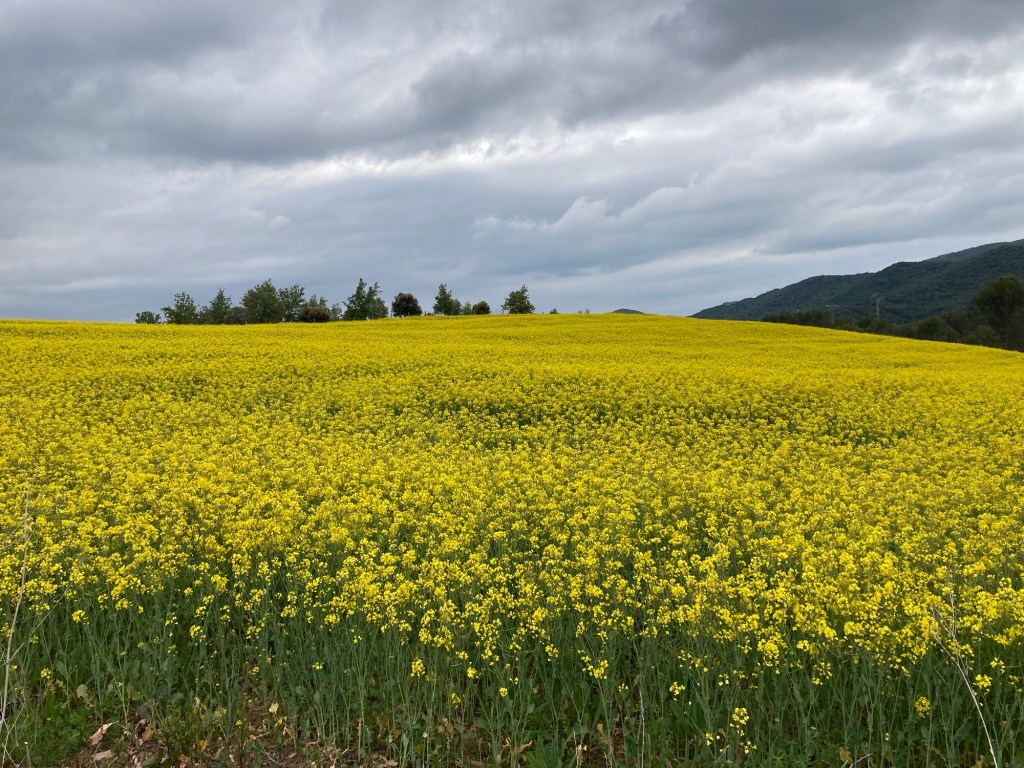
After leaving Cirauqui, fields of yellow spread before us. So striking against the green and dark skies. In a few weeks, the color will be gone for another year.

Yellow

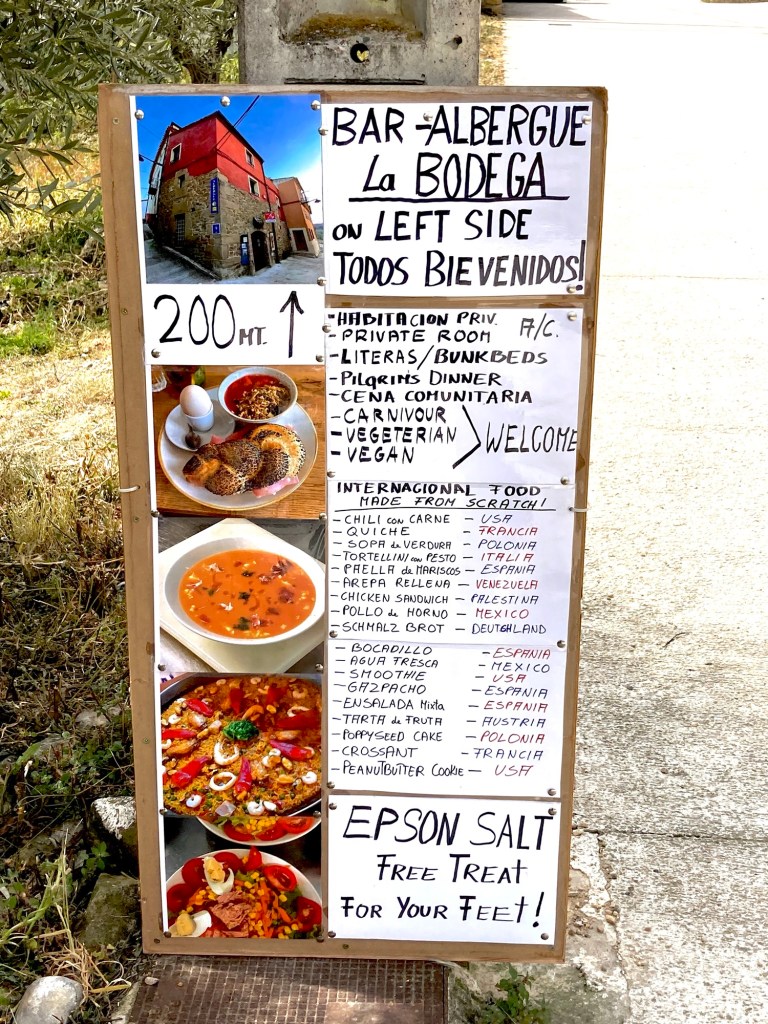
I had reached Lorca, the halfway point. Time for some lunch. I was amused by the sign that welcomed every type of eater and offered non-Spanish dishes. This establishment even offered epson (sic) salts for tired feet!

I chose a small cafe at the end of town whose owners were Spanish and Chinese. They had met as university students in Rome. What a world! I asked to take their photo but the wife demurred; she said that she was shy.

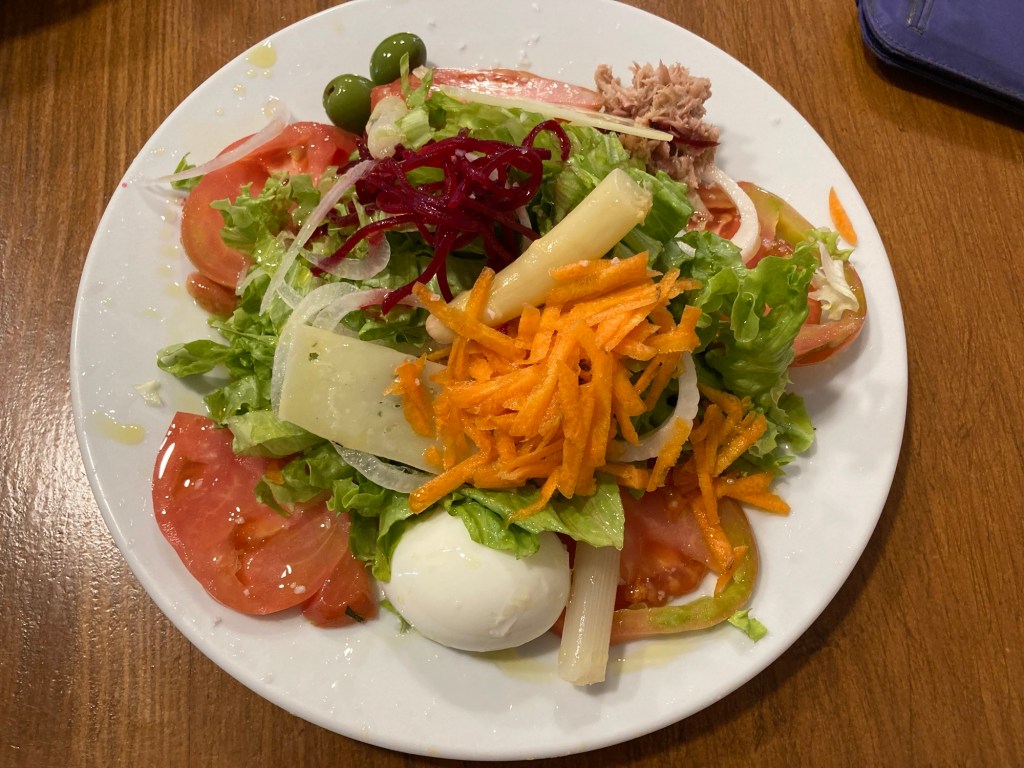
But I did meet some satisfied diners who were not shy. Sean from Ireland had studied as a graduate student at Penn State. I chose the mixed salad and a draft beer – both were delicious and cost only 11.75 Euros.

Esther, Netherlands; Constantine, Germany; Sean, Ireland
Mixed Salad

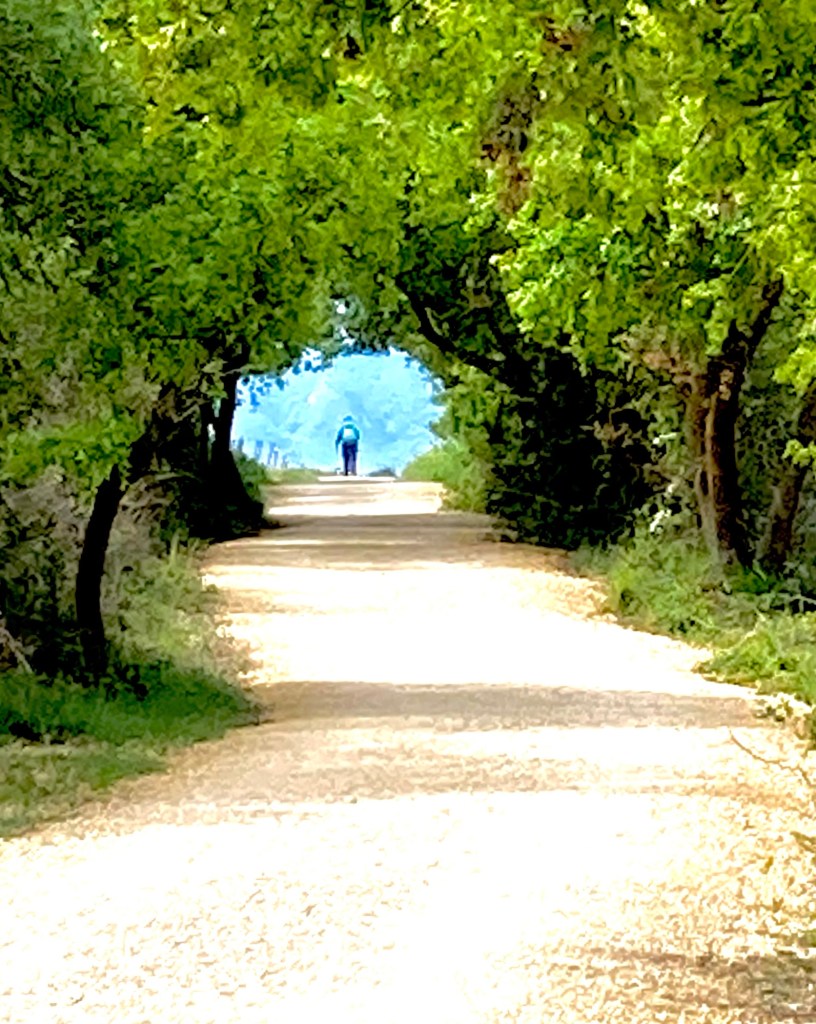
Break time ended. Now for the final push to Estella. Almost immediately after leaving Lorca, I took this photo of a pilgrim framed within a tunnel of trees. I could not resist.

Pilgrim On The Move

After winding through the countryside, I entered Estelle which was once a multi religious city with a large Jewish population. A plaque recounts the history of Jews in the city.

Several historic structures still stand in Estelle – the major church on the side of a hill and the palace of the Dukes of Navarra that is now a museum. After walking through the Castile gate at the south end of the historical section, I realized that I had to backtrack to get to my hotel. I’ll walk through the gate tomorrow to rejoin the Camino.

My hotel is located in Yerri section on the newer side of town; hence, the Yerri hotel. This long day led to my crashing until dinner time. In the restaurant, I met an Irishman, Robert, who was on his first personal Camino. Until now, he served as a guide for Camino tour groups that left him little time to experience the self-reflections and interactions with pilgrims outside of his tour group. You know that I had a lot to say.

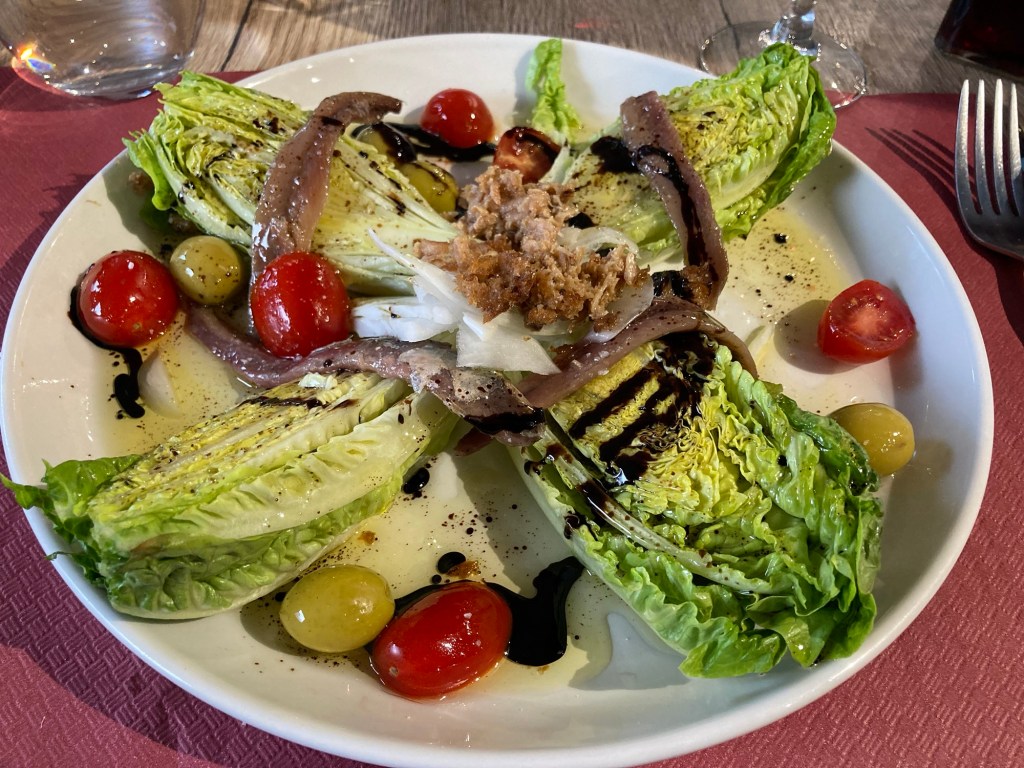
We shared plenty of Camino and personal stories as well as dinner. I chose a salad of romaine lettuce hearts with anchovies. We both ate the pig knuckle. I ended with ice cream that had the consistency of semifreddo. Did you notice that no one was sitting behind Robert? The time was 8 PM. By 9:30, it was completely full. We were concerned whether the restaurant had enough customers to stay in business.

We might see one another at breakfast or on the road. He is on the road by 8; I at 9. But moments like these even only once are the treasures of the Camino.

Hotel Yerri: 2 but with bonus points for the anchovy salad making it 1.75

Day 4 (23 April) A Soft Day — 15 Miles

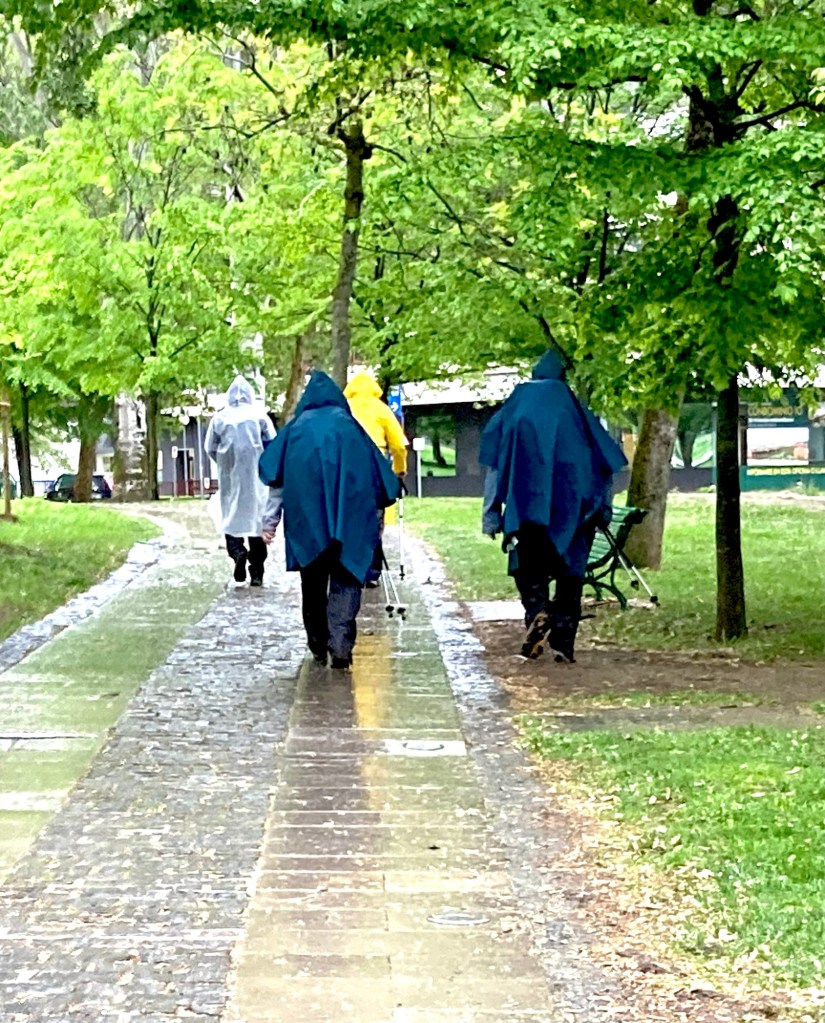
Mother Nature has a mind of her own. She brought rain to Northern Spain. It rained lightly throughout day known as a soft day in Ireland. Raincoats, rain pants, and ponchos were on every pilgrim’s body and mind.

Whether rain or shine (thank goodness, no snow) brings an ambiance to the walk. The light is muted but colors stand out. Here is a mustard covered field of yellow just outside of Pamplona. Our challenge was to crest the mountain in the background — Alto de Perdon (755 meters). Did you see the walkers in the right lower corner of the image?

Our muddy mountain climb began in Zariquiegui. I had to take a photo of the sign below. It was the first time that I had see this singular message displayed in public. I wondered whether it could be shown in Florida, probably too woke.

After passing out of the town, we proceeded up the mountain passing a row of windmills. If you have read blogs from my Primitivo trip, you will recall how often I had encountered windmills in the Cantabrian mountains. When we crested the mountain, we passed by a metal sculpture honoring pilgrims and their battles with winds at the pass. Wind and rain, constant companions of walking pilgrims.

Leaving Zaiquiegui
Up To The Alto De Perdon
Pilgrims Battling The Wind

The descent was steep and rocky. Perhaps stony describes it better – lots of the them. Towards the middle of the descent after the steepest section, grateful walkers, I included, have tossed a stone on this pile that now envelopes a Camino sign.

The Pile Of Thanks

At the bottom, I met John from Oregon who is on his first Camino. He will be going all the way. He retired from his job of 30 years. He is 58 and wanted to experience walking alone in a non- English speaking land. I was happy (perhaps with some slight envy) for him because he will have many more walks ahead of him. Although I plan on a multi-day a year, the options for the types of walks and their durations will lessen year by year.

We entered Obanos, another medieval town with close connections to the Camino – a story of murder and repentance from centuries ago. Here are photos of the main church’s alter, the gateway to the plaza mayor, and another free library. We were only 3 km from Puente La Reina.

Finally, after 25 minutes, we reached our destination with the traditional moment of celebration.

Dinner at the hotel was simple – a mixed salad and a baked fish with a caper tasting sauce. Pretty basic in comparison to some of my other dinners. Nevertheless, I was satisfied.

I took a stroll on the Main Street to the bridge that is Puente de Reina‘s namesake. Sundown had arrived. The river was calm. The area was quiet with no cars and only a man filling large water bottles at a public fountain behind me. A meditative moment.

As I walked back to my hotel (two buildings beyond the church tower), the town lanterns came on. They are electric but before such power was available, they were torches and a townsman walked the streets with a long staff to protect walkers. No need for a patrolman today as I passed locals talking at the nearby bar. Another day experienced.

Hotel Beidan: 2.5

Day 3 (22 April) Return To Pamplona — 14 Miles

Nine AM seems to be time that I get started so far. Down the block, right turn, and over the Romanesque bridge for the walk out of town.

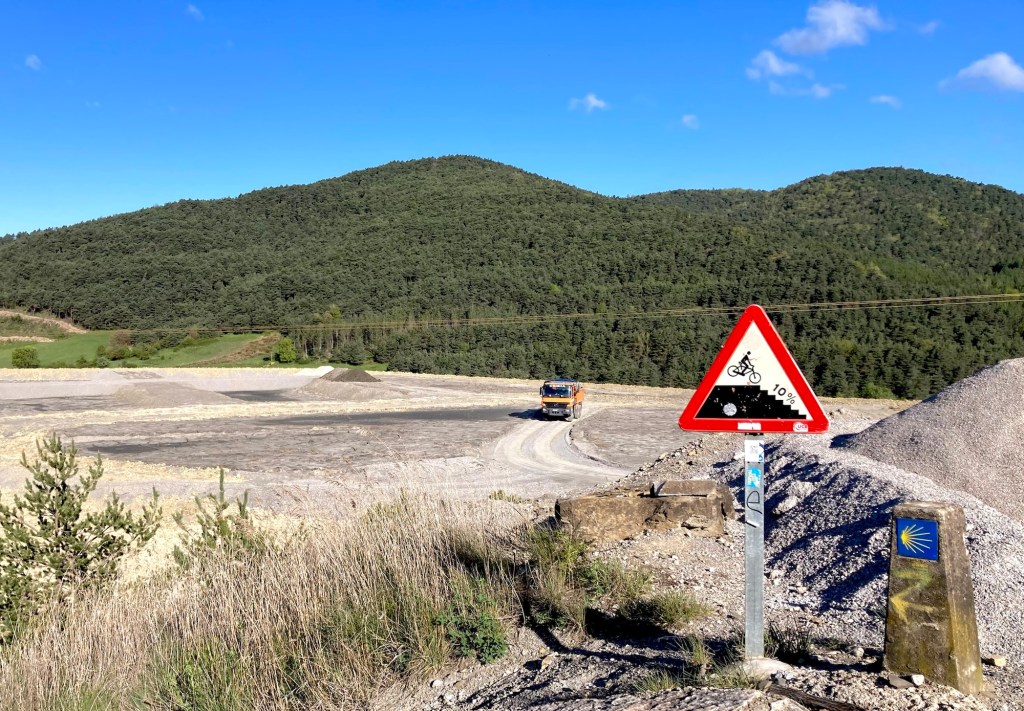
Not every moment on the Camino is idyllic. Almost immediately I pass a factory whose purpose is to grind up earth most likely for cement. Close by were two very large open pits. The truck in the photo is the size of earth movers that you see on the highway.

Big Pit

But right around the next hill were two mares with their foals lying on the ground. The contrast could not have been more stark.

Back To Nature

After ups and more downs on the trail, I took a welcome break for some cafe con leche. Others had the same idea in mind. I met up with some pilgrims who shared this morning’s breakfast with me. Josh turned up soon afterwards and told me that Racquel was taking the taxi to Pamplona because she was not feeling well.

Fellow Travelers

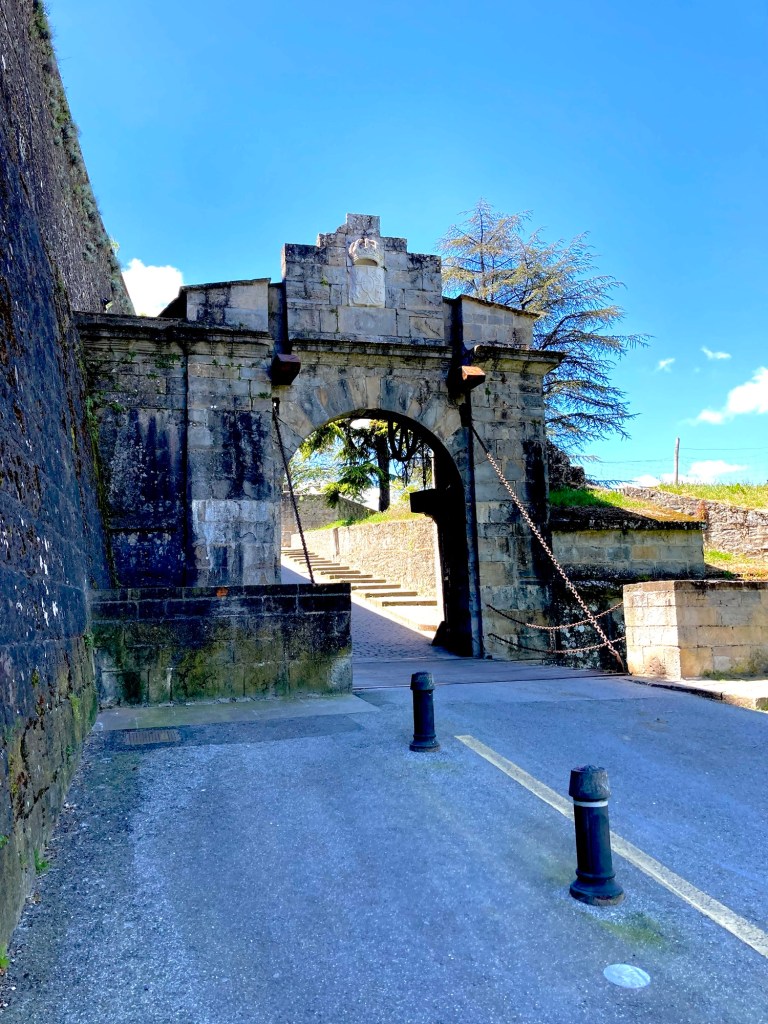
We hiked the last 8 miles to Pamplona together. We crossed a Romanesque bridge built in the 11th C when we entered Trinidad de Arre, a suburb of Pamplona. We passed an example of a Spanish free lending library. Large Camino signs guided us through the streets until we reached the Pamplona’s city gate that hugged enormous city walls as high as 30 feet. Storm this walls? I had retuned!

Entering Trinidad de Arre
Free Lending Library – Spanish Style
Guiding Signs
Pamplona City Gate

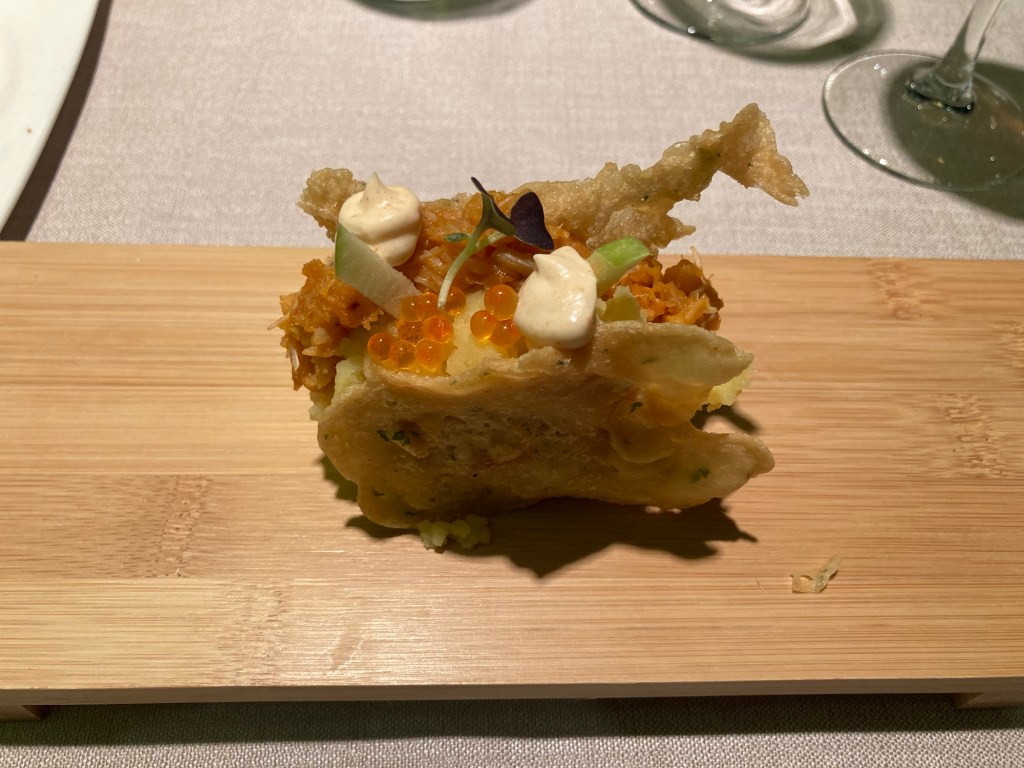
Within a few hours, dinner time (8:30) required a 25 minute walk to the south outside the old centro to El Merca’o which Michelin designated with Bib icon as an establishment with excellent food at good prices. How about a delicious three course meal for 34 Euros that included bottled water, the wines for each course, bread, and coffee? I added one of its award winning pintxos (representing a crab composed of a shrimp spread layered with potatoes) and a glass of vermouth from Narvarra to start. BTW – Spain has hundreds of vermouth to taste.

Pinxtos
Navarran Vermouth

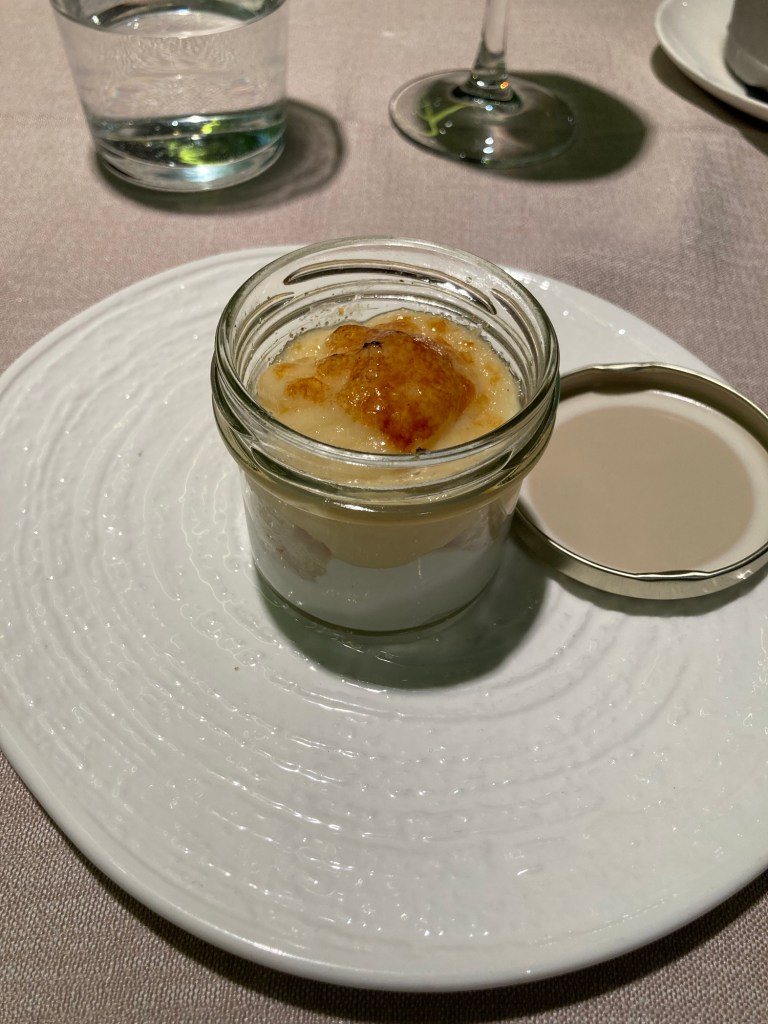
My first course was garlic sautéed string beans followed by fideua (paella but with angel hair pasta instead of rice – I prefer the rice version) ending with Goxua, a Navarran take on crème brûlée but with whipped cream as base. The Goxua thankfully came in a small jar. I enjoyed a citrus tinged white wine on the acidic side with my string beans and fideua, A good complement.

String Beans With Shrimp
Fideua
Goxua
White Wine

Dinner ended at 10:30, a reasonable time in Spain. The streets were quiet except locals hurrying home. A very light rain dotted my puffy jacket as I made my way back to my hotel.

I have received some emails asking about my boots that arrived last October after a two and a half year wait. The boots took about 250 miles to break in. A day before traveling to Spain. I gave them a light coat of bear grease. They still looked new. After three days, they lost their virginity,

Hotel Alda: 2
Day 2 (April 21) Walk In The Woods – 14 Miles

Dawn broke with the temperature at 30 degrees plus high winds. Roncesvalles was quiet even at 9 AM. It was Sunday and probably most the pilgrims were on the road. My hotel was just to the right (the small sliver of a wall) in the photo. Such peace on the Camino.

Roncesvalles

After passing the Camino stating the distance to Santiago (755 kms for thru walkers), out came my puffy jacket plus gloves. But they were soon shed because the pathway entered into a thick forest that proved to be an excellent windbreak.

Windbreak

Although some of the walk went through exposed areas like grazing land or meadows, most of today cut through different forests or stands of trees including a very rocky section near the town of Zubiri similar to the Appalachian Trail as it makes it way on the north side of the Lehigh Valley.

Rocky Road

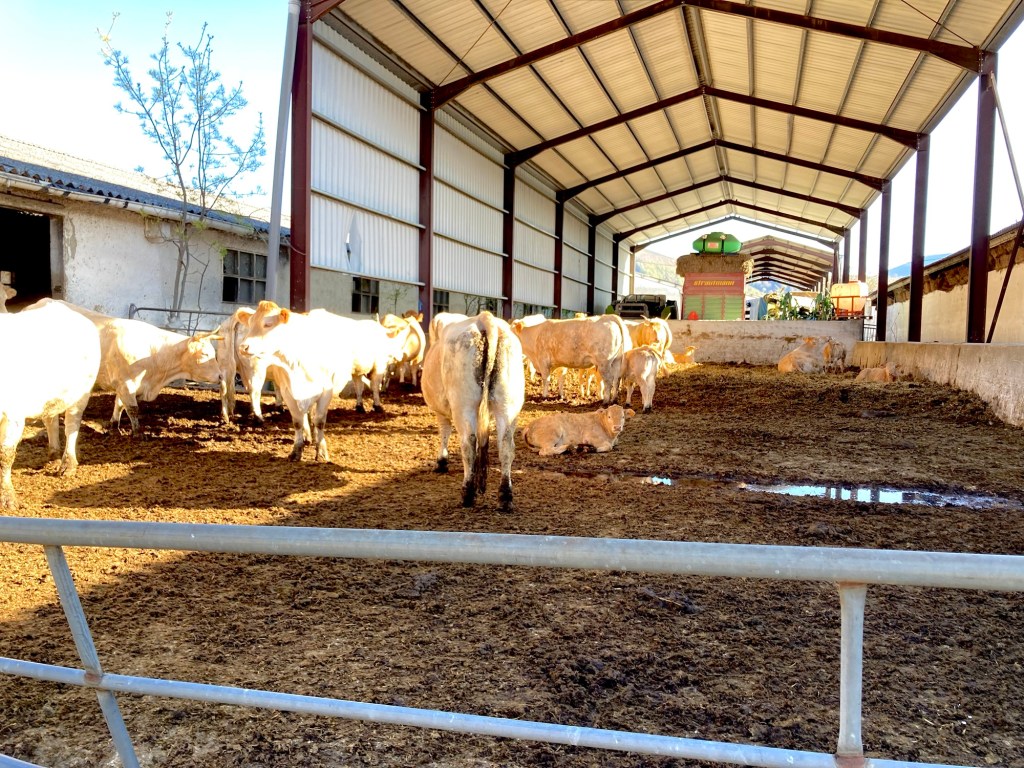
We passed several dairy farms and in the town of Espinal, a community ja’lai court with a spirited doubles game in progress. Given the size of the court and three walls, it is not surprising that the game didn’t catch on in the US like pickleball. I wonder if pronouncing ja’lai had something to do with it as well.

Local Dairy Farm
Ja’lai Court

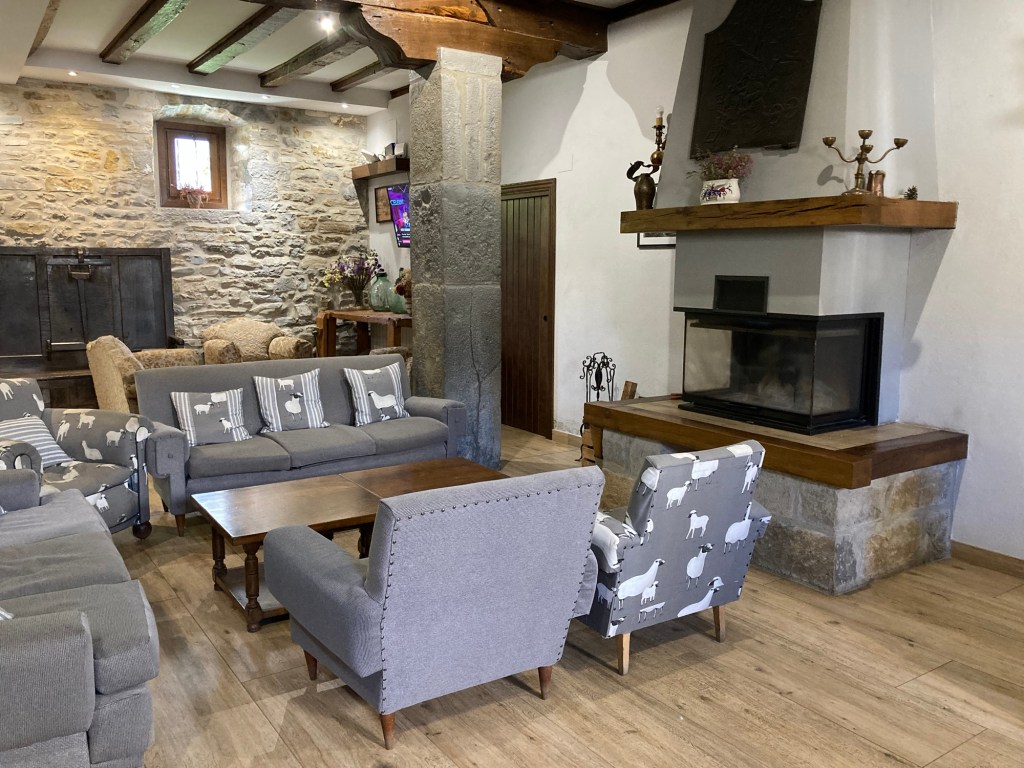
We eventually reached Zubiri and our hotel Txantxotena. I have provided some photos of the hotel so that you can calibrate what a standard hotel room en suite (bathroom in room) may be like if you book a trip with my provider, Camino Ways. I have ranked my first three hotels that I have occupied as: 1, very good to excellent (Txantxotena); 2, good (Las Posadas, Roncesvalles); and 3, adequate (Les Ramparts, St Jean). All were clean with good beds. The difference is the general ambiance of the hotel and room, room size, and internet speed. The Txantxotena was off the charts with internet download and upload speeds. Not even 5 star hotels can beat its speed.

Bedroom
Bathroom
Lobby

After settling in, Raquel and Josh, a couple from Colorado, and I were off to dinner. When we entered the restaurant, there sat Raye, Holt, and Daniel. I wrote about the first two in yesterday’s blog. Daniel is from Eisenach, Germany who is between jobs. At this point in the Camino, pilgrims are settling into their paces thus creating the opportunity for people to run into one another on the trail or in restaurants/bars even though they may be staying in different accommodations and starting each day at different times.

Guess Who’s Who (Answer Below)

Racquel, Josh, and I were seated and ordered our dinner. It turned out that Racquel and I love beans. Here is photo of the last spoonful of my beans that we devoured with relish (not literally). We were served ourselves from a tureen. We each indulged on about three bowls. Need that protein and fiber.

Beans Navarra Style

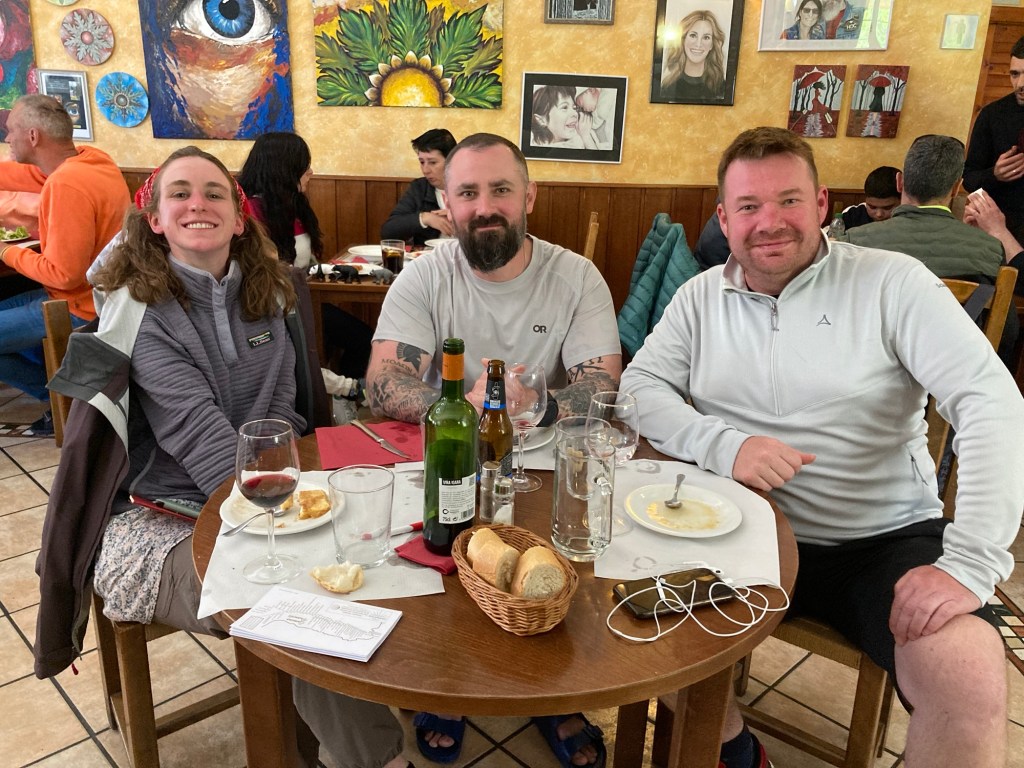
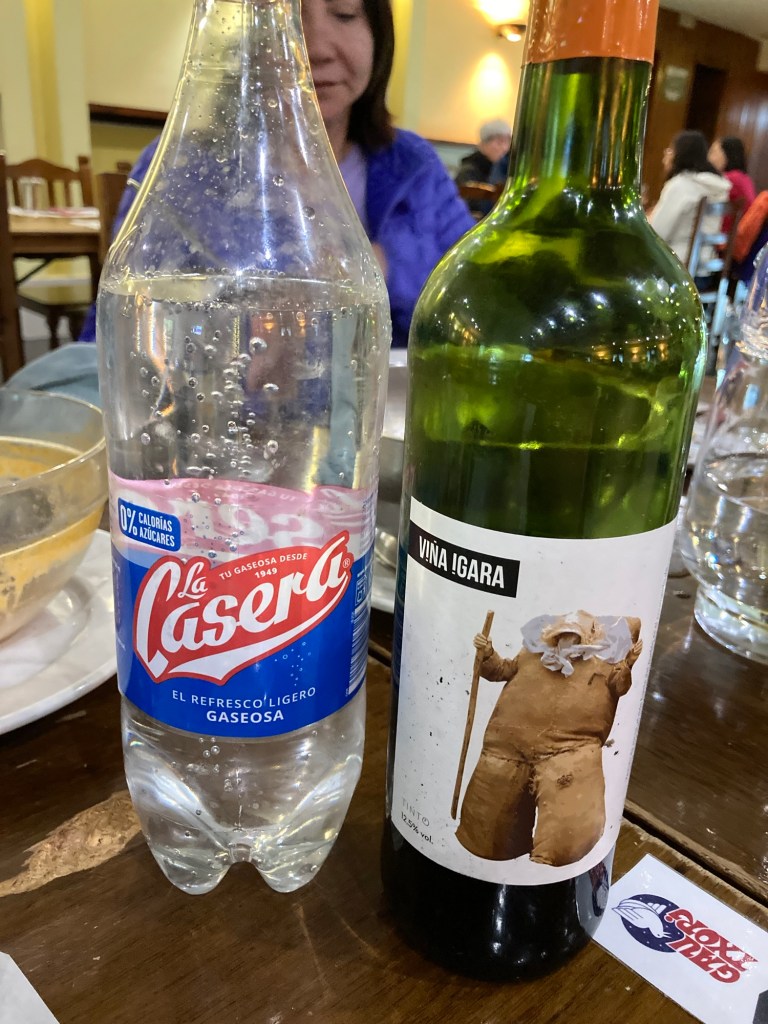
Josh and I shared a bottle of red wine that came with a bottle of zero calorie slightly sweetened soda. I was reminded of the 2021 Camino when Laird Evans and I were served similar two bottles. Back then, we asked our waiter, why two bottles after we had consumed a somewhat harsh wine. He said that we were supposed to mix the two! Luckily, our red wine yesterday was good. You have been forewarned.

Red Wine With Mixer

So ends another day – not overly exciting but with its own beauty of hearing the wind rustle leaves, birds chirping, water skimming over stones in a stream, and cows mooing. Most importantly, meeting new people and hearing their stories. Tomorrow, leaving the Pyrenees with my return to Pamplona. But not before breakfast.

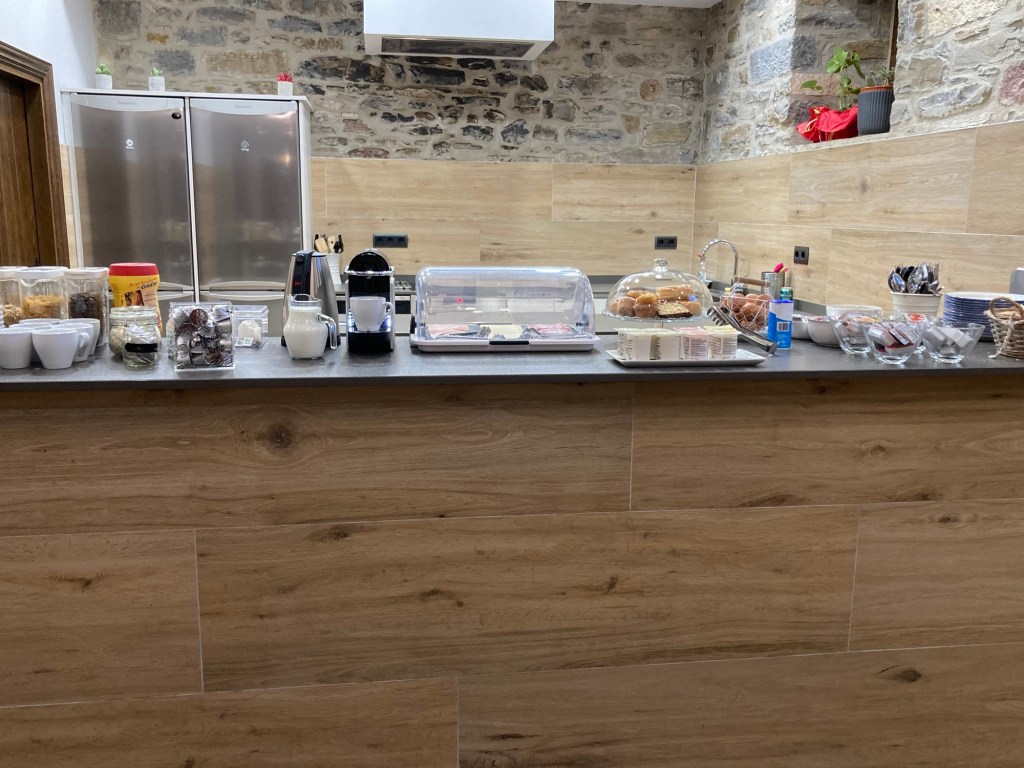
Breakfast But Not Tiffany’s

Answer (left to right): Raye, Holt, Daniel

Day 1 (20 April) Over the Top – 17 Miles

The most challenging stage of the Camino Frances is the climb from St Jean Pied de Pere to Roncesvalles, Spain. The ascent is about 4200 feet with a long descent into Roncesvalles.

I started at 9 AM and ended close to 5 PM. The day was glorious – cloudless, Carolina blue skies with very strong winds above 2000 feet on the Route Napoleon. I met the fellow who helped me yesterday at the Pilgrim’s Office in Orisson, a way stop serving food and drinks. He said that on the previous Monday, the route was hit with rain and snow. I had already passed a sign that showed chains were required on car tires before 1 April. Whew, dodged that bullet.

Uphill!

The first section is very steep with some parts at 20% grade. After about two hours, St Jean was in the distance framed by the foothills.

Looking Back

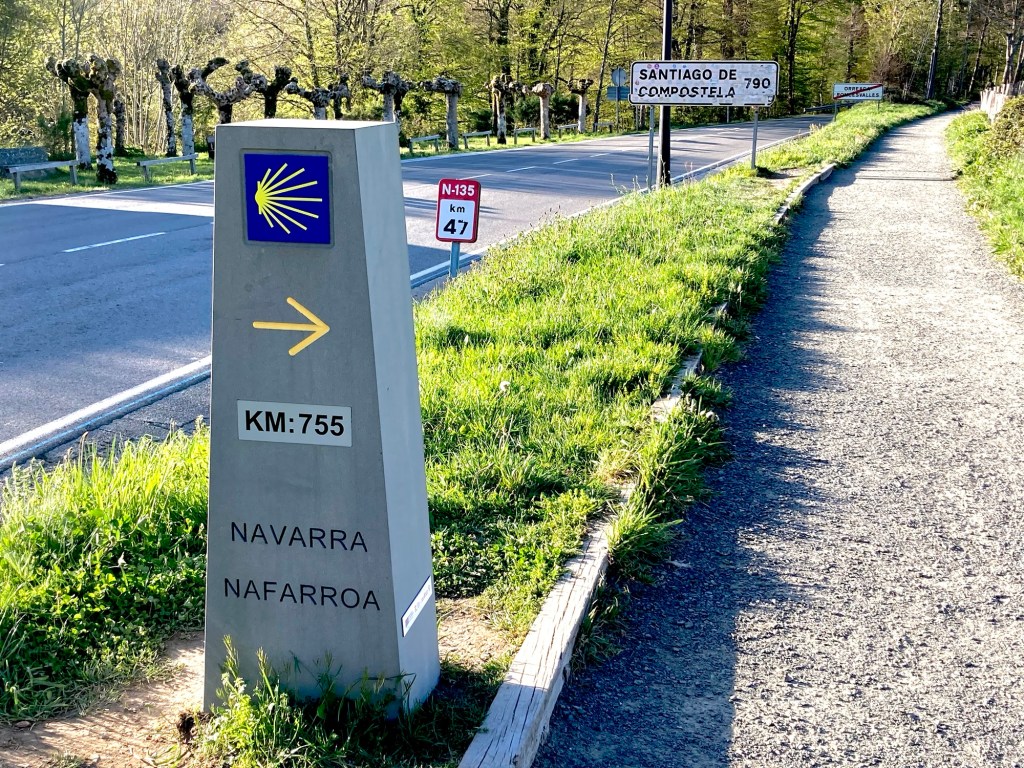
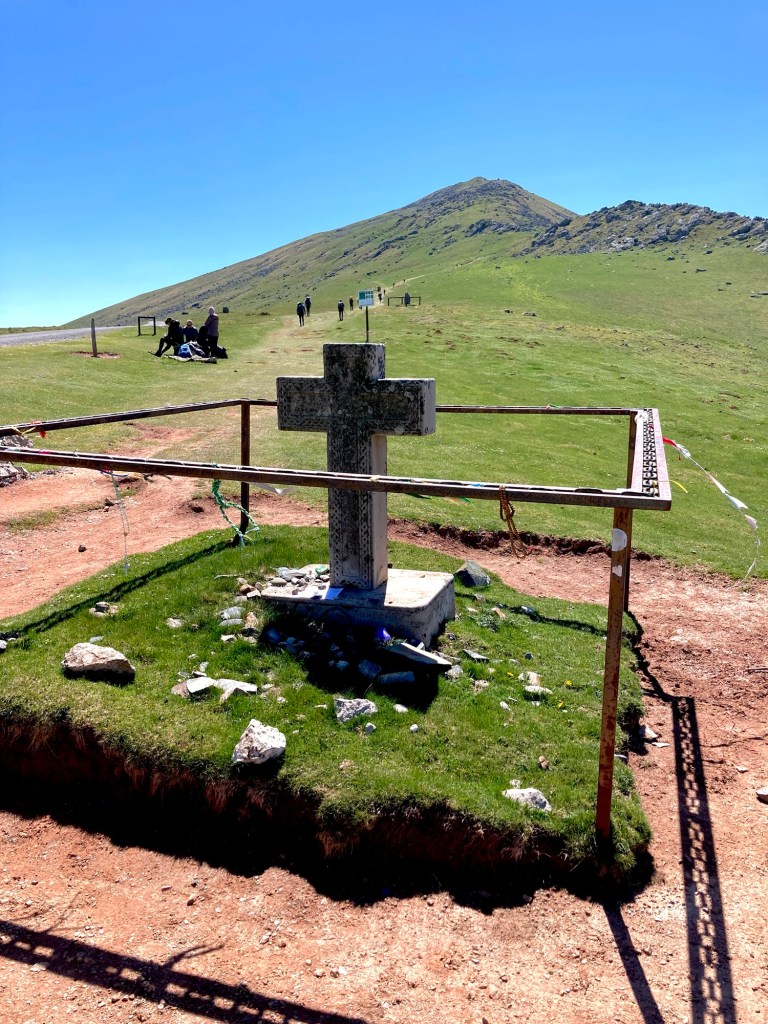
My fellow pilgrims and I eventually reached the Croix Thibaut that marked the ascent to the Col de Bentarte (1337 meters). The wind was fierce until we went through the pass that was about 20 feet wide. We were then in a wind break passing into Navarra (province of Spain) until we reached the Col de Lepoeder (1429 meters) – the highest point of this stage. We were back in the wind during our descent to Roncesvalles.

Croix Thibaut
Navarra Landmark

I would estimate that about 200 pilgrims were hiking to Roncesvalles. Not as many who walk the 100km from Sarria to Santiago but certainly more than the 30 or so in my cohort on the Primitivo. When I reached Roncesvalles, a long line of pilgrims were in the welcoming offices seeking lodging. The best offerings were shared rooms with 2-3 others. If you saw the movie, the Way, the 100 bed dorm room in the main hostel was converted into the smaller rooms. The moral of the story is book ahead.

I was surprised that Americans could have formed a plurality of the pilgrims; I met five Pennsylvanians. I chatted with a dozen New Zealanders traveling together (no Aussies yet), several Chinese and South Koreans, a South African, and plenty of Europeans.

The most frequent reasons for walking the Camino were: finding direction at a turning point in their lives, and seeking a different tourist experience especially for hiking enthusiasts. One fellow, Greg, is an ER physician at retirement age. He says the ER gives him purpose in life but the stress is overwhelming. Holt, a military veteran, is pondering whether to enter the Anglican ministry. Raye, a woman named after her grandfather, is taking a few months off after completing her time with a non-profit organization to figure out her next steps.

Then, there are those who walk because “it is there.” One woman has walked the John Muir trail and has biked across the US west-east, north- south. Two sisters, one of whom knows a former teacher from Centennial School in the 1980’s, are avid hikers and wanted share in the Camino experience. Several people mentioned “The Way” as their first introduction and inspiration for coming to the Camino.

For whatever reason, hearing and sharing so many life stories reinforces that we have so much in common — our shared humanity.

It is welcome change from the news at home.