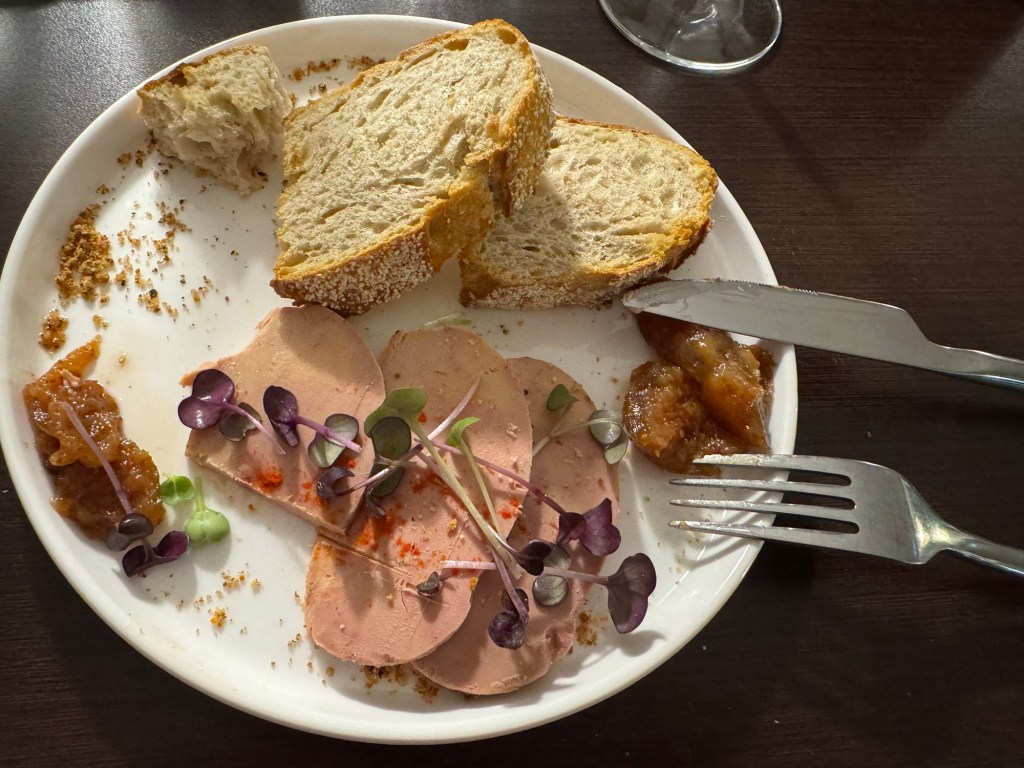
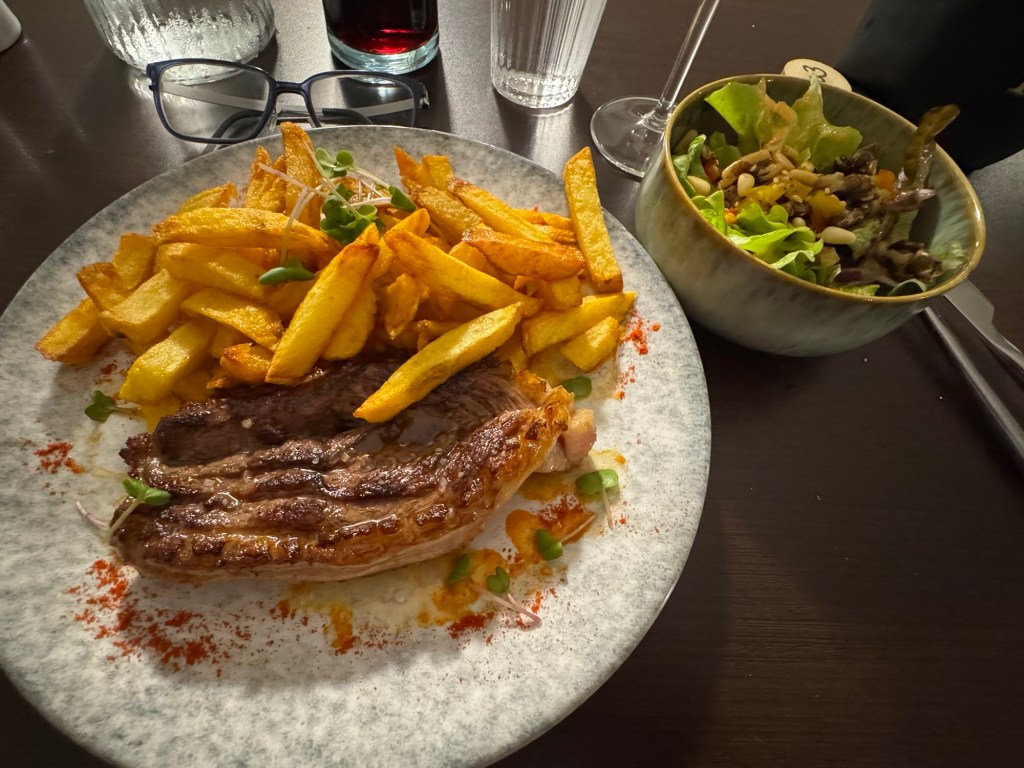
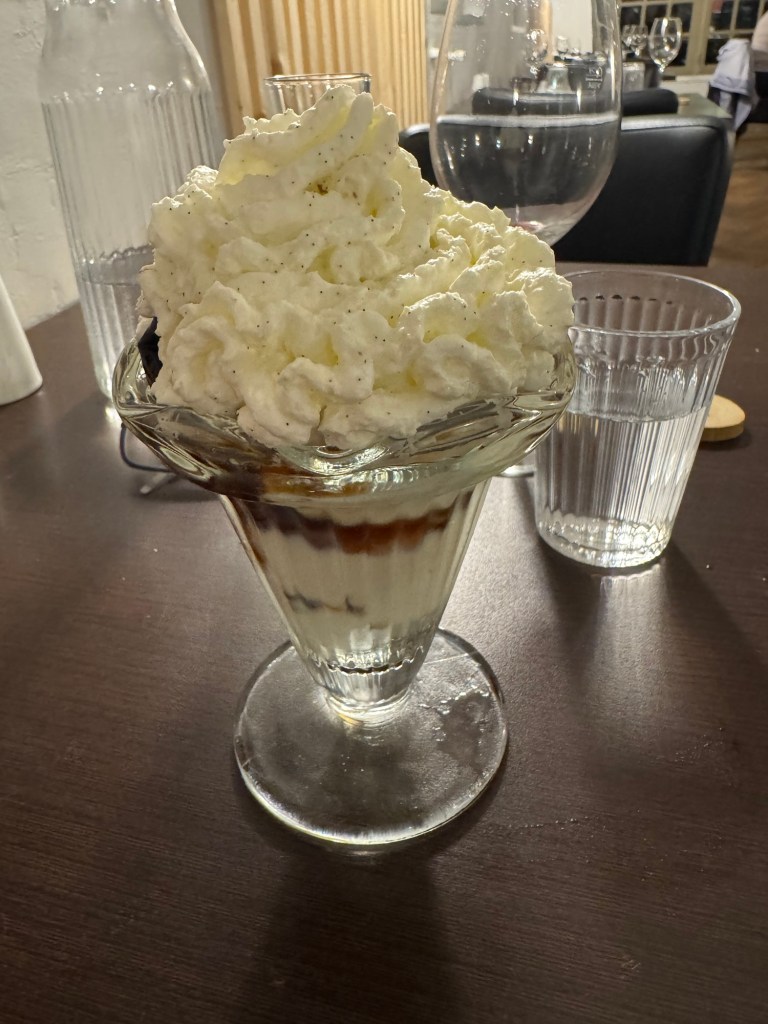
The Day After
No more having my suitcase out for the 8AM transfer. It’s like getting ready everyday to catch a plane. However, the baggage service is indispensable. At a certain age, you just can’t carry 20 pounds or more for 20 miles. For a reasonable cost, add that service if you are planning to do the Camino, Chemin, or Via Francigena.
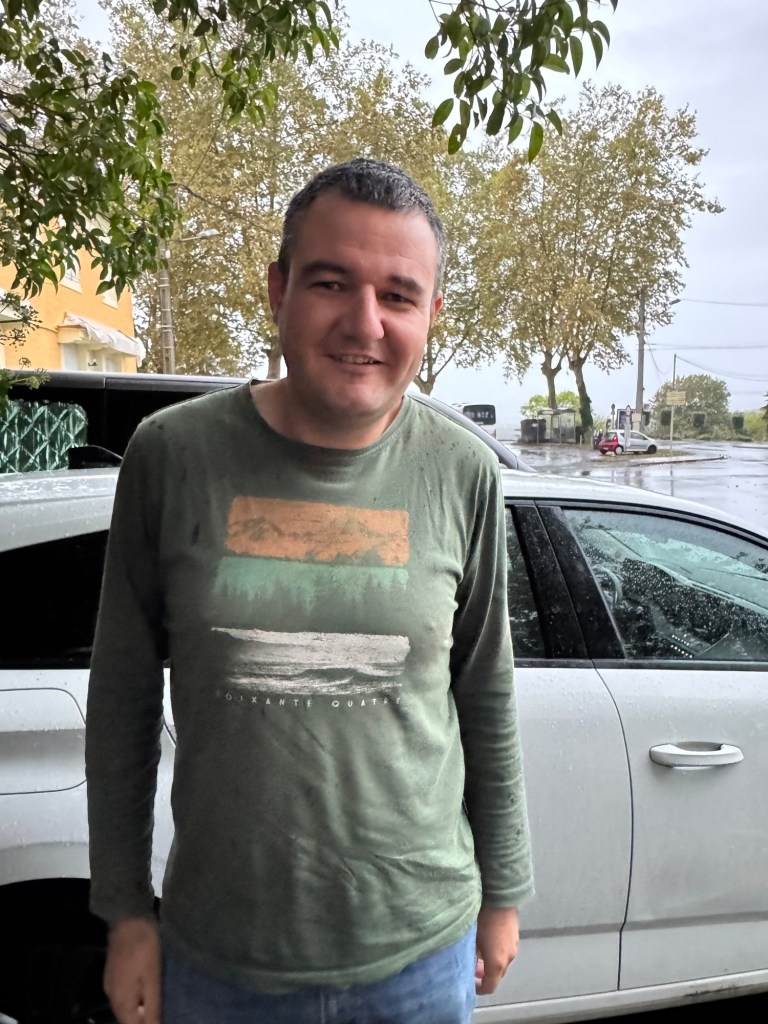
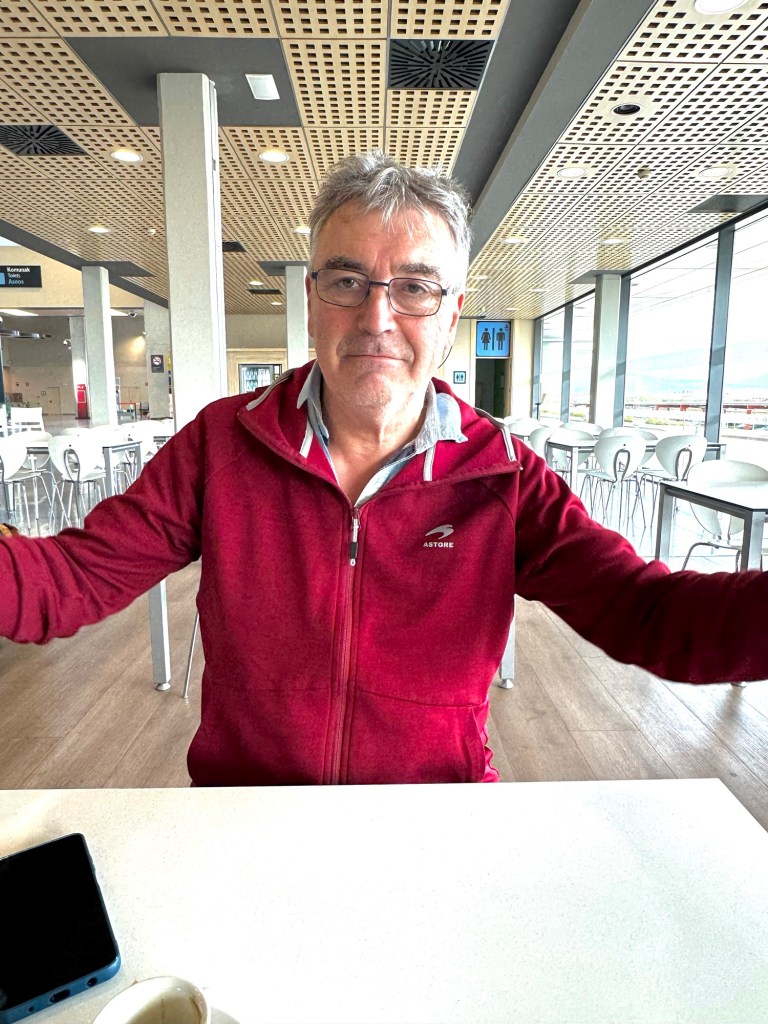
Just before 10AM, Jean-Baptiste picked me up for the drive to the Pamplona airport. I could not take the bus because it would arrive an hour after take-off. We spent the next hour and half talking mostly in French. He laughed that he was the professor’s French professor. The trip cost 200€ (my most expensive taxi ride ever). The alternative was to buy a bus ticket, pay for a hotel and dinner in Pamplona, and then a taxi to the airport. The cost would probably have been more. You have to do, what you have to do — sometimes.
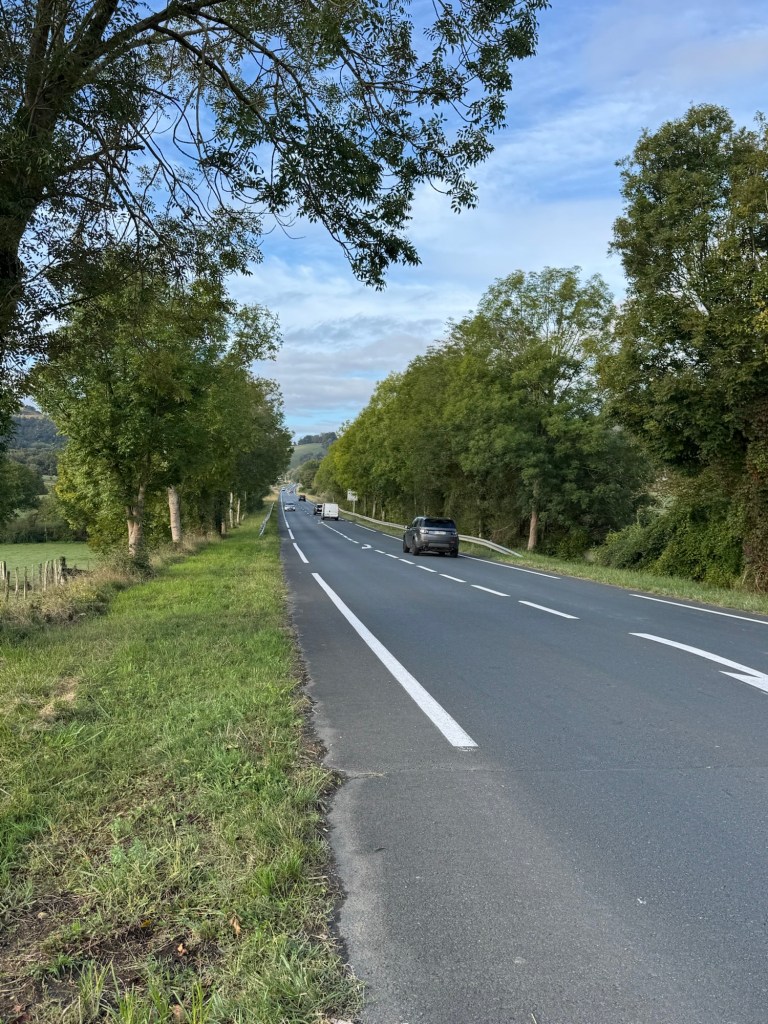
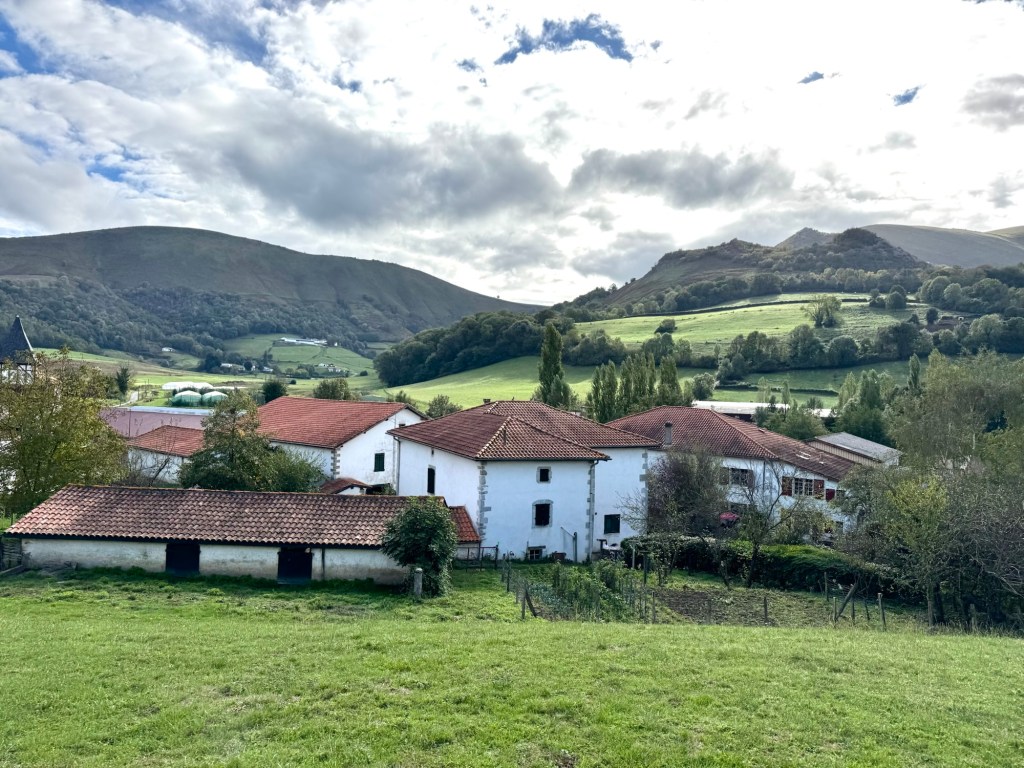
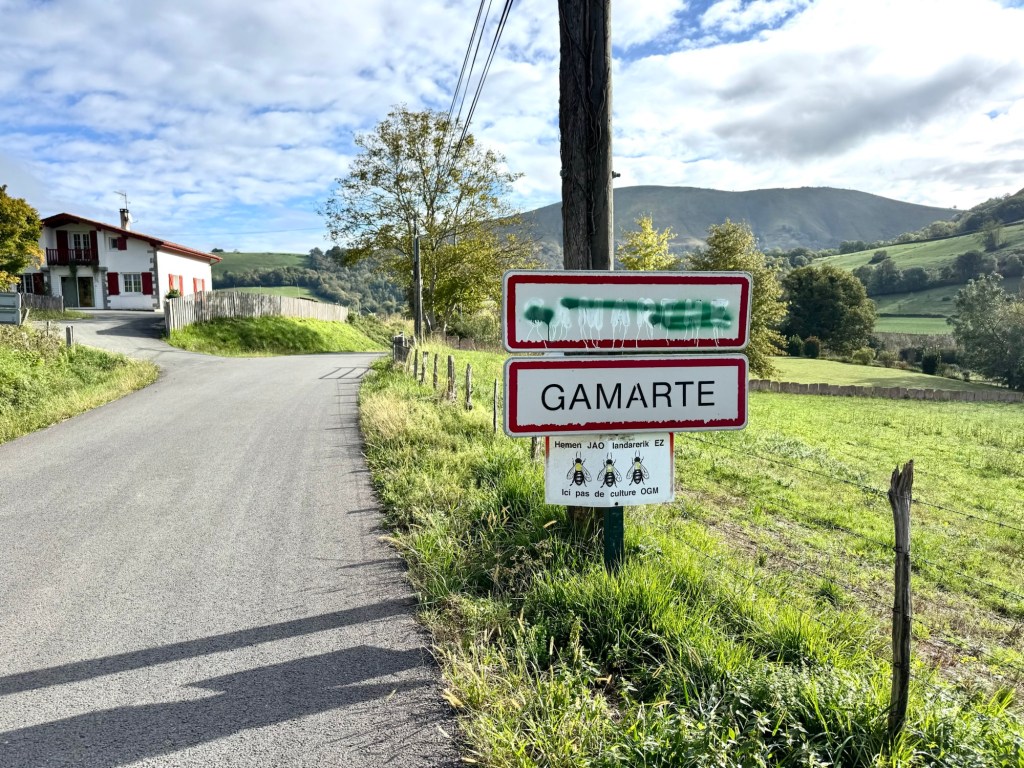
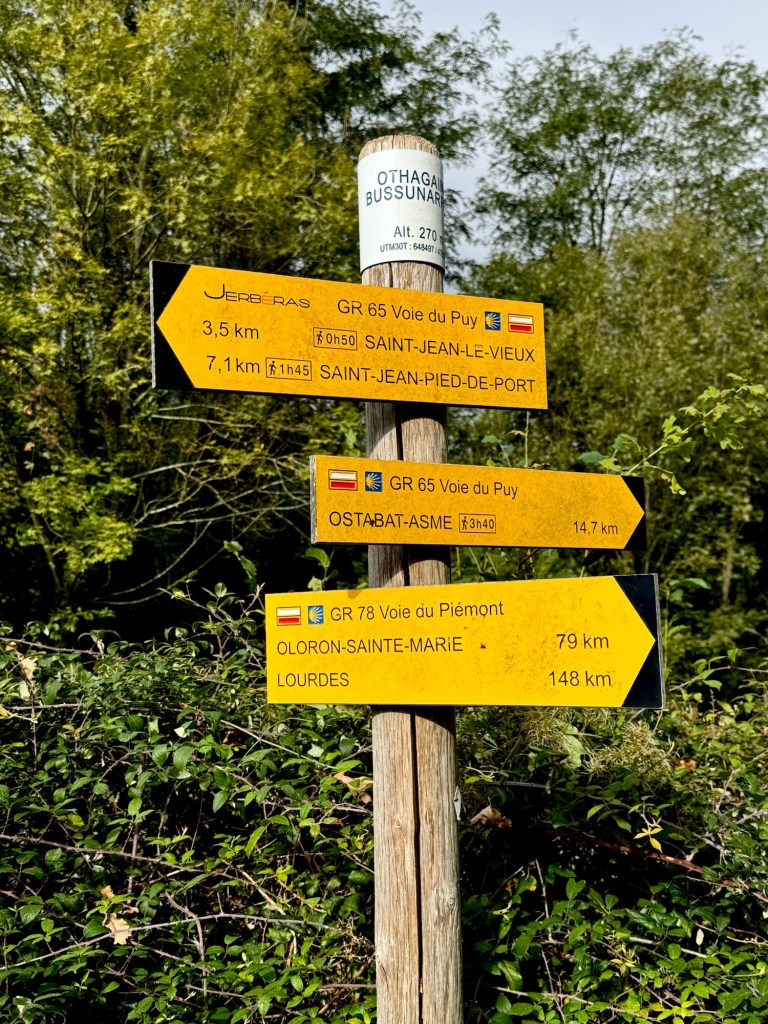
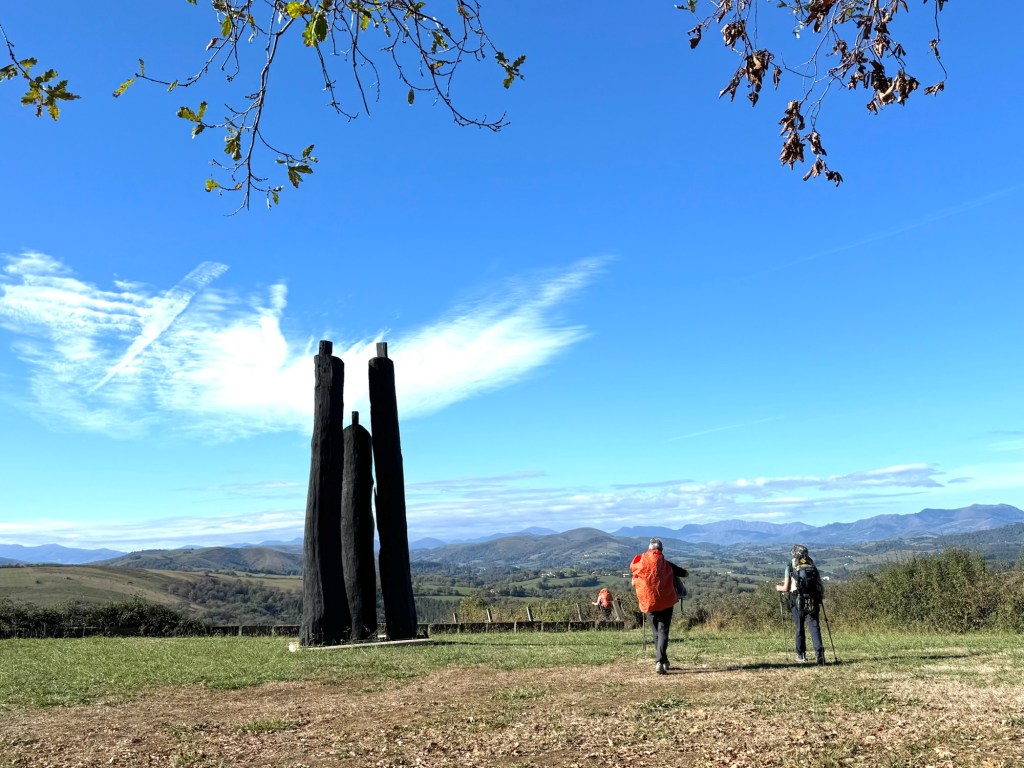
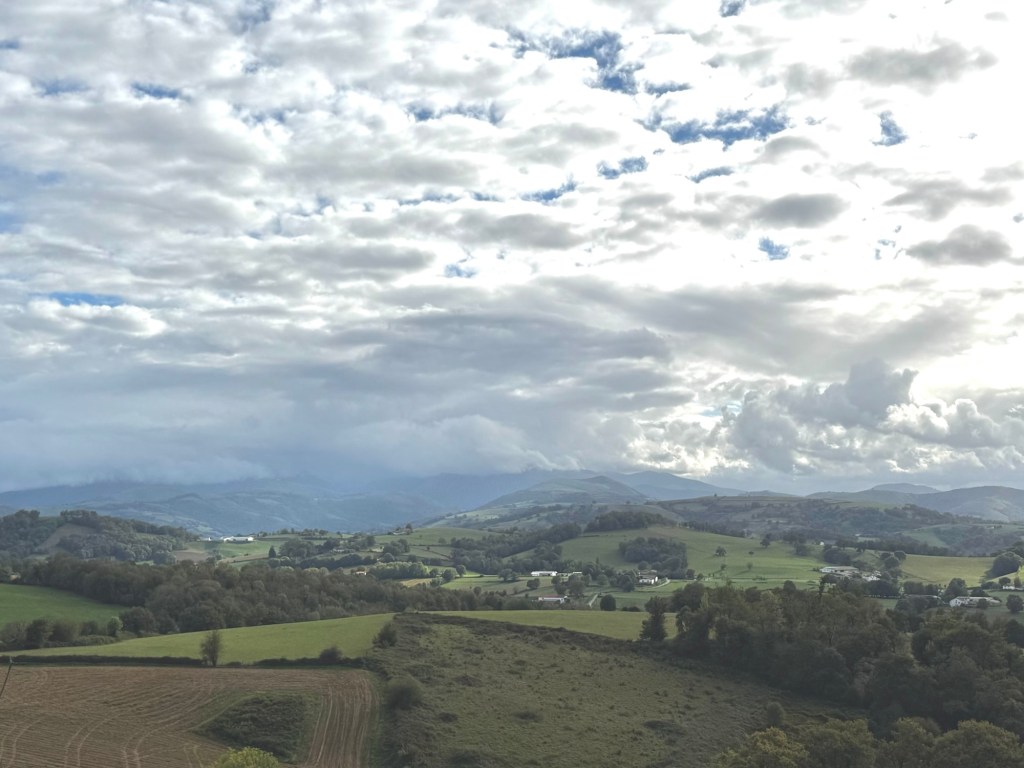
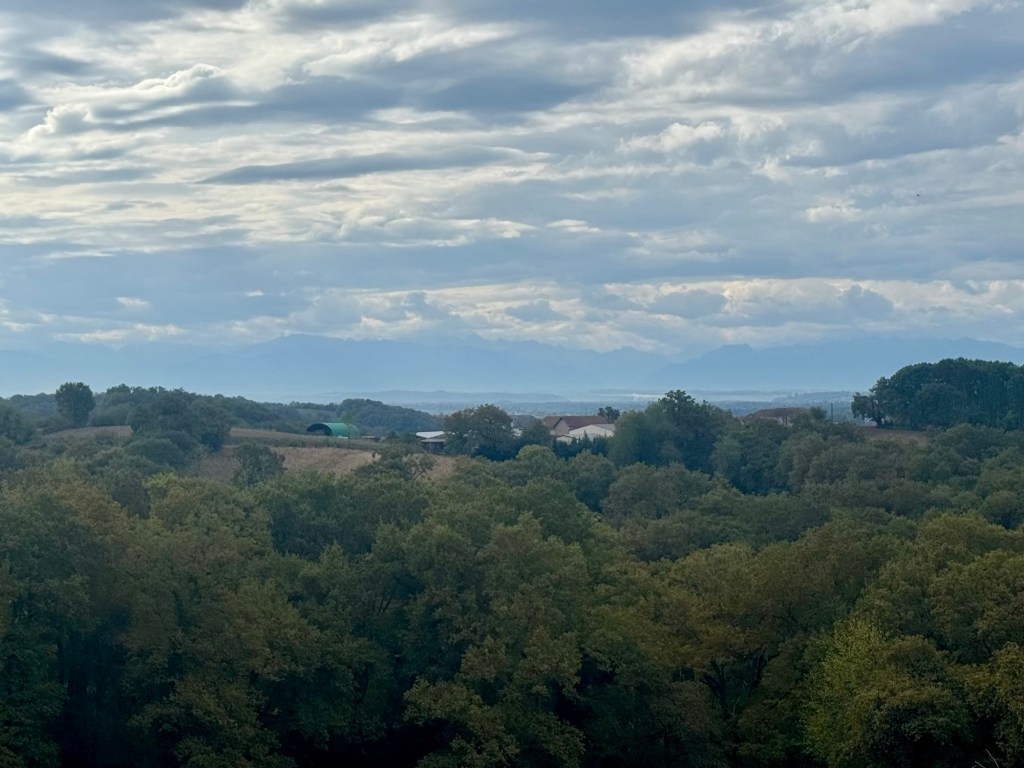
We passed Roncenvalles, the end point of the climb over the Pyrenees. As we passed the hotel where I stayed that night in 2024, I had a fresh appreciation for the mountains and my fellow pilgrims who were milling about. I also had a bit of nostalgia as we past a few villages along the Way.
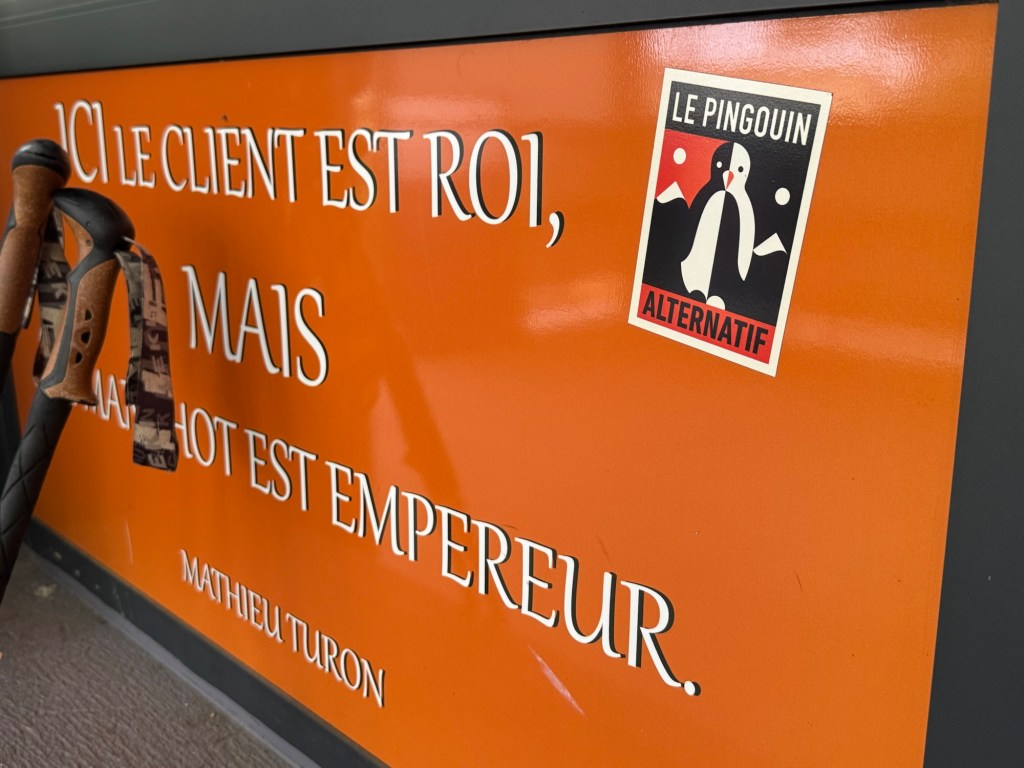
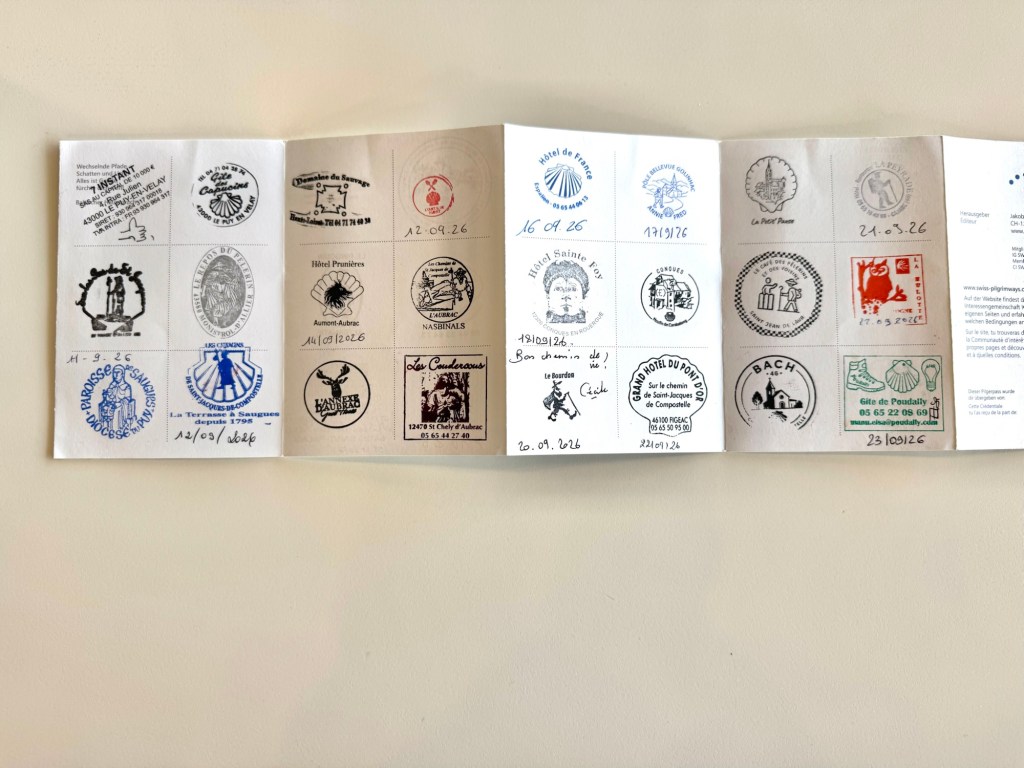
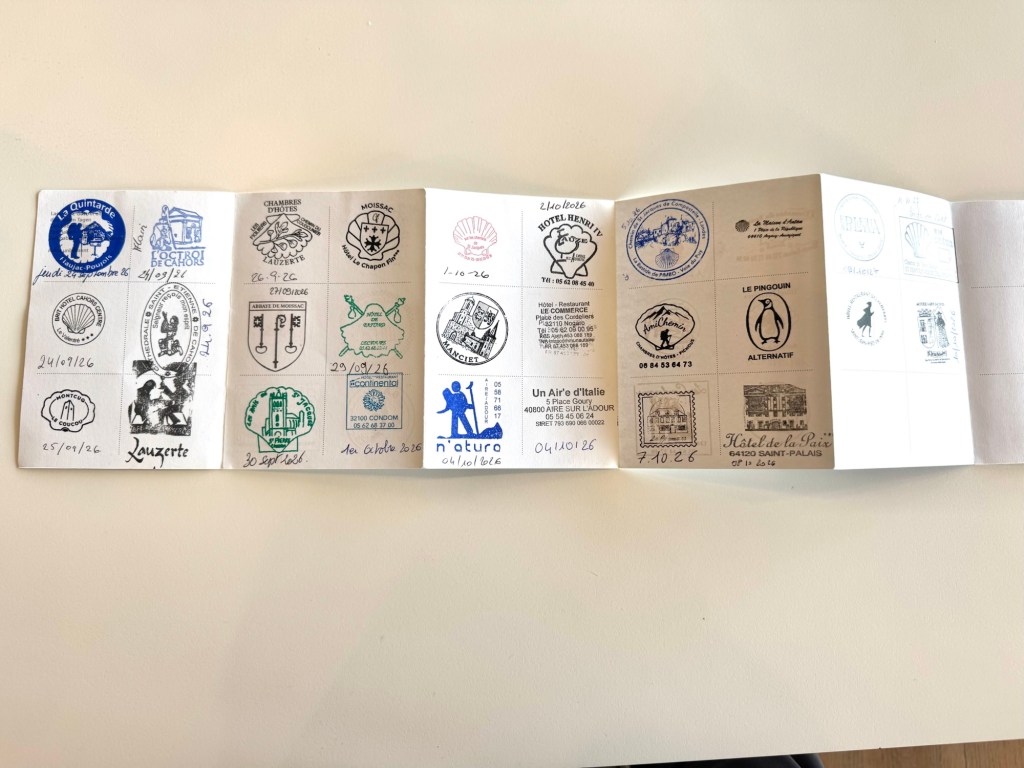
I added two images of the Swiss credential (Monique’s gift) that I used to document the journey. Most stamps incorporated some icon of the Chemin/Camino — the scallop shell, a pilgrim, or in some cases, the logo of the business as the Penguin. One needs such stamps as proof of walking the last 100km before Santiago in order to qualify for a Compestella (the certificate of completion). For me, it is a booklet of memories.
Observations
More than 95% of the walkers were Francophones. I talked with or heard second hand about 20 Americans during the 31 days.
With minimal French but with a charming and patient personality, one can do just fine. French does help in getting around and engaging in conversation. But not necessary.
A significant percentage of walkers were women (75% by consensus with whom I spoke). Most were in pairs or small groups though at least 5-10% were single women. I was a rarer bird — a single male after Monique left me at Conques. Most of the time, after saying bonjour or bonsoir at breakfast or dinner, I sat alone listening to a book on tape (Percival Everett was outstanding), to the songs of Diana Krall, Rod Stewart, Blossom Dearie, or Joe Pass, or writing the blog of the day. I was content to enjoy the solace and peace.
To a person, the walkers said the Chemin was safe even for single women. I can attest that is the case for other Camino routes.
People are people and contrary to general rumor, French people are quite engaging but I had to ask them to speak slowly. As the days went on, I picked up more French and words were coming back. I took French in college over 55 years ago. So, don’t let a lack of language deter from going on a Camino.
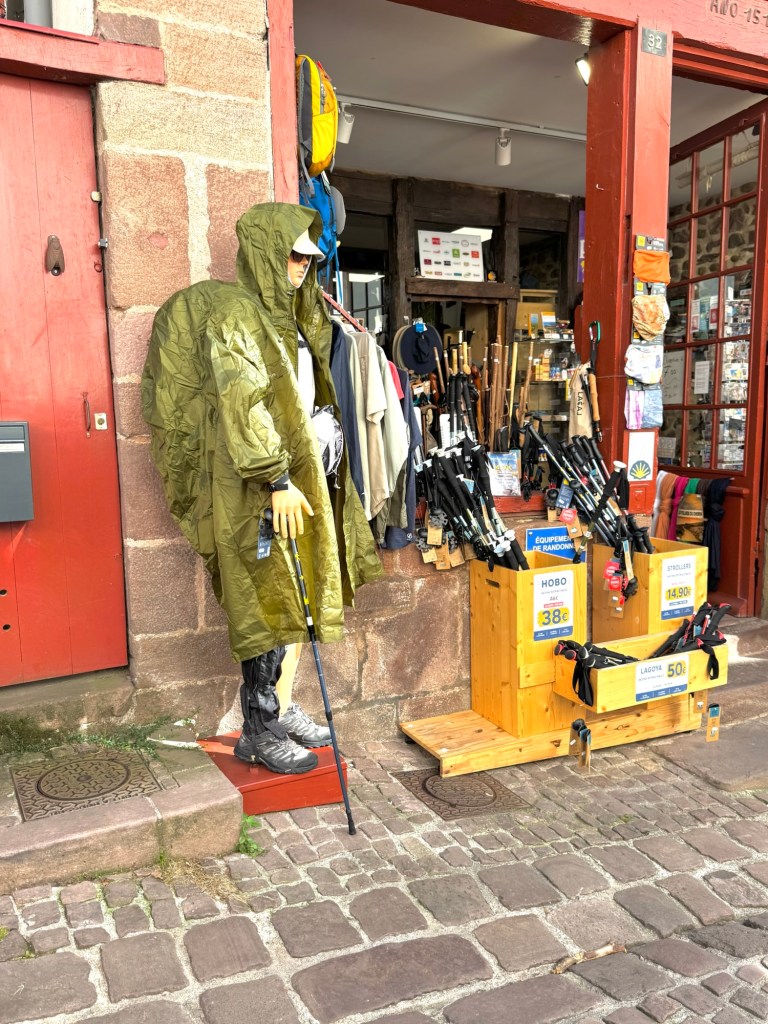
Have the right gear. Given the rocky terrain between Le Puy and Moissac, I suggest boots over the ankle and water-proof. Get them at least a half-size larger than your usual size. On really long distance stages, one’s feet will swell. You need the space to avoid feet rubbing the sides of the boots which will reduce the chances of developing blisters. Although I experienced four days of rain, two really heavy days, a good rain coat and rain pants are essential. For older hikers, bring poles especially for the rocky ascents and descents which were many.
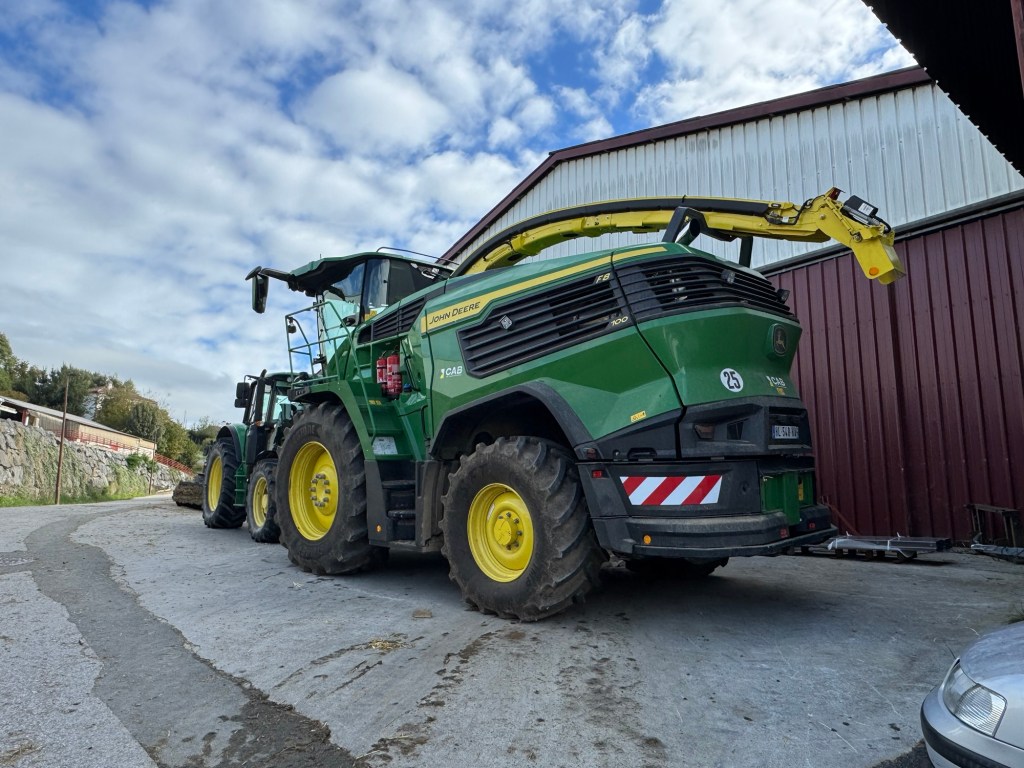
I found that I am still capable of walking 20 miles a day but not five days in succession. I will need to review the length and difficulty of stages more carefully. I half kiddingly have said that one can always call a taxi or Uber if one was needed. But what happens if you are in a rural area with poor mobile coverage? Try to describe where you are to a dispatcher in broken French, “I am at a farm with cows and a big tractor in a barn.” Right. In the future, shorter legs (I already have those) or if a 20 miler is necessary, I’ll make it a single event.
Europeans are liberal users of credit cards. However, several bars and restaurants accepted credit cards (Visa, Mastercard, American Express is shunned) only if one spends 10€. In the rural areas, no credit cards. Cash is needed for that cup of coffee, beer, or sandwich.
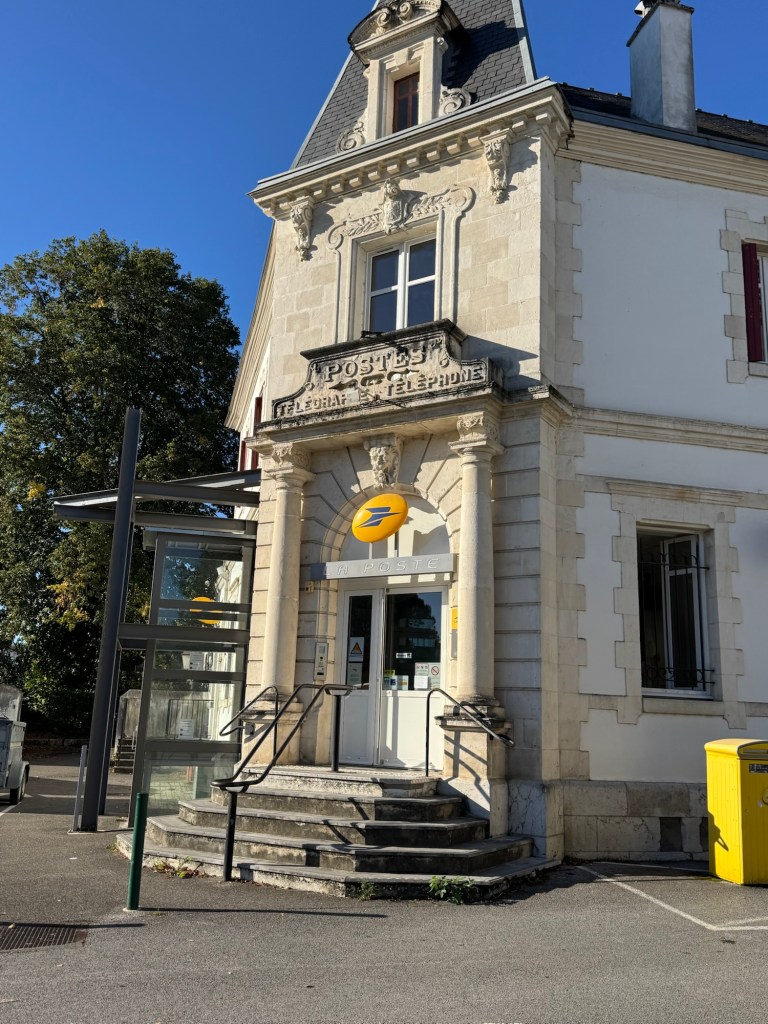
In France, the best ATM exchange rate with commission is the Postal Bank. In Spain, BBVA. Always select euros for the transaction, never dollars.
The other interesting quirk is that many hotel receptions especially small ones or B&Bs are open only later in the afternoon. So, I timed my departures to arrive around 3PM. On the 20 milers, no issue because I always arrived no earlier than 5PM.
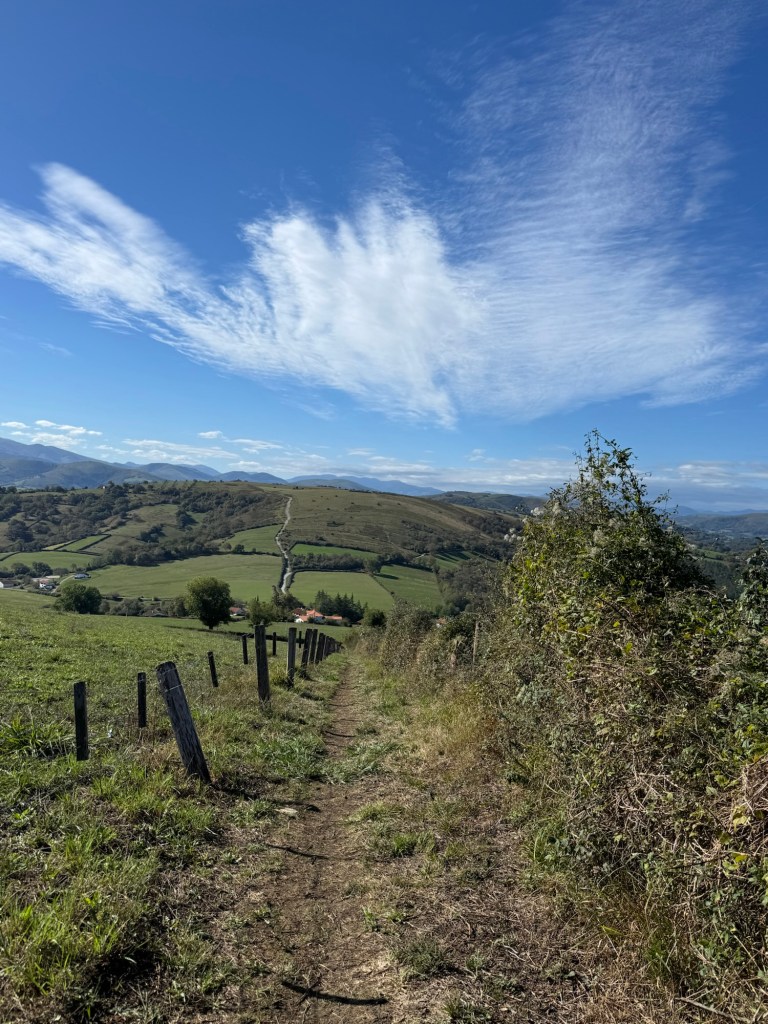
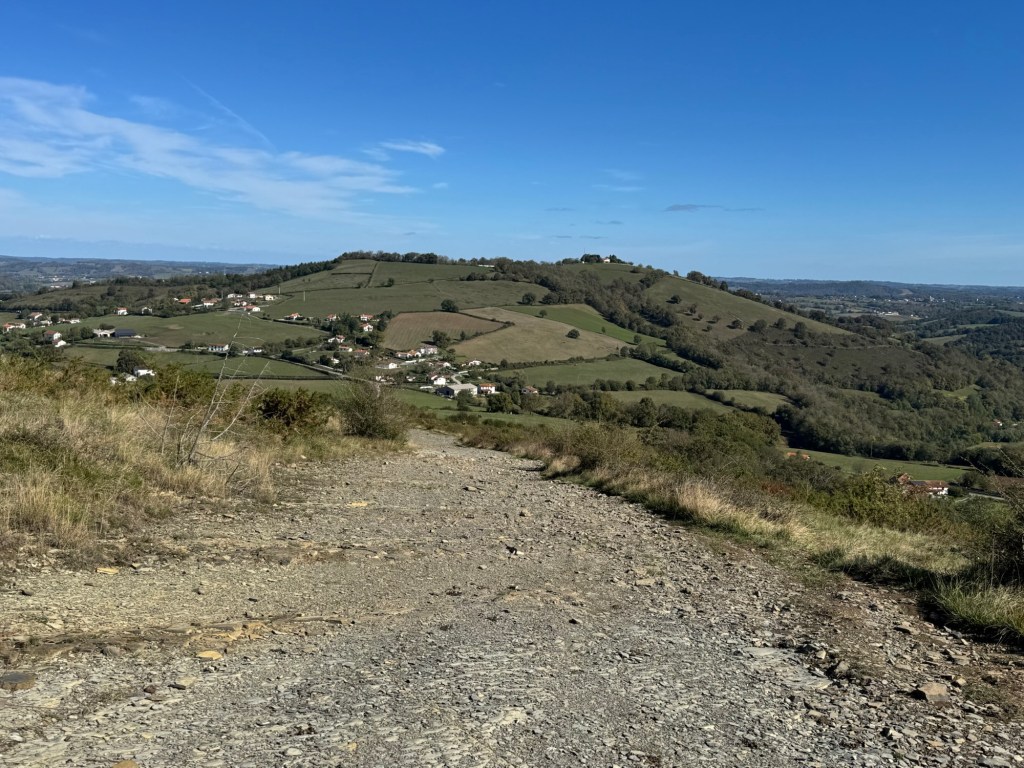
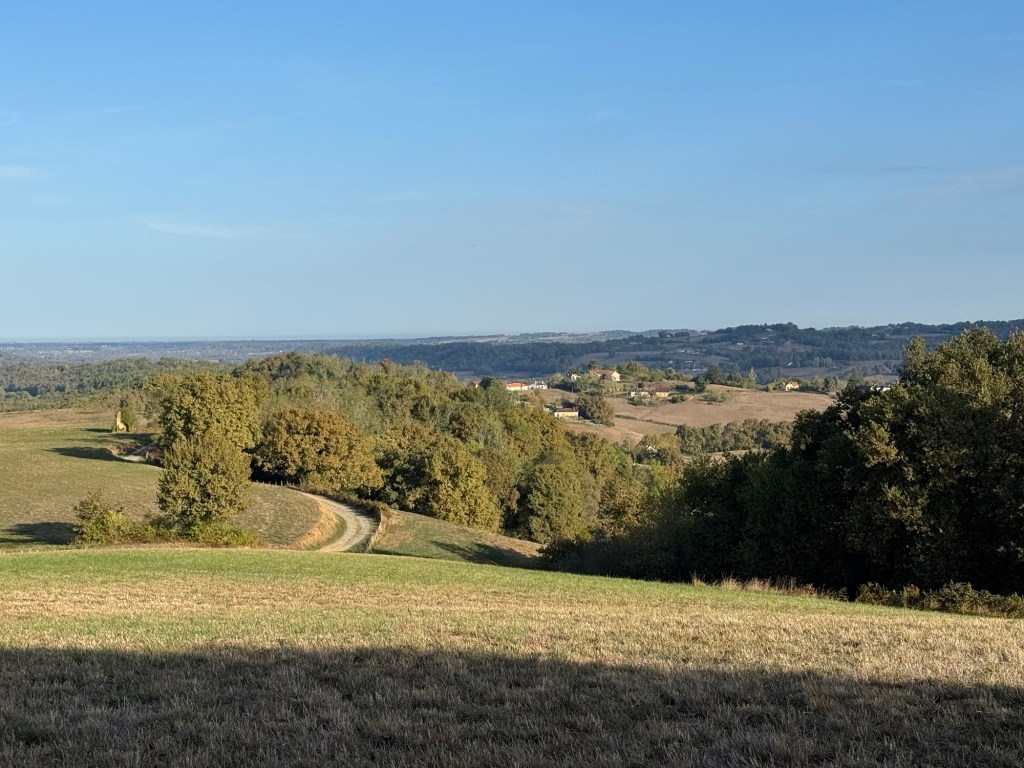
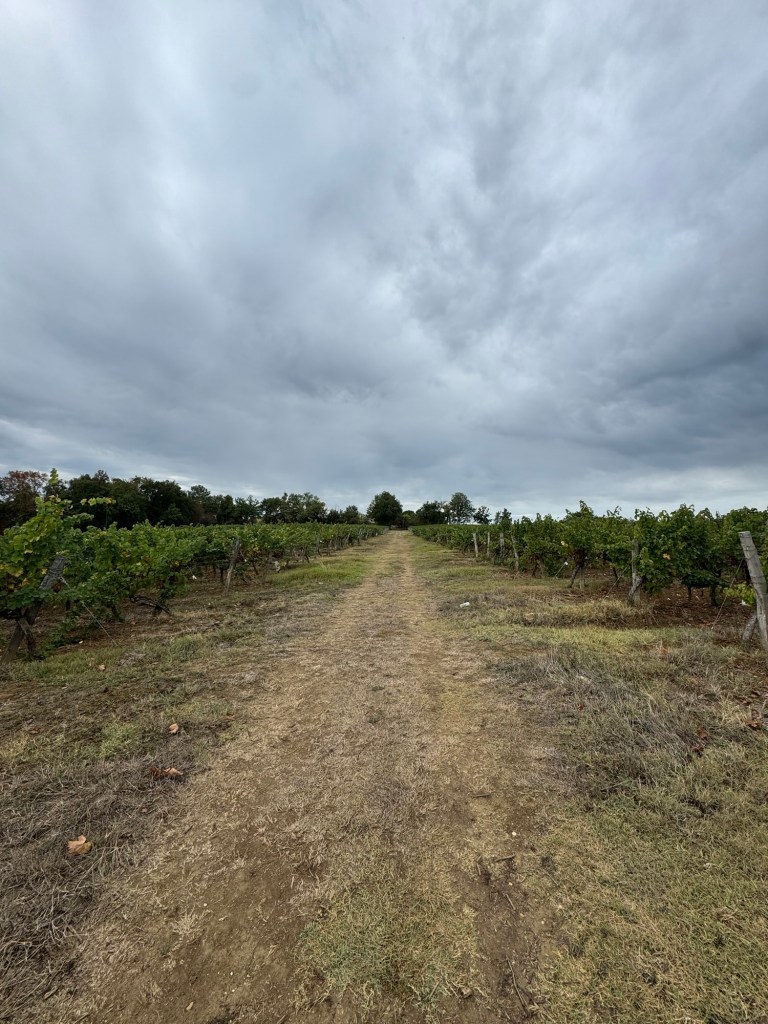
Finally, the typical high point for tourists is a first class museum, an architectural gem, or a stunning viewpoint. This Chemin and most Caminos start in a historically significant site. I have started in Porto, Oviedo, Pamplona (after crossing the Pyrenees from SJPP), Burgos, San Sebastián, and Le Puy. Once on the road, most places visited are small cities to hamlets with a house or two. Long stretches of only fields are common. But I am convinced that every walker will find beauty that will affect their spirit.
Reflections
Some of what I write is trite and self-evident. However, one may know these principles but never have felt them in one’s core.
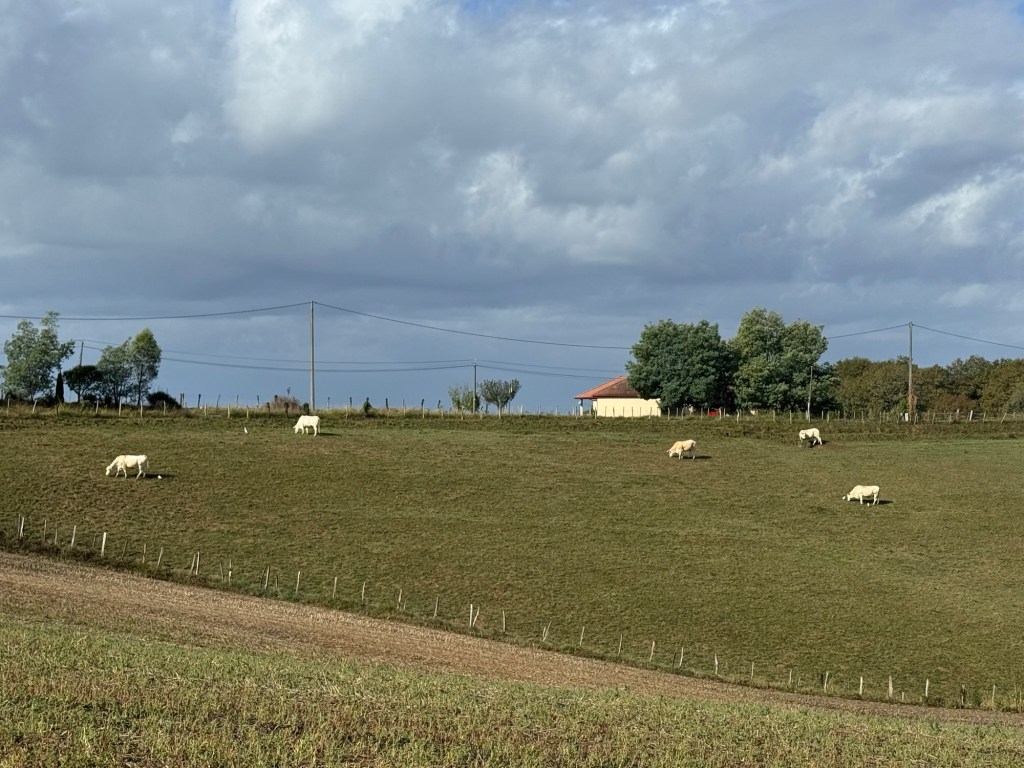
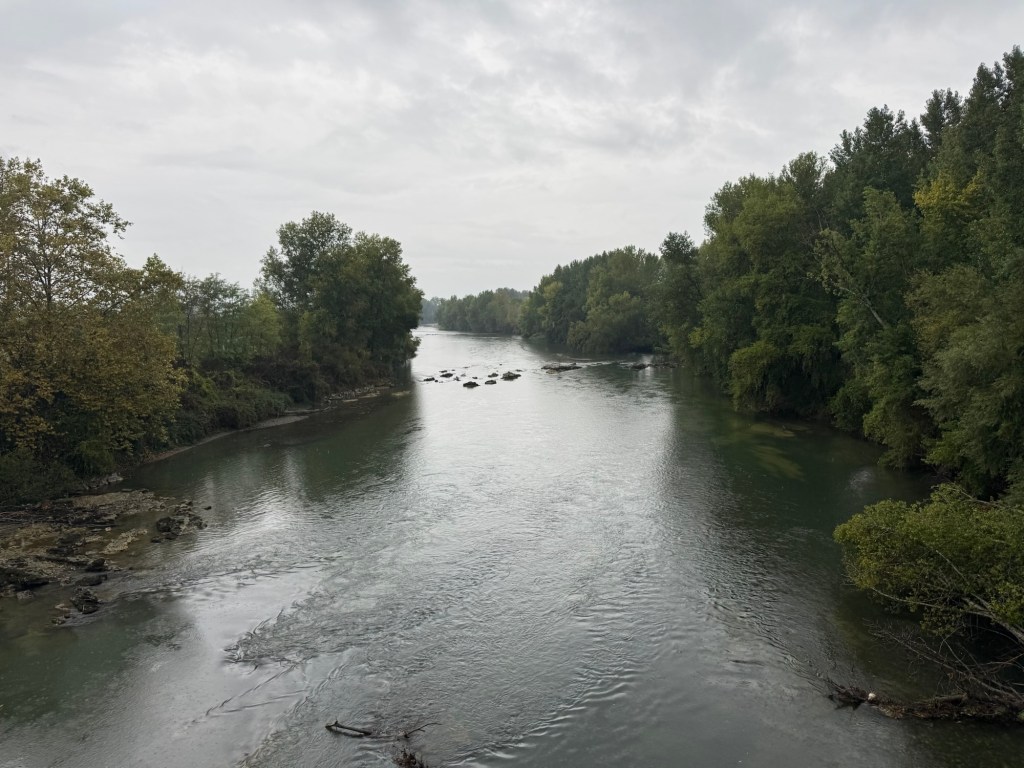
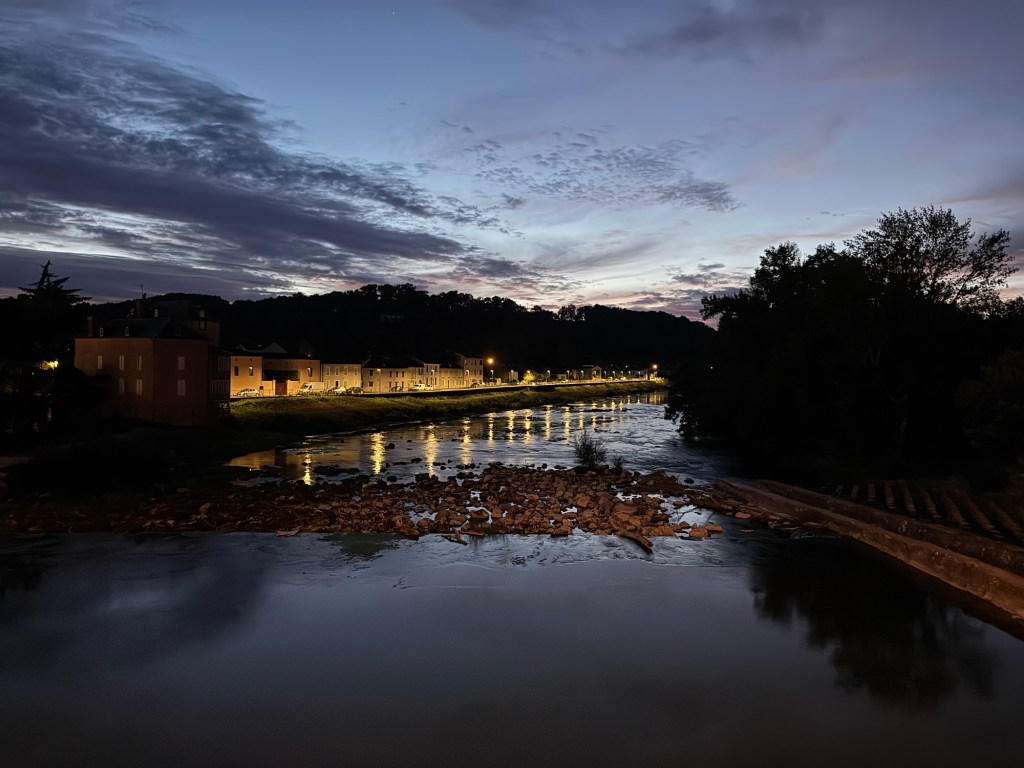
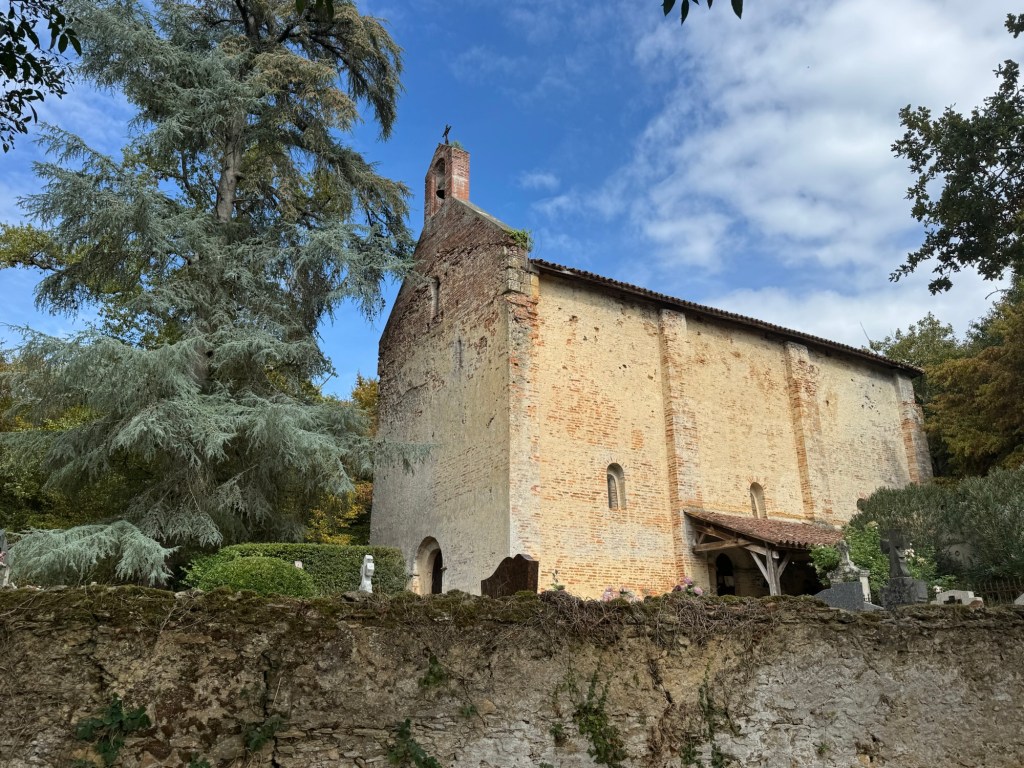
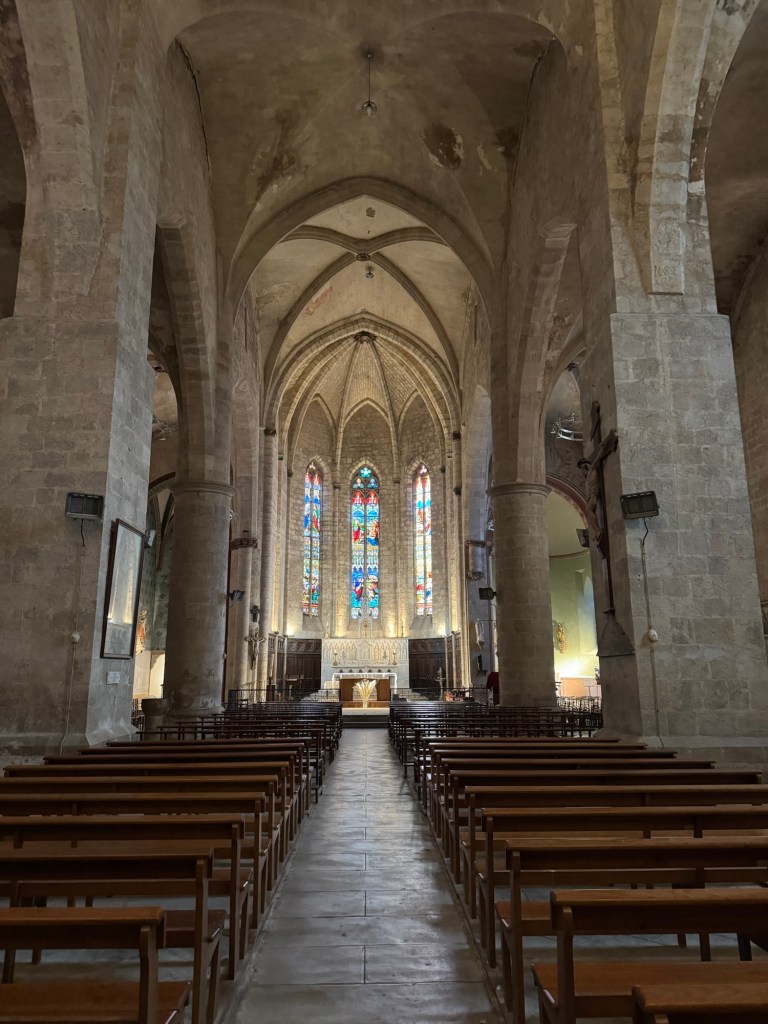
Every day is a new day. Every step, turn, view is new and will never be seen again in the same way even if the walk is repeated. Aoyama-san introduced me to Ichiro-Ichirei. Every interaction is unique. My favorite photo that I took was of the sole cow on the Aubrac plateau. I have been on the Plains in the US and have seen cows in the pasture and the on the horizon. But it was early morning and the light had a yellow hue that gave mood to the photo. It was moment of beauty as was so many instances on the Chemin such as seeing a really dark sky with thousands of stars, churches over a 1,000 years old, the sounds of birds, the stands of trees along the Garonne-Tarn canal.
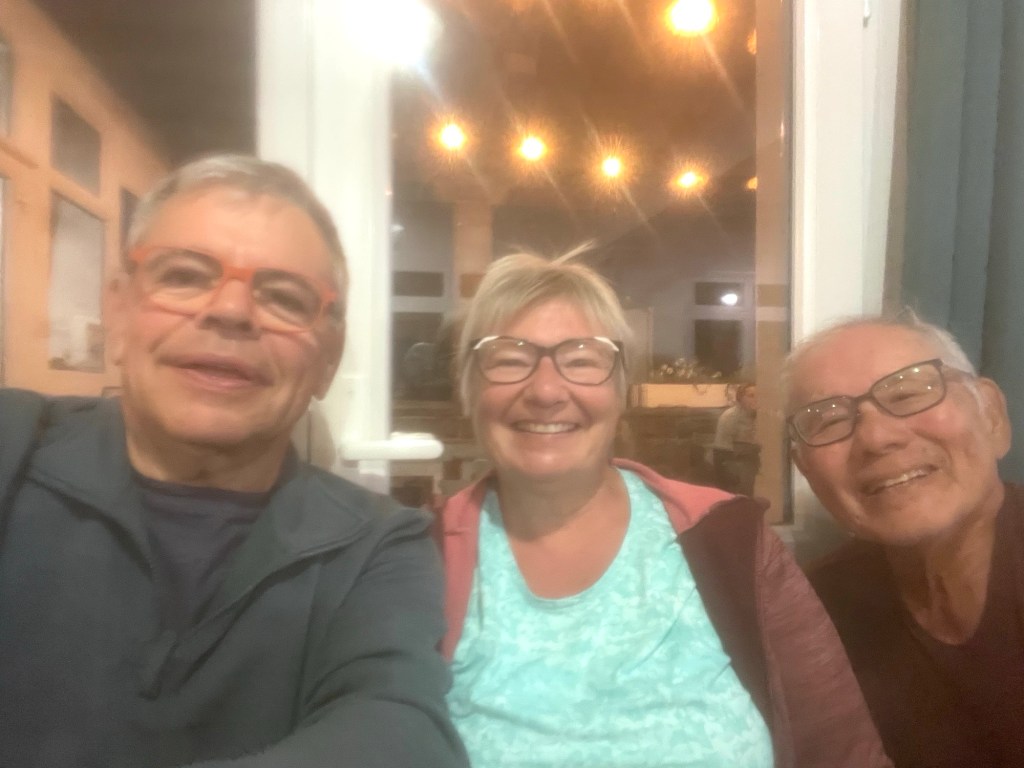
Having traveling companions regardless of the amount of time is another gift of the Chemin. When will I hike with Monique again? Will I ever meet Jeff and Nick in the future? Even for a day or for brief encounter, I began to know fellow hikers like Miriam, Stefan, Thierry and Isabelle, Jean-Jacques and Fred. Thank you to the hotel and B&B receptionists who were gracious to a weary hiker. I felt their kindness and encouragement to finish this journey.
Stay in the present. Sharon has talked about this principle over years. My 88 temple walk finally convinced me to follow it. The past is over. You can think about the future but you can’t control it. So, when it rains, it rains. Don’t waste energy worrying about it. Be prepared with the right gear and go with the flow.
During my 88 temple walk, I marveled at this man who was 80 and walked with Aoyama-san and me (I was 71 in 2019) for a week. He said that we were fortunate to have the health, time, and money to go on such walks. I look forward to a few more Caminos and other multi-day walks. The next one will be a segment of the Camino Norte in April 2027. Amen.